A flat in Spain For many people, buying a home is a dream, and we’re here to help you make that dream a reality. In this guide, you’ll find everything you need to make the right choices with confidence when buying your home.
Are you a Belgian senior citizen looking to spend the winter abroad, or a family searching for a holiday home? We’ll guide you every step of the way.
From the search for the perfect home to the finalisation of the sale at the solicitor’s: you can count on us. We know only too well that buying a An apartment in Spain is a significant investment is.
That is why we provide you with comprehensive legal guidance throughout the purchase process and sound financial advice, including assistance with applying for a mortgage in Spain.
[IMAGE: A modern flat in Spain with a sea view, a spacious balcony with comfortable furniture, and a clear blue sky. The focus is on the architecture and the attractive surroundings, captured by a professional photographer.
Why buy a flat in Spain? The benefits
For many people, buying a flat in Spain is a dream come true, and that is hardly surprising.
Few countries offer such a rich blend of sunshine, culture and a relaxed way of life, and it is precisely this combination that appeals enormously to both Belgian senior citizens and pensioners looking to spend the winter abroad, as well as Flemish property investors.
With over 300 days of sunshine a year, the Mediterranean climate ensures a pleasant stay, whether you’re moving here permanently or looking for a holiday home.
This translates into a better quality of life and greater well-being, which is a major consideration for anyone thinking of investing in Spanish property.
What’s more, there’s something for everyone, from the golden beaches of the Costa del Sol to the rugged mountains of Andalusia.
A buying a flat in Spain It also brings with it significant financial benefits.
The property market is stable and offers excellent investment opportunities.
The appeal of the Spanish way of life
The Spanish way of life is perhaps the biggest draw for anyone considering buying a flat in Spain. It’s all about family, socialising and a relaxed way of life, and that appeals to a great many people.
Think of leisurely lunches, the siesta and cosy evenings on a terrace. All those little things combined create a sense of community and well-being that’s hard to find in many other countries.
Families looking for a holiday home will find a safe, child-friendly environment in Spain, whilst those considering moving to Spain particularly appreciate the warm welcome and rich culture.
Delicious food, colourful local festivals and the hospitality of the Spanish people make life here a real pleasure.
What’s more, Spain is very easy to reach from Belgium and the Netherlands, with countless direct flights to all sorts of Spanish cities. This means you can visit your flat in Spain effortlessly, and you can entertain friends and family just as easily.
The infrastructure is modern and well-maintained, making travel within Spain a smooth experience. Whether you’re drawn to the bustling cities or the tranquil coastal towns, the benefits of a stay in Spain are endless.
For anyone buying a second home for their own use, the ability to travel to their holiday home quickly and hassle-free is a major advantage. In addition, we offer legal guidance on property purchases in Spain and financial and mortgage advice in Spain, to ensure your purchase goes smoothly.
Investment opportunities and returns
As well as offering a great lifestyle, an apartment in Spain also opens the door to interesting investment opportunities. The holiday rental market is thriving, particularly in the popular coastal areas. This means that holiday let owners can achieve an attractive return on their investment.
With a well-planned Property Search & Selection service in Spain, you will find a property that not only meets your personal requirements but also represents a sound investment.
Demand for holiday homes continues to rise, driven by growing tourism and the desire of many Europeans to enjoy the Spanish sun.
For entrepreneurs and the self-employed with a variable income who wish to diversify their assets whilst enjoying a beautiful location, this is a smart move.
We’d be happy to help you find the perfect flat in Spain that meets all your requirements.
- A stable property market with growth potential.
- High demand for holiday rentals.
- A wide range of venues to suit every budget.
- Potential for long-term capital appreciation.
Depending on your personal circumstances and the intended use of the property, buying a flat in Spain may also offer tax benefits. Make sure you seek expert advice on this from specialists in tax optimisation in Spain.
The procedure for obtaining a NIE- The numbering system and administrative support have now been streamlined, making the entire purchasing process much simpler. Would you like to find out more about the benefits of investing in Spanish property? If so, please consult a reliable source here.
The different regions: Where would you like to live in Spain?

When buying a flat in Spain, choosing the right region is of crucial importance. Spain is a country of striking contrasts: from sun-drenched coastlines and historic inland areas to bustling cities.
Every region has its own lifestyle and atmosphere, and this is a major consideration for Belgian senior citizens and pensioners looking to spend the winter abroad, families searching for a holiday home, or Flemish property investors seeking a return on their investment.
So ask yourself carefully what your priorities are: are you looking for peace and quiet, culture, the beach or the mountains?
Take the Costa del Sol, renowned for its glamour and golf courses, making it ideal for those looking for a second home for their own use who appreciate luxury.
Here you’ll find a wide range of flats, from modern penthouses to charming beachfront flats.
The Costa Blanca, on the other hand, is particularly popular with families and pensioners, thanks to its affordability and stunning sandy beaches. An excellent choice for anyone looking for a Looking for a flat in Spain that offers good value for money.
Popular coastal regions and their characteristics
The Spanish coastline boasts a wealth of beautiful regions, each with its own charm and unique attractions. Anyone who dreams of a life by the sea is spoilt for choice.
In the north-east, the Costa Brava offers rugged cliffs and picturesque coves, perfect for adventurous souls and young professionals who dream of a Spanish adventure.
In the south-west, the Costa de la Luz is renowned for its unspoilt beaches and authentic Andalusian culture, where you can fully enjoy the local cuisine and the laid-back atmosphere.
Our Property Search & Selection Service in Spain helps you find the perfect location to suit your needs, whether you’re a holiday let owner or a prospective expat to Spain.
- Costa del Sol: Glamour, golf, luxury flats, a vibrant nightlife.
- Costa Blanca: Affordable, family-friendly, beautiful sandy beaches, lots of expats.
- Costa Brava: A rugged coastline, picturesque villages, cultural heritage – ideal for active holidays.
- Costa de la Luz: Authentic, unspoilt beaches, plenty of windsurfing and kitesurfing opportunities.
- Canary Islands: Spring all year round, volcanic landscapes, popular tourist destinations.
Urban centres versus rural tranquillity
It is not just the coast, but also Spain’s cities and inland areas that offer attractive options for an apartment in Spain.
Major cities such as Barcelona, Valencia and Seville are perfect for those who love a dynamic environment with plenty of culture, fine dining and job opportunities. Entrepreneurs and the self-employed with flexible incomes often find the ideal work-life balance here.
Buying a city flat can also be a smart investment, particularly with a view to letting it out. If, on the other hand, you’re looking for peace and quiet and the countryside, then the rural areas of Andalusia, Castile and León or Extremadura might be a better fit.
There, you’ll often find traditional fincas or flats in charming villages, far away from the hustle and bustle. Whatever location you choose, be sure not to overlook tax optimisation in Spain, so that your investment yields the best possible return.
Further information about the various regions and their characteristics can be found on the Spanish Tourist Board’s website. Find out more about Spain.
Financing your flat in Spain: Mortgages and costs
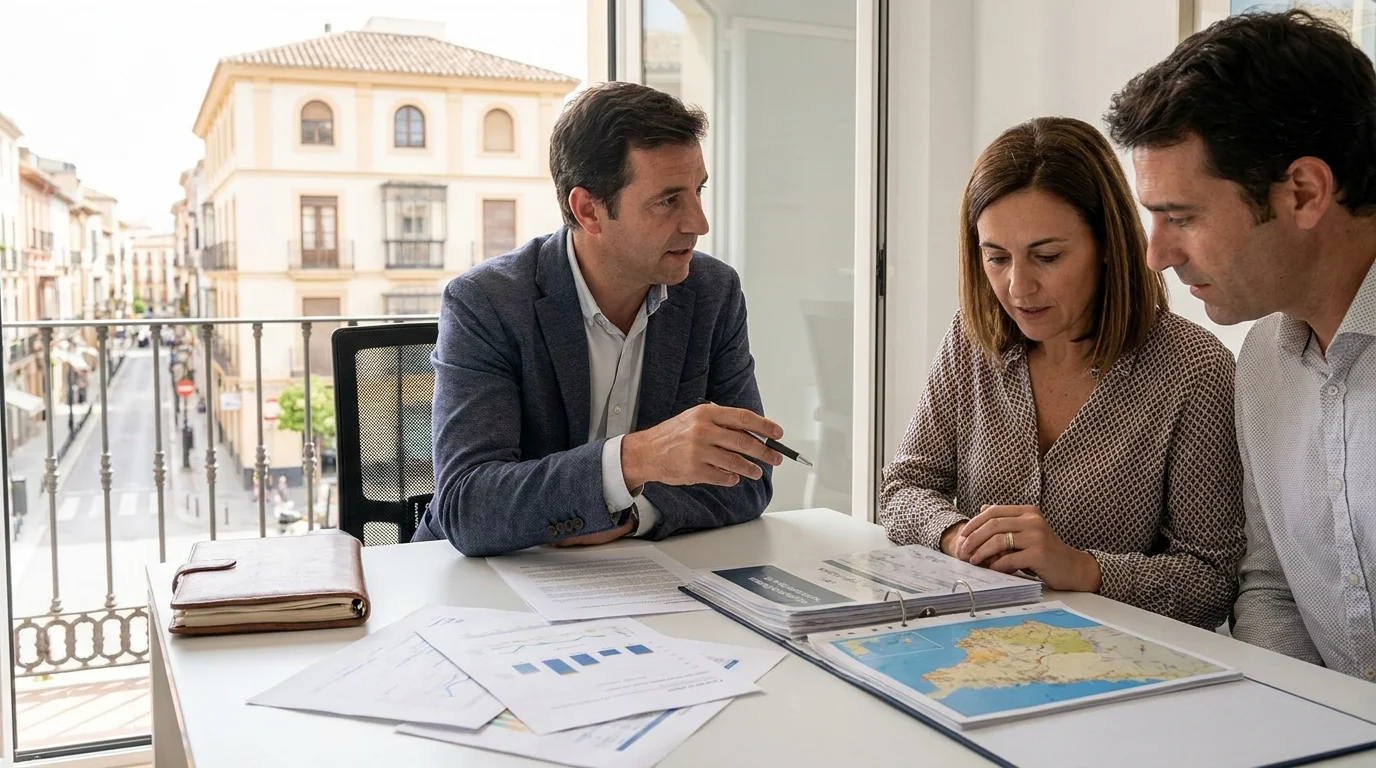 When buying a flat in Spain, there is more to consider than just the purchase price; the financing and all the associated costs require careful planning. Many Belgian senior citizens and pensioners looking to spend the winter abroad, as well as Flemish property investors, are considering a mortgage in Spain. Before you commit, it is essential to fully understand the various options and the overall financial implications. Thorough financial and mortgage advice in Spain is indispensable in this regard.
A Spanish mortgage can prove attractive, particularly given current interest rates. However, the terms and conditions may differ from what you are used to in Belgium. Banks generally finance 60–70% of the purchase price or valuation, whichever is lower. You must therefore allow for a substantial deposit.
The Spanish Mortgage Application and Additional Costs
Applying for a mortgage in Spain requires specific documentation and can take quite some time. Prospective expats to Spain and families looking for a holiday home would be well advised to have the necessary documents in order, such as proof of income, tax returns and a copy of your NIE number. Our team will be happy to assist you with your NIE number and administrative support. The additional costs involved in purchasing a an apartment in Spain with a mortgage These costs are substantial and warrant serious consideration. On top of the mortgage, they can amount to 10–15% of the purchase price. You should therefore be sure to include these items in your budget.- Transfer tax (ITP): This varies by region, usually ranging from 7% to 10% for existing homes.
- VAT (IVA): For new-build flats, this is 10%, plus 1.5% stamp duty (AJD).
- Notary fees: Required for the transfer of ownership and the mortgage deed.
- Registration fee: For the registration of the property and mortgage in the Land Registry.
- Legal costs: Legal guidance on property purchases in Spain: essential for protecting your interests.
- Valuation fees: Required by the bank for the mortgage application.
- Mortgage arrangement fee: Some banks charge a percentage of the mortgage amount.
Tax Issues and Advice for Your Flat in Spain
In addition to the direct purchase and financing costs, tax matters also play a role. Tax optimisation in Spain is essential, particularly for holiday let owners or business owners and the self-employed with variable incomes. You should therefore seek advice on the annual property tax (IBI), income tax on rental income and capital gains tax. Anyone who fully understands these taxes can often save a great deal of money in the long term. We provide buyers of a second home for their own use with a transparent overview of all costs. If you would like to find out more about the Spanish mortgage market, please visit the Bank of Spain’s website: Bank of Spain. It is essential to have a full picture of all financial obligations before you take the step of buying a flat in Spain.The buying process step by step: From searching for a property to the handover of the keys
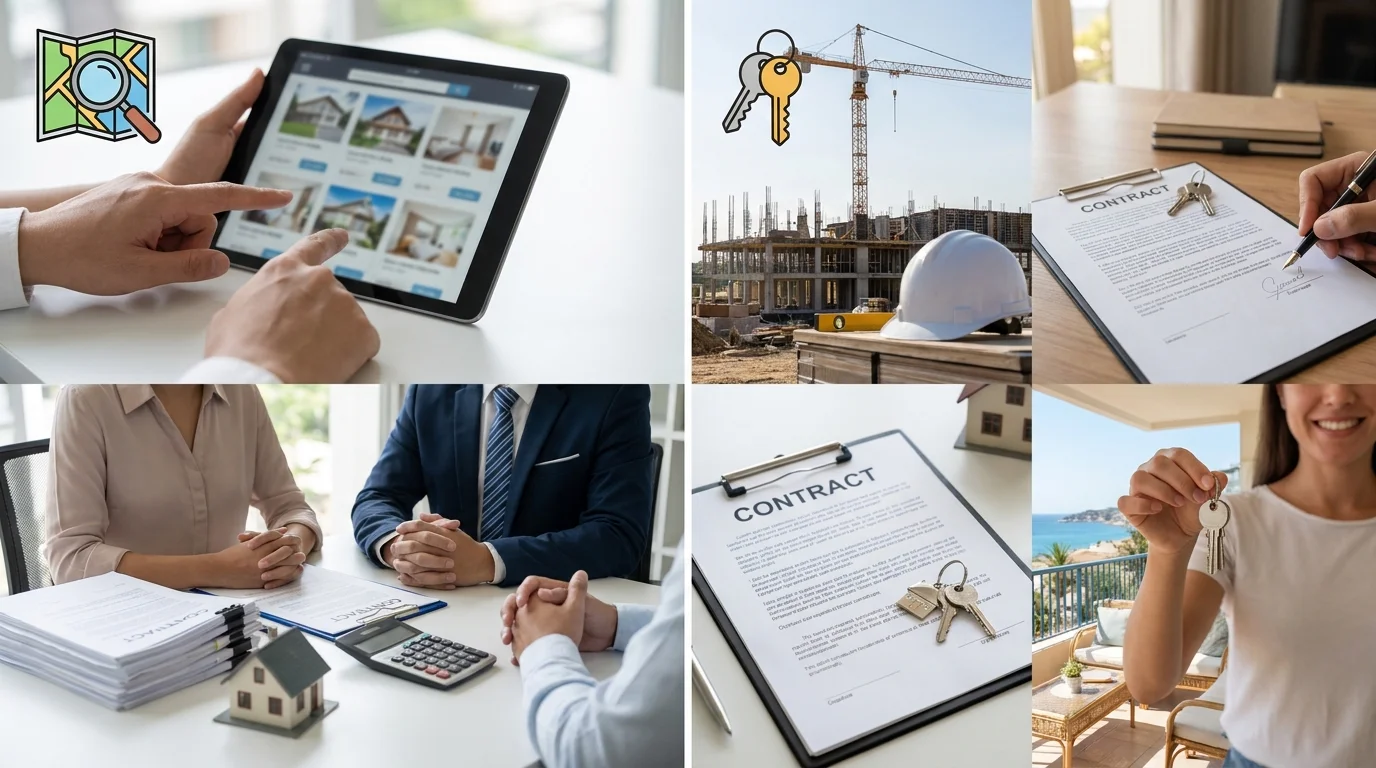 Finding the perfect flat in Spain is an exciting endeavour, but the buying process can seem complicated, particularly for Belgian senior citizens and pensioners looking to spend the winter there, or for Flemish property investors. We’ll guide you step by step through every stage, from the initial search right through to the moment you receive the keys to your new Spanish home. We’ll cover everything, from identifying your requirements to the legal and financial arrangements.
The first stage involves a thorough assessment of your needs and preferences. Are you looking for a family home, a second home for your own use, or are you a young professional dreaming of a Spanish adventure?
Together, we’ll decide on the ideal location, the type of flat you’re looking for and your budget, so that the search is efficient and targeted.
An essential step is to obtain an NIE number, which is compulsory for any property transaction in Spain.
The search for and selection of your dream home
Once your profile is clear, the active search and selection process will begin. We will present you with a carefully compiled list of flats that meet your criteria.
These can range from modern new-build developments on the coast to charming flats inland.
We organise the viewings and work with you to weigh up the pros and cons of each option, taking into account factors such as location, facilities and rental potential for holiday home owners.
The financial aspects also deserve due attention at this stage. Our team offers Financial and mortgage advice in Spain, so that you can get a realistic picture of the costs and the financing options.
This is particularly relevant for entrepreneurs and the self-employed with variable incomes, who often have specific needs.
Legal and administrative processing
The legal and administrative procedures form a complex but essential part of the purchase process. There are numerous steps involved, which you must follow carefully.
Thanks to our expertise in providing legal support for property purchases in Spain, everything is carried out in accordance with Spanish law and your interests are protected at all times. This is of great importance to potential emigrants to Spain and buyers of a second home.
- Due Diligence: We carry out a thorough investigation of the flat, including proof of ownership, any outstanding debts, planning permission and building plans. This helps to avoid any unpleasant surprises later on.
- Notarial settlement: The final deed of sale is signed at a notary’s office. We are present at this stage to ensure that everything proceeds correctly. This is when the keys are handed over and the official transfer of ownership of the flat in Spain.
- Registration: Once the transaction has been finalised by a notary, the deed of sale is registered in the Spanish Land Registry. This is the final step in officially registering your property.
Even after the handover, we’ll continue to support you with aftercare and property management in Spain, so that you can enjoy your new home with complete peace of mind.
Legal aspects and taxation when buying property in Spain
Buying a flat in Spain involves a number of legal and tax considerations that are crucial to the success of the transaction. It is vital to gain a thorough understanding of these aspects before committing to a purchase.
Thorough preparation helps to avoid unexpected costs and legal complications, so that you can enjoy your new Spanish home with complete peace of mind.
This certainly applies to Belgian senior citizens and pensioners who wish to spend the winter abroad, but it applies just as much to Flemish property investors looking to expand their portfolios.
As Spanish legislation differs significantly from that of Belgium or the Netherlands, specialist legal advice is essential. This includes checks on title deeds, any potential debts attached to the property and the validity of planning permission.
A Buying a flat in Spain requires thorough legal due diligence to avoid any surprises. This involves checking the land registry and the cadastre, which is essential for a transparent purchase.
Key taxes and costs when buying a property
When buying a flat in Spain, you will have to deal with various taxes and costs.
The main ones are the transfer tax (ITP – Impuesto sobre Transmisiones Patrimoniales) for existing properties, or VAT (IVA – Impuesto sobre el Valor Añadido) for new-build properties, often supplemented by stamp duty (AJD – Actos Jurídicos Documentados).
Rates vary by autonomous community in Spain, so it’s worth finding out the exact rates for your chosen location.
In addition, there are notary fees, registration fees with the Land Registry, and fees for the solicitor who assists you with the legal aspects of the property purchase in Spain.
Taken together, these items can amount to 10–15% of the purchase price, depending on the region and the specific circumstances of the purchase. A detailed breakdown of costs is essential for realistic budgeting.
You should also bear in mind the annual taxes payable after the purchase, such as property tax (IBI – Impuesto sobre Bienes Inmuebles) and income tax for non-residents (IRNR – Non-Resident Income Tax (Impuesto sobre la Renta de No Residentes) if you are not a tax resident in Spain.
This last tax applies even if you do not let out the flat, and is calculated on the basis of the property’s cadastral value.
For potential emigrants to Spain or families looking for a holiday home, tax optimisation in Spain can offer significant benefits.
With the right planning and advice from a tax expert, you can keep your tax burden as low as possible and ensure you meet all your Spanish tax obligations.
This is a complex area where professional guidance – for example, through financial and mortgage advice in Spain – is crucial to avoiding pitfalls and ensuring the purchase of your Spanish flat to ensure that everything runs smoothly.
Further information about the Spanish tax authorities can be found on the official website: Agencia Tributaria.
A thorough understanding of the Spanish legal and tax frameworks is essential for a successful property purchase.
The role of a solicitor and the NIE number
Whilst there is no legal obligation to engage a specialist solicitor, it is strongly recommended when buying a flat in Spain.
A solicitor represents your interests, carries out legal due diligence, reviews all contracts and guides you through the entire purchase process, including the notarial completion service.
This ensures that all documents are in order and that the transaction complies with Spanish law. This provides extra peace of mind, particularly for buyers of a second home for their own use who are less familiar with local procedures.
Applying for an NIE number (Número de Identificación de Extranjero) is also an essential step.
You will need this tax identification number for virtually any financial or legal transaction in Spain, from buying property and opening a bank account to setting up utility services.
Our NIE number and administrative support service takes care of everything for you, so that you can focus on finding your dream home.
Important documents and the role of the notary
When purchasing a flat in Spain, various crucial documents must be carefully drawn up and checked. The role of the solicitor is indispensable in this process, as this professional ensures the legality and validity of the transaction.
Without a thorough notarial settlement, unexpected legal problems may arise later on, quickly turning the dream of a Spanish adventure into a nightmare.
You should therefore rely on expert guidance right from the start, especially if you are a Belgian senior citizen or pensioner looking to spend the winter abroad.
The notary checks the title deed and ensures it is correctly registered in the land registry.
This helps to prevent future disputes over ownership and rights. A good solicitor is therefore essential for a secure purchase.
The deed of sale and other essential documents
Another essential document is the NIE number, the tax identification number that every foreign national needs for property transactions in Spain. Without this number, the purchase simply cannot go ahead.
In addition, the notary checks that there are no mortgages or other encumbrances on the property, which is crucial for the buyer’s legal certainty.
All of this forms part of the Notarial Settlement Service we offer, so that you can buy your dream home with complete peace of mind. We also assist young professionals who dream of a Spanish adventure with these complex procedures.
The notary as an independent party
The notary acts as an independent and impartial party, whose primary role is to protect the interests of both the buyer and the seller. This means that the notary ensures that all legal requirements are met and that the transaction is conducted in a transparent and fair manner. From verifying the parties’ identities to ensuring the correct transfer of ownership, the notary is a crucial link in the process of buying a flat in Spain. This independence provides an extra layer of security for buyers of a second home for their own use.
The notary also advises on the tax implications of the purchase and assists with the submission of the necessary tax returns. These include stamp duty and any other local authority charges.
It is vital that these tax matters are dealt with correctly in order to avoid any subsequent problems with the Spanish tax authorities. For entrepreneurs and the self-employed with variable incomes, this advice is worth its weight in gold.
Further information on the role of the notary can be found on the website of the Royal Professional Organisation of Notaries.
Choosing an estate agent: What to look out for when buying a flat in Spain
Finding the right estate agent is crucial when buying a flat in Spain. A good estate agent will guide you through the complex process, from the initial search right through to the completion of the sale at the notary’s office.
Not only do they know the local market inside out, but they also have a keen understanding of the legal and tax aspects of property transactions in Spain.
This is particularly important for Belgian senior citizens and pensioners looking to spend the winter abroad, or Flemish property investors seeking a profitable purchase.
An experienced professional will assist you with your property search and selection in Spain and ensure that you are presented with the best options to suit your requirements and budget.
Your estate agent’s expertise should go beyond simply listing properties. He or she should also be able to advise you on the specific requirements for buying property in Spain.
The role of a specialist estate agent
A specialist estate agent offers so much more than just a list of available flats. They are your guide through an unfamiliar market. Consider the need for an NIE number and administrative support, which are essential for any purchase.
Tax optimisation in Spain is also an important consideration, as tax rules can vary and affect your overall investment. For families looking for a holiday home or those considering moving to Spain, this is invaluable.
A reliable estate agent will also assist you with financial and mortgage advice in Spain, so that you can make an informed decision about financing your dream home.
An estate agent with local knowledge and a strong network is essential for a successful purchase of a flat in Spain.
They can give you access to properties that are not advertised publicly and provide you with valuable insights into the neighbourhood and future developments.
Essential services and expertise
When choosing an estate agent for your flat in Spain, pay close attention to the scope of their services. Ask yourself whether they offer legal guidance on property purchases in Spain; this is essential for avoiding pitfalls.
A notarial settlement service is also crucial for a smooth transfer of ownership. For buyers of a second home for their own use, or entrepreneurs and the self-employed with a variable income, the after-sales support following the purchase is just as important.
Check whether the estate agent offers after-sales support and property management in Spain, particularly if you’re planning to let out your flat. This is particularly relevant for holiday let owners and young professionals dreaming of a Spanish adventure.
Always ask for references and enquire about their experience with similar clients. Transparent communication and clear agreements form the basis for a successful partnership.
- Experience and knowledge of the local market.
- Comprehensive legal and tax advice.
- Transparent communication and a clear cost structure.
- After-sales services, such as management.
- Check independent reviews and references.
Remote maintenance and management of your Spanish property
Just like any other property, an apartment in Spain comes with responsibilities in terms of maintenance and management. This can be a challenge if you do not live in Spain permanently.
Fortunately, there are plenty of ways to ensure that your dream home in Spain always remains in top condition, even when you’re thousands of kilometres away.
Professional property management for peace of mind
A professional property manager takes a lot of the hassle off your hands. They act as your eyes and ears on the ground, which is invaluable for Flemish property investors, for example.
These services often include regular inspections of your holiday home in Spain.
They check for leaks, pests and the general condition of the property, which is crucial for owners of a flat in Spain.
Don’t forget to coordinate repairs and sort out administrative matters. This is particularly useful for Belgian senior citizens and pensioners who wish to spend the winter abroad.
Practical tips for efficient remote management
As well as professional management, there are also steps you can take yourself to make managing your flat in Spain easier. A good network of local contacts is worth its weight in gold.
Think of a reliable cleaner or a handy handyman who can step in quickly if unexpected problems arise. For families looking for a holiday home, a swift response in the event of an emergency is of the utmost importance.
You might also want to consider installing smart technology in your home. Think of thermostats that you can control remotely, or security cameras that you can monitor via an app.
Not only does this offer extra security, but also convenience: for example, you can switch the heating on before you arrive. For those buying a second home for their own use, this is a smart investment.
“A proactive approach to maintenance and management prevents many problems and helps to preserve the value of your Spanish property.”
With Aftercare & Management Spain, we offer a comprehensive range of services designed to take all the hassle off your hands. From key management to regular cleaning and garden maintenance: we ensure your property is always ready for you to move into.
This is particularly relevant for holiday home landlords who wish to ensure a consistent standard of quality. We understand our clients’ specific needs and provide bespoke solutions.
You can find more information about managing your Spanish property at Expatica.
It is also a good idea to keep a detailed inventory of all the contents of your flat in Spain. This will come in handy when making insurance claims and will give you a clear overview of what is there.
Regular communication with your property manager or local contacts is essential to ensure everything runs smoothly. This ensures transparency and prevents misunderstandings, helping to make owning your Spanish property a worry-free experience.
Rental options for your flat in Spain
Owning a flat in Spain not only offers the luxury of having your own holiday home, but also opens up significant rental opportunities. Many owners choose to let out their property when they are not using it themselves, which can be an attractive source of income.
This is of particular interest to Flemish property investors and families looking for a holiday home that should be profitable.
The Spanish rental market is in a state of flux.
You can choose from a range of letting models, each with its own advantages and points to bear in mind. Be sure to familiarise yourself thoroughly with local regulations before you start letting out your property.
Short-Term Lettings: Holiday Lettings
Short-term lettings, better known as holiday lettings, are particularly popular. This model is aimed at tourists and holidaymakers looking for accommodation for a shorter period. Examples include Belgian senior citizens and pensioners who want to spend the winter abroad, or families spending their summer holidays away.
A well-managed flat in Spain to let can yield such an excellent return.
To ensure a successful holiday let, it is essential to present your flat in an attractive way, including professional photographs and a clear description of all the facilities. Nazorg & Beheer Spanje can assist you with this.
The rules governing holiday lettings vary from one autonomous region to another in Spain. You should therefore ensure that you comply with local licensing requirements and tax obligations.
Our Tax Optimisation in Spain and Legal Support for Property Purchases in Spain services will guide you through this process, ensuring you are not faced with any surprises. Always ensure you have the correct permits.
Long-Term Lettings: Stability and Less Administration
Long-term rentals offer greater stability and less operational hassle than short-term rentals. This is often the preferred option for potential emigrants to Spain or young professionals who dream of a Spanish adventure and are looking for a permanent home.
Whilst the monthly rental income is lower than that from holiday lettings, it is more consistent and the vacancy rate remains minimal. For owners who view their flat in Spain primarily as a stable investment, this is a reassuring prospect.
For long-term lettings, a sound tenancy agreement is crucial. It protects both the landlord and the tenant. Our Notarial Administration Service will be happy to assist you with this.
Further information on Spanish tenancy law can be found in the official sources: Spanish Urban Tenancy Act (LAU).
Frequently asked questions about buying a flat in Spain
Buying a flat in Spain often raises many questions, particularly amongst Belgian senior citizens and pensioners who wish to spend the winter there, or Flemish property investors. The process may seem complicated, but with the right guidance, it becomes much clearer.
We offer comprehensive legal support for property purchases in Spain, so that you can find and buy your dream home with complete peace of mind.
What are the key steps involved in buying a flat in Spain?
Buying a flat in Spain involves a number of crucial steps.
Firstly, there is the property search and selection process in Spain, during which we help you find the perfect property to suit your needs, whether you’re looking for a holiday home or a second home for your own use.
This is followed by financial and mortgage advice for Spain, which is essential for building a solid foundation.
We then arrange the NIE number and provide administrative support, which is a requirement for all foreign buyers. The notarial settlement service ensures that the legal transfer is carried out correctly.
And finally, we offer after-sales support and property management in Spain, so that you can continue to enjoy your investment to the full even after your purchase.
What costs should I expect on top of the purchase price of my flat in Spain?
In addition to the purchase price of your dream flat in Spain There are various additional costs to bear in mind. These include stamp duty (ITP), notary fees, registration fees and solicitors’ fees.
For those considering moving to Spain, or for entrepreneurs and the self-employed with a variable income, it is also worth considering tax optimisation in Spain, which can reduce your overall tax burden.
A detailed cost estimate is essential to avoid any surprises. We ensure transparency in all financial matters, so that you know exactly where you stand. Our experts will provide you with comprehensive advice on this.
Additional costs usually range from 10% to 15% of the purchase price, depending on the region and the type of property. So make sure you set aside a sufficient budget for this.
- Transfer tax (ITP)
For more detailed information on the additional costs, please visit the Spanish tax authority’s website: gb/Home/TheAgencyTributaria/Informationyattendancetributaria/QuestionsFrequently Asked Questionsfrequentsobertaxesyfees/taxsoberTransmissionsHeritage propertiesyActosLegal professionals”Documentados.shtml” target="”blank” rel=”noopener noreferrer” title=”Information on Spanish stamp duty">Spanish tax authorities.
Buying a flat in Spain is a dream for many people, and with the right preparation, it can become a reality. Bear in mind the location, your budget and the legal aspects.
This guide has provided you with the essential steps and considerations you need to make an informed decision. This way, you’ll avoid any surprises and be able to enjoy your new home to the full.
Seek sound advice from local experts and estate agents. Armed with this knowledge, you’ll be fully prepared to find and buy your ideal flat in Spain, and enjoy everything the country has to offer.
Frequently Asked Questions
What are the key considerations when buying a flat in Spain?
When buying a flat in Spain, there are several important factors to consider. These include the location (coast, city or inland), your budget, the condition of the flat and its proximity to amenities.
How does the legal process work when buying a flat in Spain?
The legal process for buying a flat in Spain usually begins with a reservation agreement and a deposit. This is followed by a provisional purchase contract setting out all the details.
Why is now a good time to buy a flat in Spain?
The Spanish property market has been showing steady growth for some time now and is attractively priced compared with other European countries.
When should I use an estate agent to help me find a flat in Spain?
It is best to engage a reliable estate agent who specialises in the Spanish property market as early as possible in the process.