Tuinonderhoud in een mediterraan klimaat draait niet om méér water en méér werk, maar om slimmer meebewegen met de seizoenen: droogtebestendige beplanting zoals olijf, palm, cactussen en mediterrane kruiden, een goed afgesteld druppelsysteem dat in de vroege ochtend water geeft, mulchen om vocht vast te houden, en gericht snoeien op het juiste moment. Aan de Costa Blanca, met zijn hete droge zomers en milde natte winters, betekent dit dat u kiest voor planten en technieken die de felle zon en lange droogteperiodes aankunnen. Voor tweede-verblijfeigenaars uit België, Nederland, Duitsland en Frankrijk die hun woning niet het hele jaar bewonen, is een onderhoudsvriendelijke, waterbesparende tuin geen luxe maar een noodzaak, vaak in combinatie met een betrouwbare onderhoudspartner die in uw afwezigheid de boel verzorgt.
Tuinonderhoud in een mediterraan klimaat: de complete gids voor de Costa Blanca
Droomt u van een tuin die de sfeer van de Spaanse Costa ademt? Een buitenruimte waar de geur van lavendel en rozemarijn u tegemoetkomt terwijl u geniet van de warme zonnestralen op uw terras in Dénia, Jávea, Altea of Moraira? Het creëren van zo’n mediterrane oase is één ding, maar het in topconditie houden ervan is een tweede. Tuinonderhoud in een mediterraan klimaat vraagt om een specifieke aanpak die fundamenteel verschilt van de traditionele Noord-Europese tuinmethoden die veel kopers van een tweede verblijf van huis uit gewend zijn.
Of u nu een vakantievilla bezit aan de Costa Blanca Noord, een appartement met patio in Torrevieja of Orihuela Costa, of een luxe woning op Ibiza, de uitdagingen zijn dezelfde: intense hitte, lange periodes van droogte en een bodem die vaak arm maar kalkrijk is. In dit uitgebreide artikel duiken we diep in de wereld van het mediterraan tuinieren. We bespreken droogtebestendige beplanting, slimme irrigatie, seizoensgebonden onderhoud, snoeien, de keuze tussen gazon en grind of xeriscaping, waterbesparing én de mogelijkheid om alles uit te besteden aan een professionele partner.
Wat kenmerkt tuinonderhoud in een mediterraan klimaat?
Om succesvol te zijn met tuinonderhoud in een mediterraan klimaat, moet u eerst begrijpen wat dit klimaat precies inhoudt. Het mediterrane klimaat aan de Costa Blanca wordt gekenmerkt door hete, droge zomers en milde, vochtige winters. De planten die hier van nature gedijen, hebben zich over duizenden jaren aangepast om vocht vast te houden, hun verdamping te beperken en de felle zon te weerstaan. Dat is precies de reden waarom u in een Spaanse tuin andere keuzes maakt dan in een tuin in België of Nederland.
Onderhoud in deze regio draait niet om het dwingen van de natuur, maar om het meebewegen met de seizoenen. Waar men in Nederland gewend is aan wekelijks grasmaaien en veel sproeien, draait de mediterrane tuin om efficiëntie, waterbesparing en een overlevingsgerichte aanpak. Voor wie een tweede verblijf koopt, is dit goed nieuws: een goed aangelegde mediterrane tuin vraagt op jaarbasis veel minder uren dan een klassieke Hollandse siertuin, zeker wanneer u de juiste planten en een doordacht irrigatiesysteem combineert.
1. De bodem: de basis van elke mediterrane tuin
Voordat u begint met planten of snoeien, is de bodemkwaliteit essentieel. In mediterrane gebieden aan de Costa Blanca is de grond vaak rotsachtig, kalkrijk en arm aan organisch materiaal. Dit klinkt als een nadeel, maar voor de meeste mediterrane planten is het juist ideaal: zij houden niet van een zware, vochtvasthoudende grond.
Drainage is cruciaal
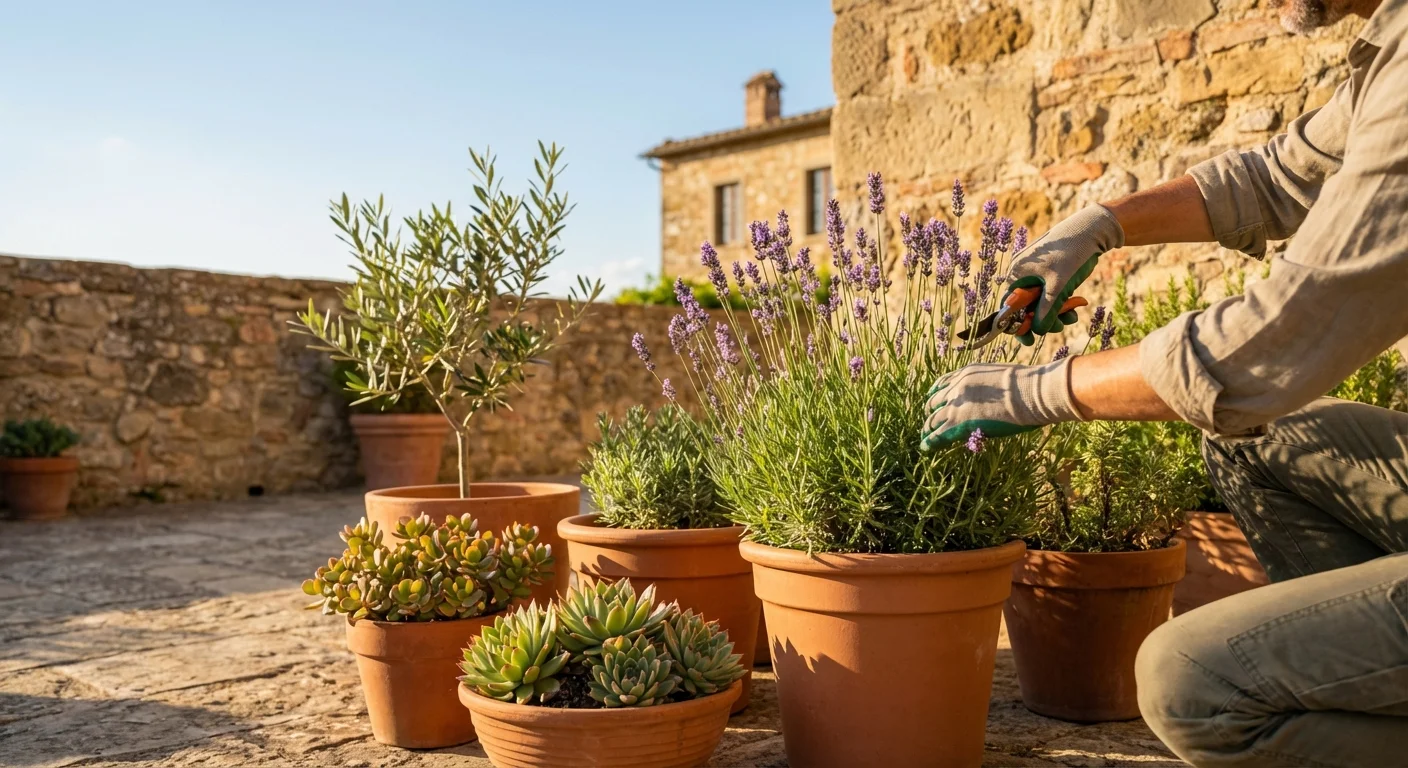
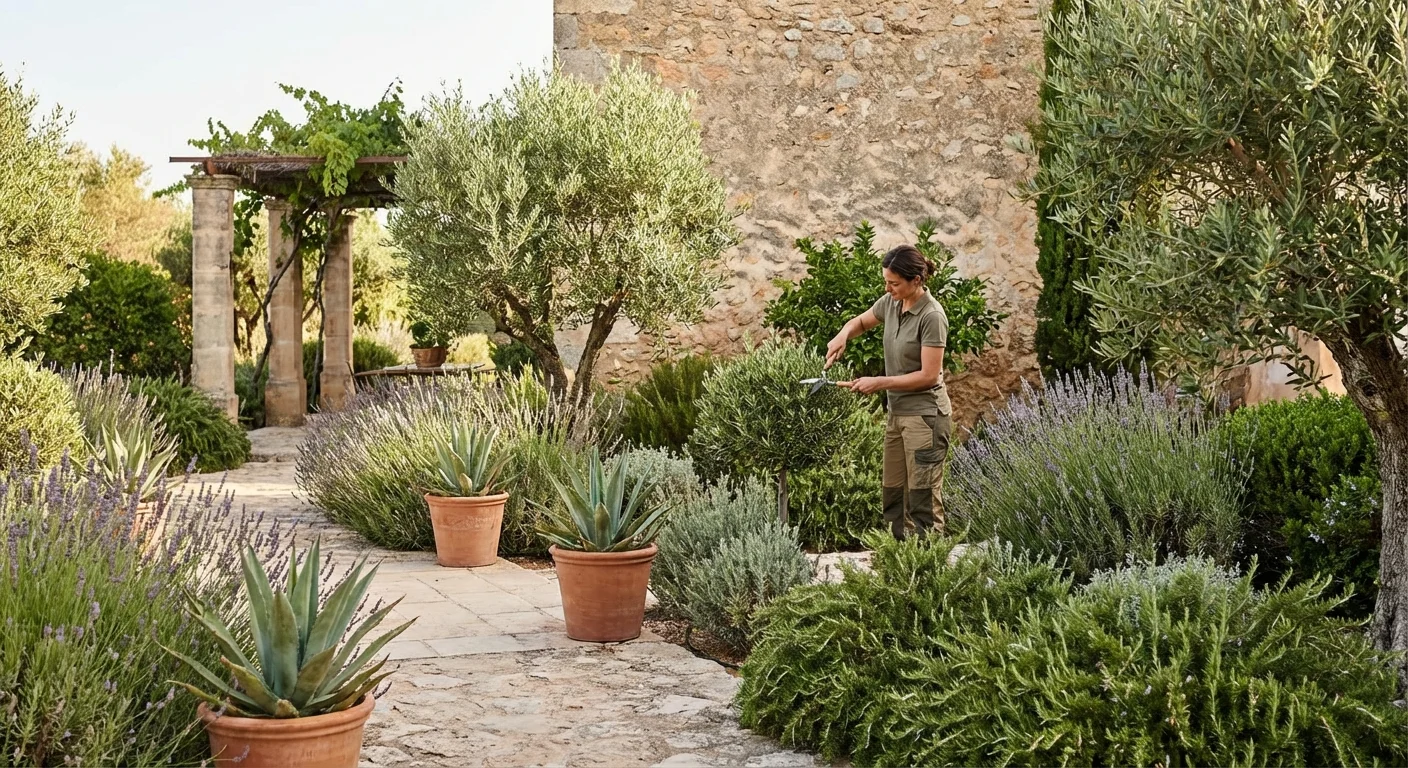
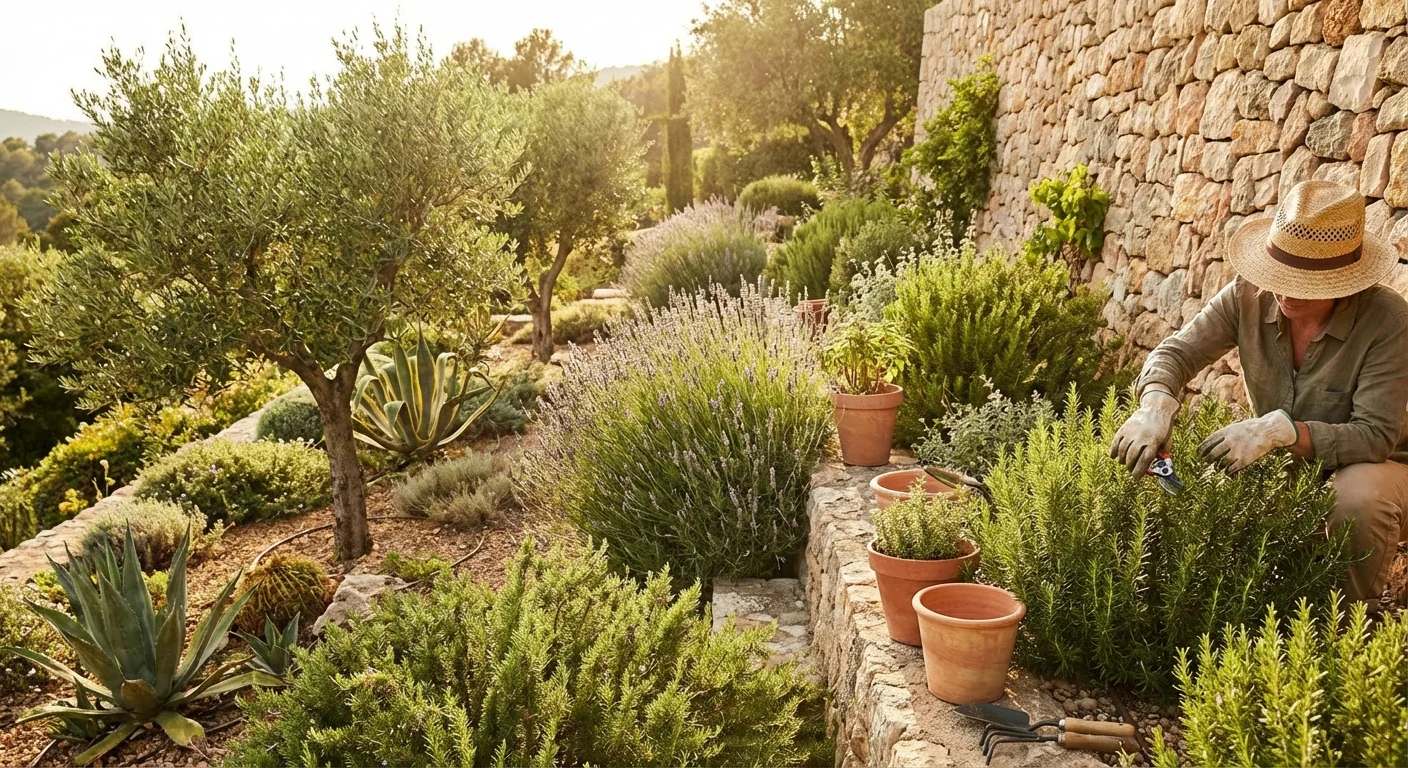
Hoewel het in de zomer kurkdroog is, kunnen de winterregens aan de Costa Blanca zeer intens zijn. Mediterrane planten zoals olijfbomen, lavendel en oleanders haten “natte voeten”. Zorg er bij het onderhoud altijd voor dat de drainage optimaal blijft. Voeg grind of grof zand toe aan de plantgaten om te voorkomen dat de wortels gaan rotten tijdens de natte maanden. Op hellende percelen, die in heuvelachtige plaatsen als Altea en Jávea veel voorkomen, helpt het aanleggen van terrassen en stapelmuurtjes om wateroverlast en bodemerosie tegen te gaan.
Mulchen: de redder in nood
Een van de belangrijkste taken bij tuinonderhoud in een mediterraan klimaat is mulchen. Door een laag organisch materiaal (zoals boomschors, stro of houtsnippers) of anorganisch materiaal (zoals grind of kiezels) rond de planten aan te brengen, bereikt u drie doelen tegelijk:
- Moisture retention: het voorkomt dat water direct uit de bodem verdampt onder de Spaanse zon.
- Temperature regulation: het houdt de wortels koeler tijdens de hittegolven van juli en augustus.
- Weed suppression: minder onkruid betekent minder concurrentie om het schaarse water, en dus minder werk voor u.
2. Watermanagement en irrigatie: slimmer, niet meer
Water is het “vloeibare goud” in een mediterraan klimaat. Effectief tuinonderhoud in een mediterraan klimaat staat of valt bij de manier waarop u omgaat met irrigatie. Aan de Costa Blanca is water bovendien kostbaar en in sommige gemeenten gelden tijdens droge zomers waterbeperkingen, dus zuinig en doordacht watergeven is niet alleen goedkoper maar soms ook verplicht.
Diep en onregelmatig water geven
De grootste fout die veel tuiniers maken, is elke dag een klein beetje water geven. Dit stimuleert oppervlakkige wortelgroei, waardoor planten juist kwetsbaarder worden voor hitte. Geef in plaats daarvan één of twee keer per week een flinke hoeveelheid water. Hierdoor dringt het vocht diep de grond in, wat de planten dwingt om diepe wortelsystemen te ontwikkelen die bestand zijn tegen droogte. Eenmaal goed geworteld, redt een mediterrane tuin zich opvallend lang zonder bijsproeien.
Druppelsysteem: bijna onmisbaar
Voor efficiënt tuinonderhoud in een mediterraan klimaat is een druppelsysteem bijna onmisbaar. Het brengt water rechtstreeks bij de wortels, minimaliseert verdamping en voorkomt dat de bladeren nat worden (wat onder de warme zon schimmelziektes kan veroorzaken). Combineer het druppelsysteem met een programmeerbare timer, dan loopt uw irrigatie ook door wanneer u zelf in België, Nederland, Duitsland of Frankrijk verblijft. Veel tweede-verblijfeigenaars laten zo’n geautomatiseerd systeem aanleggen en laten de werking ervan tijdens hun afwezigheid controleren door een vaste onderhoudspartner.
Het beste tijdstip om water te geven
Geef altijd water in de vroege ochtend of de late avond. Water geven op het heetst van de dag is pure verspilling: tot wel 30% van het water kan verdampen voordat het de wortels bereikt. De vroege ochtend heeft licht de voorkeur, omdat de planten dan de hele dag profiteren van het vocht en het blad voor de avond weer opdroogt, wat schimmel voorkomt.
3. Droogtebestendige beplanting en hun onderhoud
De juiste plantkeuze is het halve werk. Wie kiest voor droogtebestendige, inheemse en aangepaste soorten, bespaart enorm op water én op onderhoudstijd. Elke plantengroep heeft eigen behoeften als het gaat om tuinonderhoud in een mediterraan klimaat. Hieronder de belangrijkste categorieën voor de Costa Blanca.
Olive trees (Olea europaea)
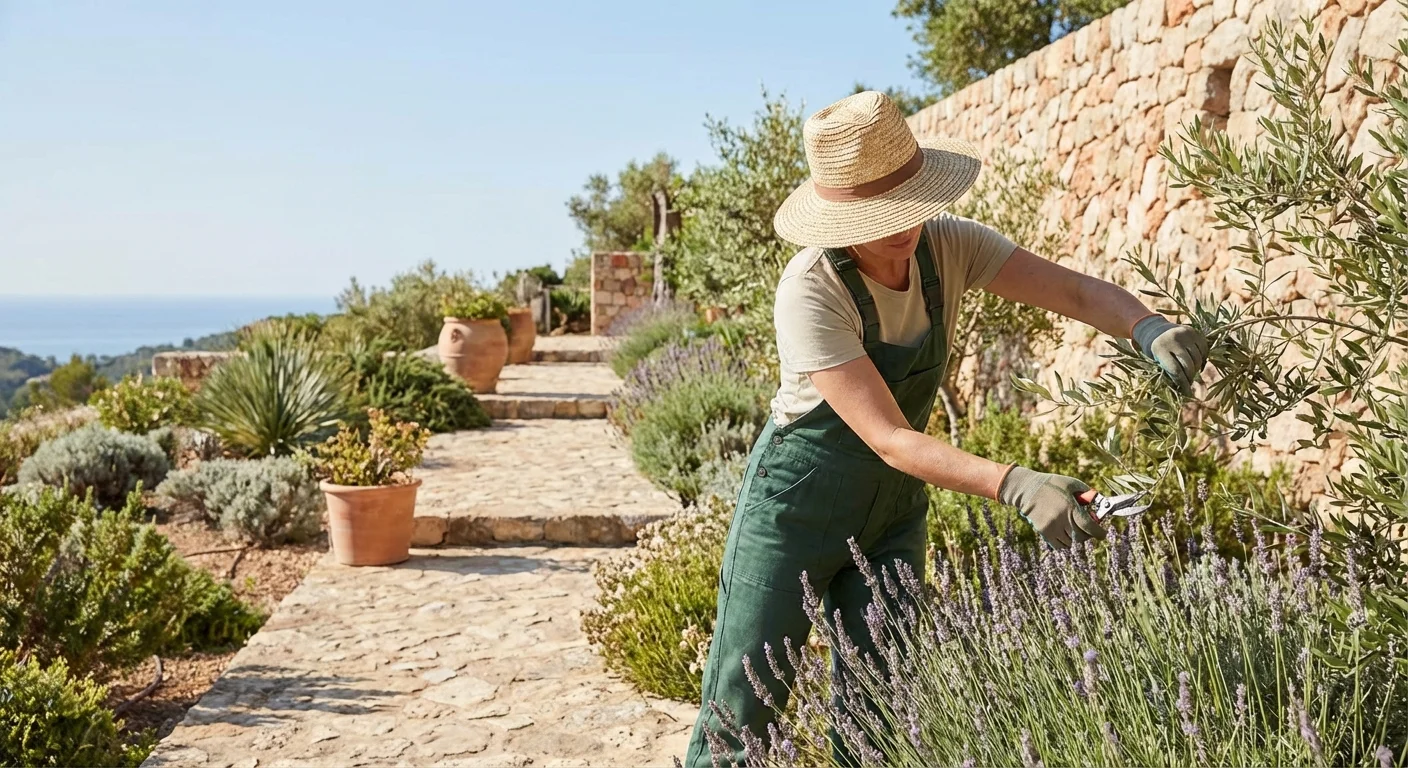
Olijfbomen zijn het iconische symbool van de Spaanse tuin, maar vragen specifiek onderhoud. Snoei ze in het vroege voorjaar, nadat de kans op vorst voorbij is. Verwijder “waterlot” (snelgroeiende verticale takken) en zorg dat het hart van de boom open blijft, zodat zonlicht en lucht overal bij kunnen. Een volwassen olijfboom is extreem droogtebestendig en heeft, eenmaal gevestigd, nauwelijks extra water nodig.
Palmbomen
Palmen geven uw tuin direct een subtropische uitstraling en zijn goed bestand tegen hitte. Het onderhoud bestaat vooral uit het verwijderen van dode bladeren en het bewaken van de gezondheid van de stam. Let goed op de gevreesde palm-snuitkever (Rhynchophorus ferrugineus), die in Zuid-Europa hele palmbomen kan verwoesten. Preventieve behandeling en tijdige signalering zijn hier essentieel.
Cactussen en vetplanten
Cactussen, agaves en andere vetplanten zijn de ultieme keuze voor wie waterbesparing en minimaal onderhoud zoekt. Ze slaan vocht op in hun bladeren en stammen en overleven moeiteloos lange droogteperiodes. Het enige waar u op moet letten is een goed doorlatende, droge bodem, want stilstaand water is hun grootste vijand. Voor een afwezige eigenaar zijn dit ideale planten: ze overleven probleemloos weken zonder zorg.
Mediterrane kruiden: lavendel, rozemarijn en tijm
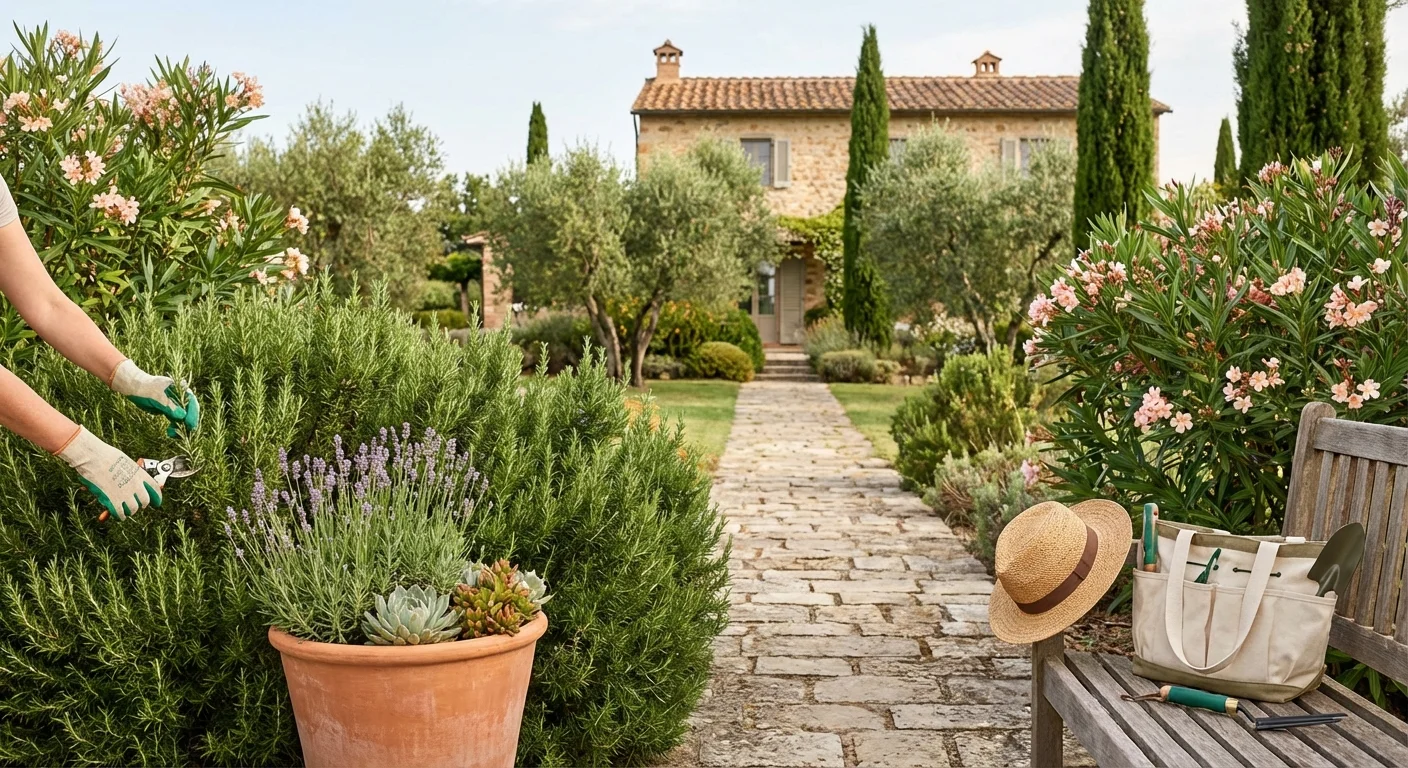
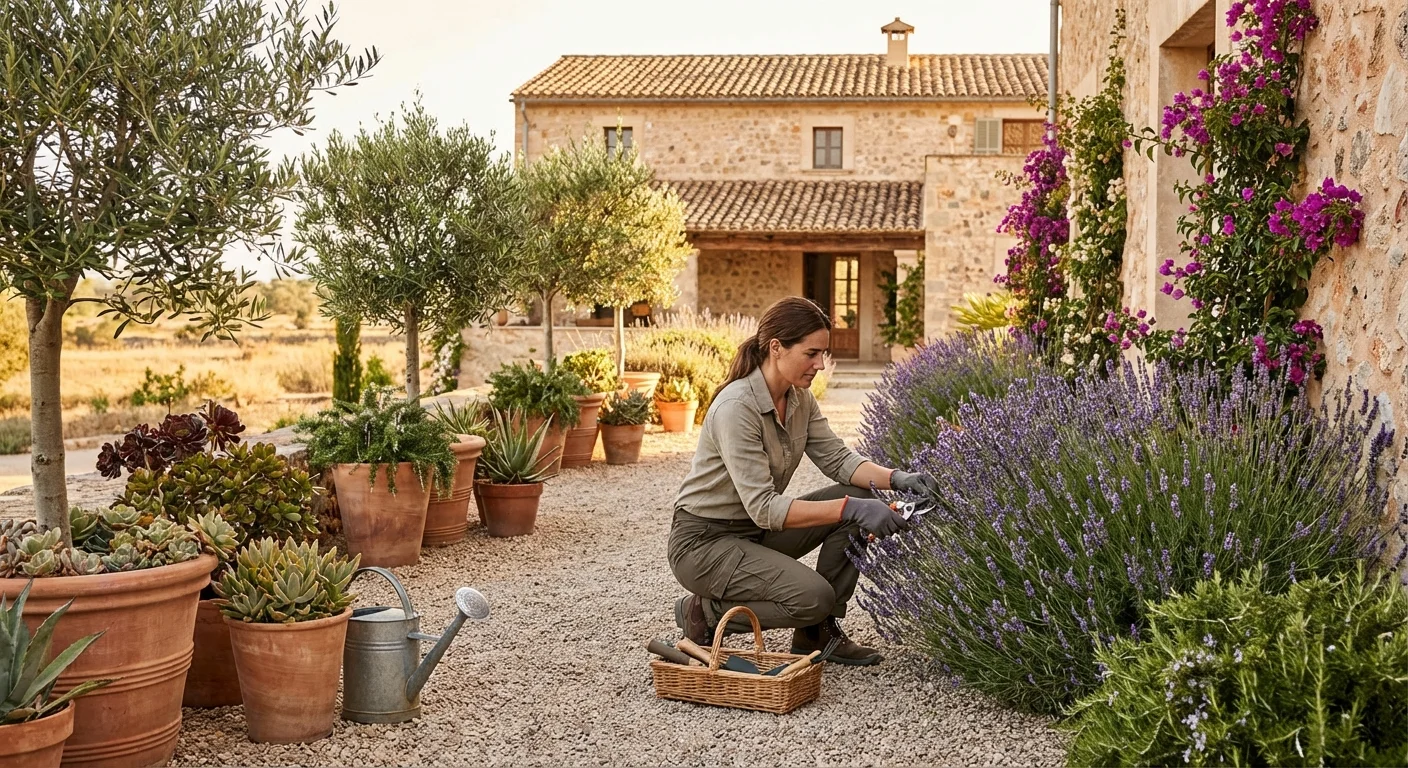
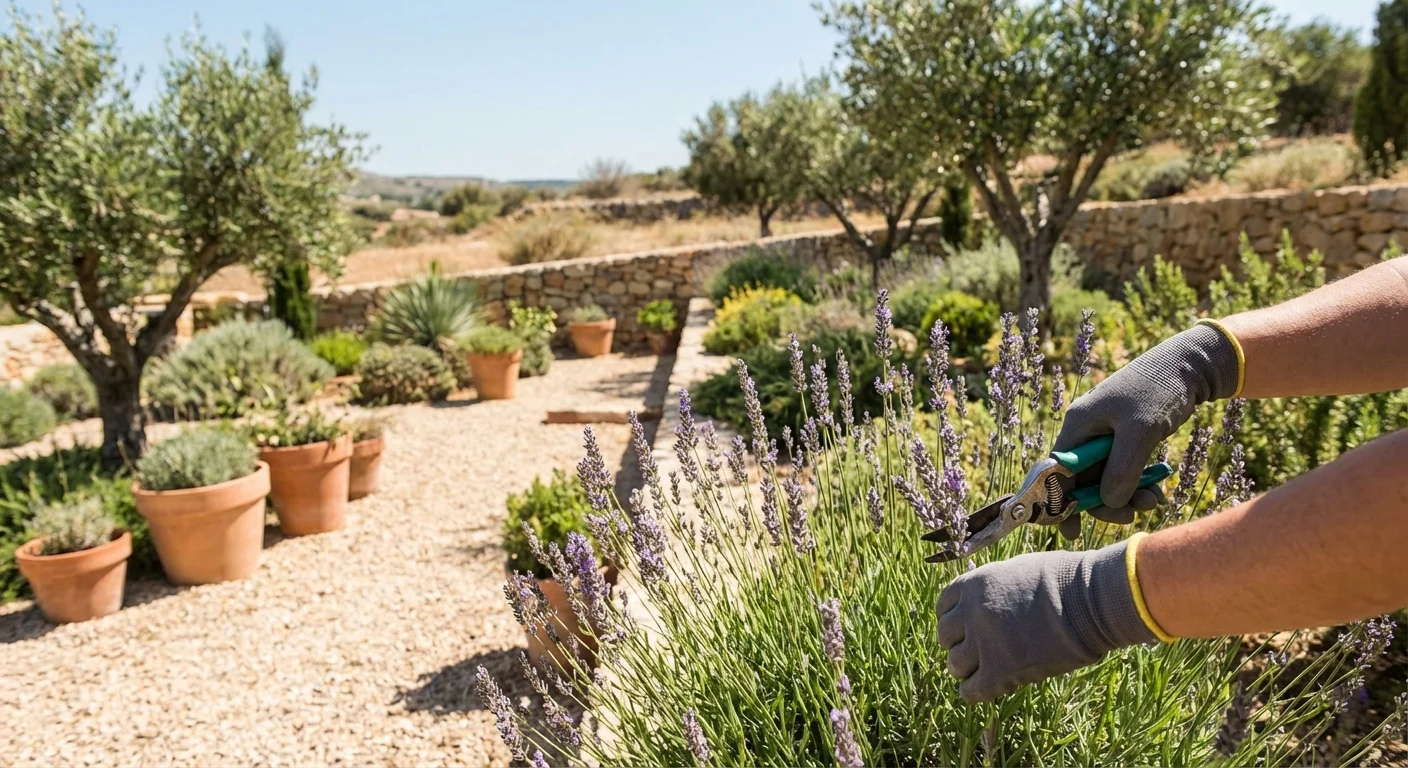
Deze kruidachtige struiken houden van zon en arme grond en geven uw tuin geur en kleur. Het belangrijkste onderhoud is de snoei na de bloei. Knip ze terug om te voorkomen dat ze aan de onderkant “verhouten”, maar knip nooit in het oude, kale hout, want daar lopen ze vaak niet meer op uit. Lavendel, rozemarijn en tijm zijn bovendien uitstekende droogtebestendige bodembedekkers die weinig water vragen.
Citrus trees
Citroen- en sinaasappelbomen zijn een lust voor het oog, maar het zijn hongerige planten. In tegenstelling tot veel andere mediterrane soorten hebben ze regelmatig bemesting nodig met een specifieke citrusvoeding die rijk is aan stikstof en ijzer. Let bij het onderhoud ook goed op witte vlieg en schildluis, die veel voorkomen in warme klimaten. Citrus heeft tijdens de zomer iets meer water nodig dan een olijf of cactus.
Bougainvillea
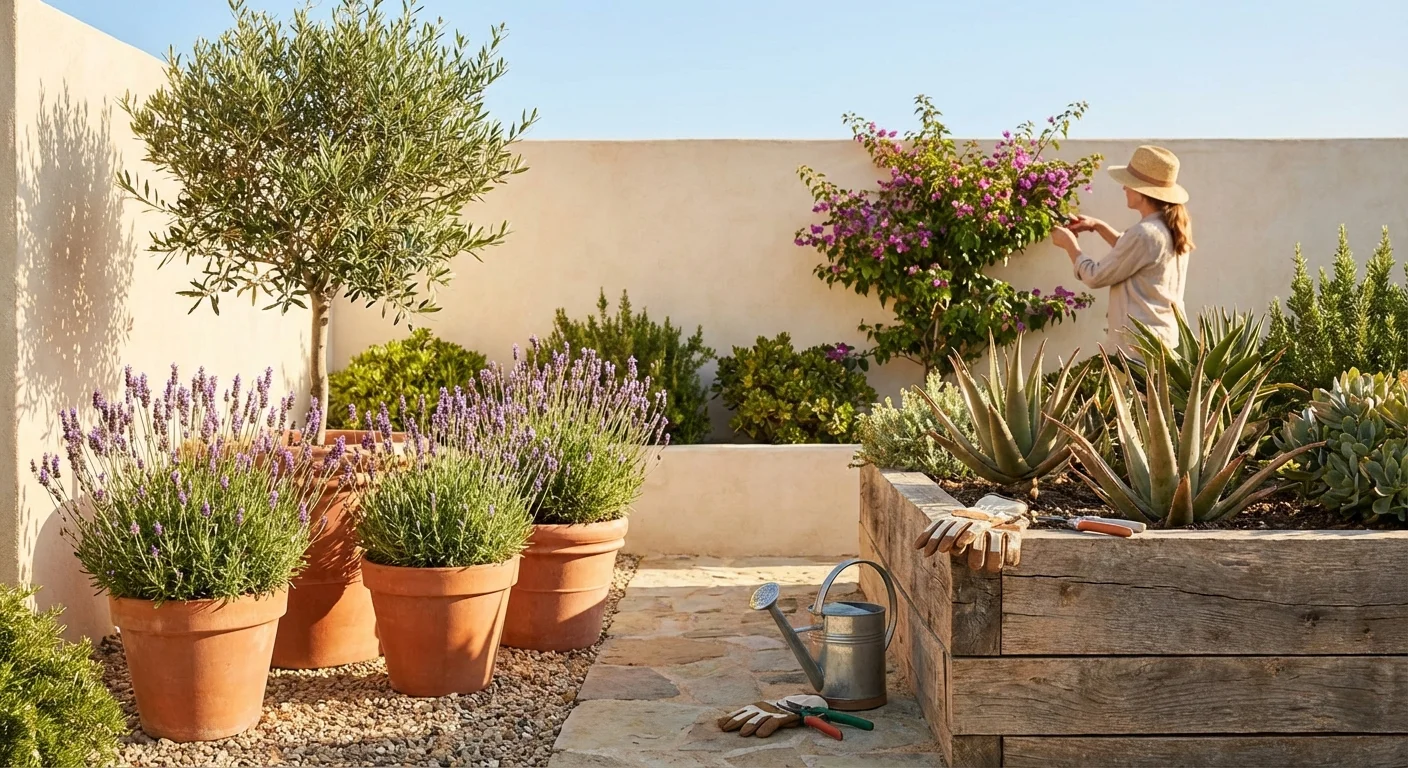
Deze klimplant zorgt voor de spectaculaire paarse en roze kleuren die u langs zoveel Spaanse gevels ziet. Het onderhoud bestaat vooral uit het in toom houden van de krachtige groei. Snoei de plant hard terug in de winter of het vroege voorjaar om een uitbundige bloei in de zomer te stimuleren.
4. Snoeien in de mediterrane tuin
Snoeien is een essentieel onderdeel van tuinonderhoud in een mediterraan klimaat, maar de timing is anders dan in het noorden. In een klimaat waar planten vrijwel het hele jaar door kunnen groeien, moet u oppassen dat u niet snoeit vlak voor een hittegolf. Verse snoeiwonden drogen onder de felle zon snel uit en kosten de plant onnodig energie en vocht.
Wanneer snoeien?
- Winter en vroeg voorjaar: voor de meeste bomen en bladverliezende struiken, waaronder olijf- en fruitbomen.
- After flowering: voor voorjaarsbloeiende struiken zoals cistusrozen en de mediterrane kruiden.
- Niet in de hoogzomer: vermijd zware snoei tijdens de heetste maanden, omdat de plant dan al onder stress staat door de droogte en de wonden extra uitdroging veroorzaken.
5. Gazon, grind of xeriscaping?
Een groen gazon onderhouden is vaak het lastigste en meest waterverslindende onderdeel van tuinonderhoud in een mediterraan klimaat. Traditionele Noord-Europese grassoorten verbranden snel onder de Spaanse zon en vragen voortdurend water. Veel tweede-verblijfeigenaars staan daarom voor de keuze: een klassiek gazon, een onderhoudsarm grindterras of volledige xeriscaping.
Kies de juiste grassoort
Wilt u toch een grasveld, kies dan voor warmteminnende soorten zoals Cynodon dactylon (Bermuda grass) or Zoysia. Deze grassen gaan tijdens koude periodes in ruststand (worden bruin), maar blijven groen en vitaal bij extreme hitte en met weinig water. Ze zijn veel beter bestand tegen het Costa Blanca-klimaat dan Engels raaigras.
Cutting height
Stel uw grasmaaier hoger in. Langer gras werpt schaduw op de bodem, waardoor de wortels koeler blijven en de grond minder snel uitdroogt. Zo bespaart u water én voorkomt u verbrande, kale plekken.
Grind en xeriscaping als alternatief
In veel gevallen is het verstandiger om het gazon (deels) te vervangen door droogtebestendige bodembedekkers zoals Thymus serpyllum (kruiptijm), of door een sfeervol grindterras met siergrassen, vetplanten en stapelmuurtjes. Deze aanpak, bekend als xeriscaping, vermindert de intensiteit van het tuinonderhoud in een mediterraan klimaat aanzienlijk. Door inheemse planten zoals steeneik, mastiekboom en wilde kruiden te combineren met grind en steen, creëert u een ecosysteem dat zichzelf grotendeels in stand houdt. Dat bespaart niet alleen water, maar ook enorm veel tijd, wat ideaal is voor een woning die u maar een deel van het jaar bewoont.
6. Waterbesparing in de praktijk
Waterbesparing is aan de Costa Blanca niet alleen goed voor uw portemonnee, maar ook voor het milieu en de lokale watervoorraad. Naast druppelirrigatie, mulchen en droogtebestendige beplanting kunt u nog meer doen om uw waterverbruik laag te houden:
- Vang regenwater uit de intense winterbuien op in tanks of een waterput voor gebruik in het droge seizoen.
- Groepeer planten met dezelfde waterbehoefte bij elkaar (zogenoemde “hydrozones”), zodat u niet de hele tuin op het ritme van de dorstigste plant moet bewateren.
- Gebruik een vochtsensor of slimme timer, zodat het irrigatiesysteem niet onnodig draait na een regenbui.
7. Plagen en ziektes onder controle houden
De warmte van een mediterraan klimaat is niet alleen fijn voor planten, maar ook voor ongedierte. Effectief tuinonderhoud in een mediterraan klimaat betekent dat u (of uw onderhoudspartner) regelmatig controleert op:
- Wolluis en schildluis: vaak te vinden op citrusbomen en oleanders.
- Red spider mite: gedijt bij droge hitte. Verhoog de luchtvochtigheid rond de plant of gebruik biologische bestrijdingsmiddelen.
- Palm weevil: een ernstige bedreiging voor palmbomen in Zuid-Europa. Preventieve behandeling en regelmatige controle zijn hier vaak noodzakelijk.
Juist bij een tweede verblijf is regelmatige controle belangrijk: een plaag die u tijdens uw afwezigheid niet opmerkt, kan binnen enkele weken grote schade aanrichten. Een vaste verzorger die periodiek langskomt, signaleert problemen voordat ze uit de hand lopen.
8. Seizoenskalender voor tuinonderhoud aan de Costa Blanca
Om u te helpen bij het plannen van uw tuinonderhoud in een mediterraan klimaat, volgt hier een beknopt overzicht per seizoen.
Voorjaar (maart – mei)
This is the busiest time. The ground is still damp from the winter rains and temperatures are rising.
- Plant nieuwe bomen en struiken zodat ze kunnen wortelen voordat de hitte komt.
- Start fertilising.
- Controleer het irrigatiesysteem op lekken en stel de timer in voor het zomerseizoen.
Zomer (juni – augustus)
The focus is now on survival and retention.
- Monitor de watergift nauwgezet en geef alleen in de vroege ochtend of late avond.
- Vernieuw de mulchlaag waar nodig.
- Remove spent flowers (deadheading) to encourage continued flowering.
Najaar (september – november)
The second “growing period” starts when the first rains fall.
- Ideale tijd voor het planten van bloembollen en nieuwe vaste planten.
- Great pruning for hedges and fast-growing plants.
- Verbeter de bodem met compost.
Winter (december – februari)
Een relatieve rustperiode, maar niet zonder taken.
- Bescherm vorstgevoelige planten (zoals jonge bougainvillea) met vliesdoek; in het binnenland van de Costa Blanca kan het ‘s nachts licht vriezen.
- Prune olive and fruit trees.
- Reinig het gereedschap en plan de tuin voor het volgende jaar.
9. Uitbesteden: tuinonderhoud en sleutelbeheer voor afwezige eigenaars
Voor de meeste eigenaars van een tweede verblijf is dit het kernpunt: u bent een groot deel van het jaar niet in Spanje, terwijl de tuin gewoon doorgroeit, de irrigatie blijft draaien en plagen zich niet aan uw vakantieplanning houden. Een prachtige mediterrane tuin die maandenlang aan zijn lot wordt overgelaten, verwildert snel, en een vergeten lekkende leiding of een stille palm-snuitkever kan onaangename verrassingen opleveren bij thuiskomst.
Daarom kiezen veel Belgen, Nederlanders, Duitsers en Fransen ervoor om hun tuinonderhoud uit te besteden aan een professionele partner, vaak gecombineerd met maintenance and key management. Zo’n partner verzorgt het snoeien, bewateren en controleren van uw tuin, houdt het zwembad en de woning in de gaten en is uw lokale aanspreekpunt bij calamiteiten. In ons artikel over de advantages of professional key management leest u uitgebreid hoe dit in zijn werk gaat en wat het u aan zorgen bespaart.
Wie de woning bovendien wil verhuren aan vakantiegasten, heeft helemaal baat bij een verzorgde tuin: een goed onderhouden buitenruimte verhoogt de verhuuropbrengst en de beoordelingen aanzienlijk. Een aantrekkelijk terras met olijfbomen, bougainvillea en een sfeervol grindgedeelte is een sterke troef in de concurrerende vakantieverhuurmarkt van de Costa Blanca.
Veelgemaakte fouten bij tuinonderhoud in een mediterraan klimaat
Zelfs ervaren tuiniers gaan de mist in als ze van een gematigd naar een warmer klimaat verhuizen. Vermijd deze valkuilen:
- Too much fertiliser: overmatige bemesting in de zomer dwingt planten tot nieuwe groei die ze door watertekort niet kunnen ondersteunen.
- Wrong plant choice: planten uit gematigde streken (zoals hortensia’s of een gazon van Engels raaigras) proberen te behouden in de volle mediterrane zon.
- De bodem negeren: denken dat de harde, droge grond geen aandacht nodig heeft.
- Elke dag een beetje sproeien: dit maakt planten juist kwetsbaarder in plaats van weerbaarder.
How we can help you
Bij Investeer in Spanje begeleiden wij dagelijks kopers uit België, Nederland, Duitsland en Frankrijk bij elke stap van hun avontuur aan de Costa Blanca, van de aankoop tot het zorgeloze beheer daarna. Ons team staat onder leiding van vastgoedexpert en CEO Kenzo Fayot en kent de lokale markt, de Spaanse regelgeving en de praktische kanten van het bezitten van een tweede verblijf door en door. Of u nu nog op zoek bent naar de juiste woning via onze property services, advies wilt over het rendement van vakantieverhuur, of gewoon wilt dat uw tuin en woning tijdens uw afwezigheid in goede handen zijn: wij ontzorgen u van begin tot eind.
Wilt u weten hoe wij uw tuin, woning en investering aan de Costa Blanca het hele jaar door in topconditie houden? Please feel free to contact us, with no obligation en wij denken graag met u mee over een aanpak die bij uw situatie past.
Veelgestelde vragen over tuinonderhoud in een mediterraan klimaat
Welke planten zijn het meest droogtebestendig voor een tuin aan de Costa Blanca?
Olijfbomen, palmen, cactussen en vetplanten (zoals agave), en mediterrane kruiden als lavendel, rozemarijn en tijm zijn uitstekend bestand tegen droogte. Deze soorten hebben, eenmaal goed geworteld, weinig tot geen extra water nodig en zijn ideaal voor wie waterbesparing en minimaal onderhoud zoekt, zeker bij een tweede verblijf dat niet permanent bewoond wordt.
Wat is het beste tijdstip om water te geven in een mediterraan klimaat?
Geef altijd water in de vroege ochtend of de late avond, bij voorkeur de vroege ochtend. Op het heetst van de dag verdampt tot 30% van het water voordat het de wortels bereikt. Geef bovendien liever één of twee keer per week een flinke hoeveelheid dan dagelijks een beetje, zodat de planten diepe, droogtebestendige wortels vormen.
Is een gazon of grind beter voor een Spaanse tuin?
Voor de meeste tweede-verblijfeigenaars is grind of xeriscaping praktischer dan een klassiek gazon. Een grasveld verbruikt veel water en vraagt regelmatig onderhoud, terwijl een grindterras met droogtebestendige beplanting en bodembedekkers nagenoeg zelfvoorzienend is. Wilt u toch gras, kies dan voor warmtebestendige soorten zoals Bermudagras of Zoysia.
Hoe wordt mijn tuin onderhouden als ik er een groot deel van het jaar niet ben?
De meeste afwezige eigenaars schakelen een professionele onderhoudspartner in, vaak in combinatie met sleutelbeheer. Die verzorgt het snoeien, bewateren, controleren op plagen en het algemene beheer van tuin en woning, zodat u bij terugkomst niet voor verrassingen staat. Wij verzorgen dit via onze dienst onderhoud en sleutelbeheer aan de Costa Blanca.
Wanneer kan ik het beste snoeien in een mediterraan klimaat?
Snoei de meeste bomen en struiken, waaronder olijf- en fruitbomen, in de winter of het vroege voorjaar. Voorjaarsbloeiers snoeit u na de bloei. Vermijd zware snoei in de hoogzomer: de plant staat dan al onder droogtestress en verse snoeiwonden drogen onder de felle zon snel uit, wat de plant extra verzwakt.