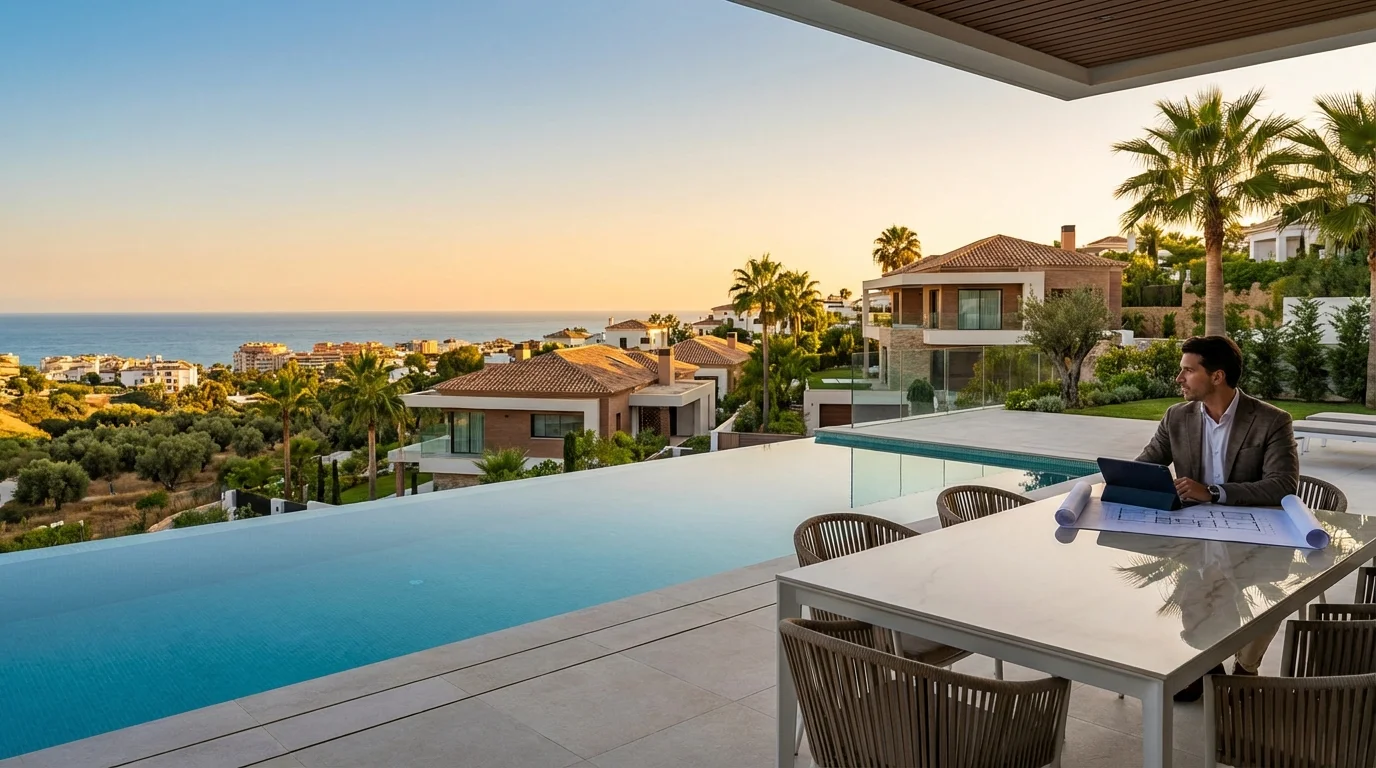
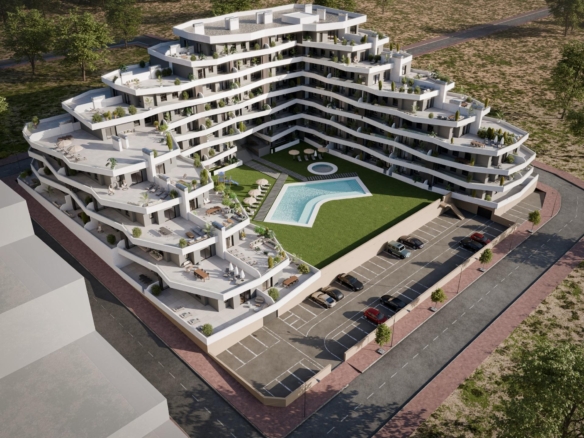
The key property trends in Spain for 2026 point to a maturing market in which sustainable, energy-efficient new-build properties, the extensive digitalisation of the purchasing process and sustained demand from international buyers are setting the tone. For investors based in Belgium, the Netherlands, Germany or France, this means that quality, energy efficiency and location are becoming more important than ever. The Costa Blanca remains our core area: a region that combines affordability, accessibility and a mild climate with a steadily growing demand for second homes and rental properties.
The market in 2026 feels different from that of a few years ago. Whereas attention used to focus mainly on volume and price, modern buyers now look at the overall quality of life a property offers: its energy rating, smart technology, proximity to amenities and the project’s future-proofing. The shifts outlined below are at the heart of what investors can expect this year.
- An undeniable shift towards sustainable, energy-efficient new-build properties with high energy ratings.
- Further digitisation of the entire purchasing process for overseas buyers.
- Growing interest in emerging regions and secondary coastal towns outside the well-known hotspots.
- Stable demand from international buyers seeking comfort, returns and security.

Key real estate trends Spain for 2026
The Spanish property market is on the cusp of a quiet but fundamental transformation, in which digitalisation and sustainability are taking centre stage. Anyone assessing the developments leading up to 2026 will see a market that has matured and is now focused on the needs of the modern, international investor. The emphasis is shifting from construction volume to the quality of the living environment and technological integration. Investors who anticipate these shifts will benefit from a market that is more stable and transparent, underpinned by consistent demand for both holiday homes and permanent residences.
Buyers have become more discerning when it comes to energy efficiency and connectivity. Within the European market, Spain retains a unique position thanks to its favourable climate and a lifestyle that remains affordable, certainly when compared with Northern Europe. At the same time, we are seeing a rise in popularity of regions that previously flew under the radar but are now more accessible thanks to improved infrastructure and faster transport links. This diversification is creating a healthier market balance, with the pressure on traditional luxury destinations such as Ibiza being partly alleviated by emerging areas. For the serious investor, this means that the horizon can be broadened to find the best balance between price and return. Anyone wishing to understand the broader context will find in our analysis of the best regions for property investment a useful guide.
The rise of sustainability and green certifications
For new-build projects in sunny Spain, sustainability has evolved from a selling point to a fundamental requirement. By 2026, we expect homes with a high energy rating and eco-friendly building materials to retain their value better than older properties. Both the government and consumers are imposing stricter requirements regarding the environmental footprint. Property developers are therefore investing in solar panels, heat pumps and high-quality insulation to meet the demand for environmentally friendly housing solutions. For those torn between a new or an older property, it is worth weighing up the pros and cons of new-build and existing properties to do it carefully.
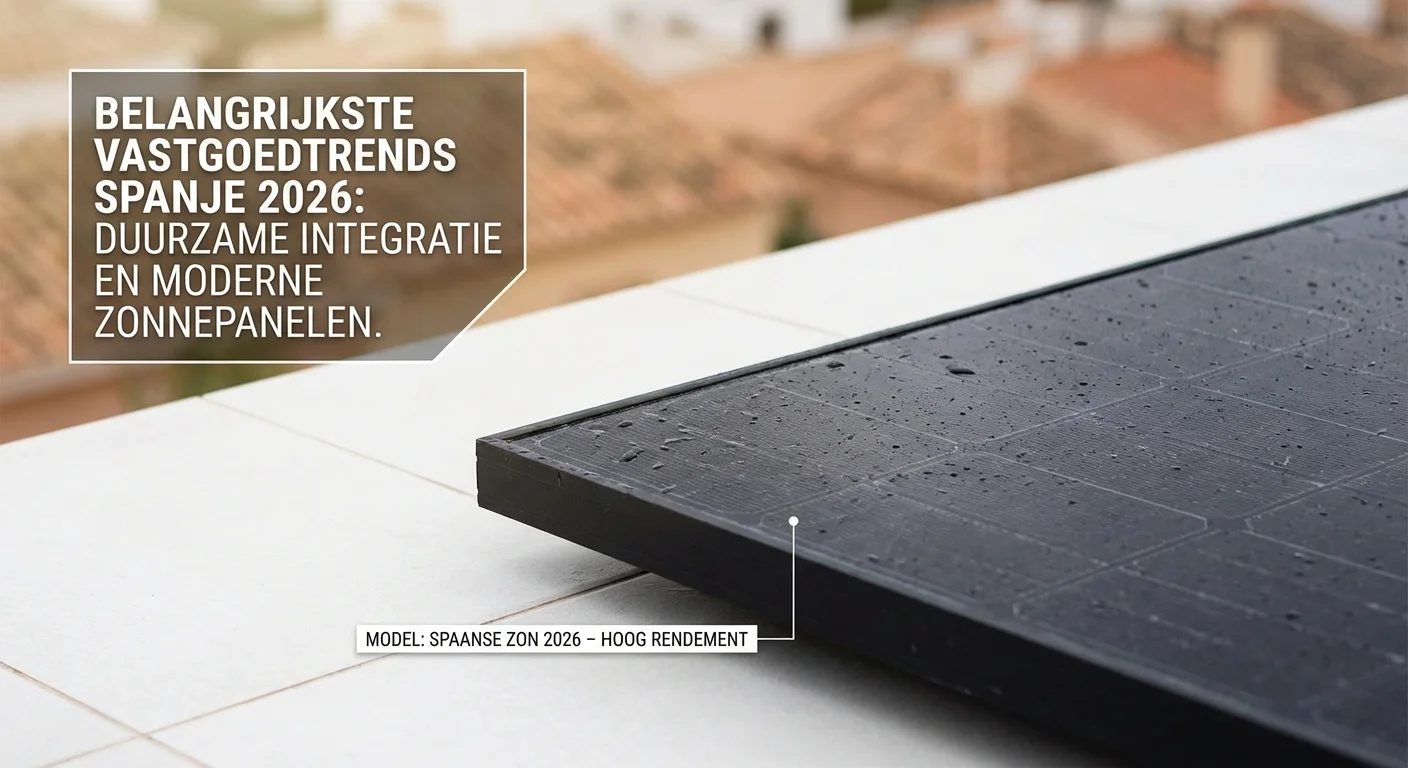
This green transition is essential for ensuring your investment is future-proof. An energy-efficient home is not only more pleasant to live in, but also easier to let out and sell.
By 2026, the integration of renewable energy sources and smart water management systems will increasingly determine the market value of Spanish property, with buyers willing to pay a premium for comfort and independence from the traditional energy grid.
Alongside the environmental aspect, social sustainability also plays a role. We are seeing a shift towards ‘community living’, centred around shared facilities and green spaces. This fosters social cohesion and increases the appeal for digital nomads, expats and retirees from Belgium, the Netherlands, Germany and France. The following elements have now become characteristic of modern property developments:
- High-quality thermal insulation for comfort in both summer and winter.
- Advanced home automation for remote energy management.
- Use of local, sustainable building materials.
- Incorporating electric vehicle charging points into new projects.
Anyone considering an investment would be well advised to familiarise themselves with the tax rules that apply to a purchase. A clear understanding of the Property taxes in Spain for 2026 avoids any surprises. A point to bear in mind for the Comunidad Valenciana, which includes the Costa Blanca: the transfer tax (ITP) For existing properties valued at up to one million euros, the rate will fall from 10% to 9% with effect from 1 June 2026. For existing properties, you should generally expect additional buyer’s costs of around 10 to 15% on top of the purchase price; for new-build homes, you pay 10% IVA plus stamp duty (AJD).
The digitisation of the property purchase process is an irreversible trend that greatly improves accessibility. Virtual viewings, online property files and digital signatures are becoming the norm, thereby lowering the barrier to entry for international buyers who are not physically present. The combination of technological progress, sustainability and a shifting geographical focus will make Spain one of Europe’s most exciting property markets by 2026.
Popular and up-and-coming regions for property investment
The dynamics of the Spanish market are constantly changing, with certain areas emerging as frontrunners. The focus is shifting from mass-tourism destinations to locations that offer a balance between quality of life, infrastructure and sustainable growth. Identifying these growth centres is essential for a stable return, which for a well-let holiday home typically ranges from 4 to 7% net per year.
Investors are increasingly looking for areas with high occupancy rates outside the peak season in order to spread their risk. This is precisely why the Costa Blanca remains so attractive: the influx of winter visitors, expats and digital nomads ensures that demand is spread throughout the year.
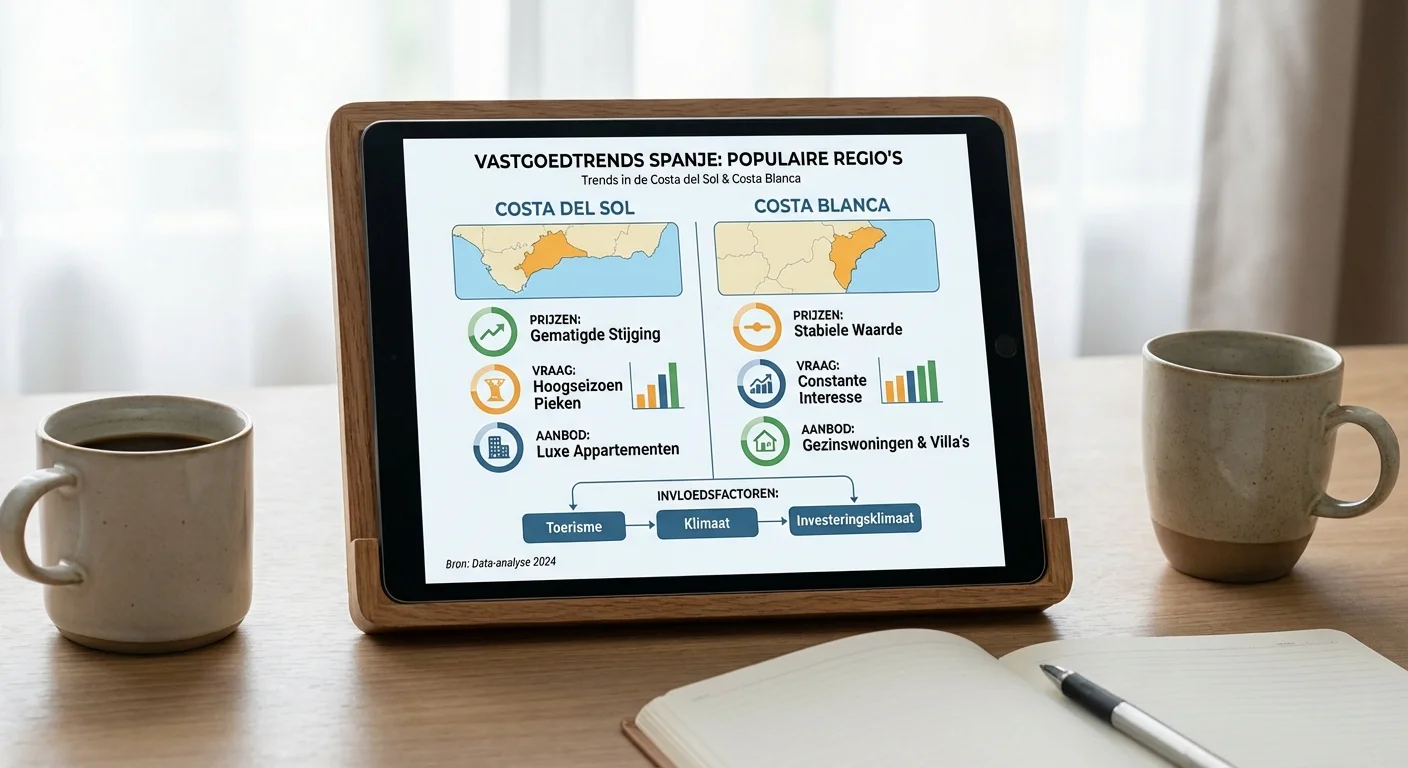
Northern and Southern Costa Blanca: our core area
The Costa Blanca is and remains our core area, with a clear distinction between the north and the south. In the north, towns such as Dénia, Jávea, Altea and Moraira offer a greener, more exclusive atmosphere, attracting an international clientele who value privacy, nature and quality. The south, with Torrevieja, Orihuela Costa and Pilar de la Horadada, is characterised by lower entry prices, a wide range of properties and a strong rental market. Investors here benefit from affordability combined with stable rental income, partly thanks to the excellent links to Alicante Airport.
For those looking for the luxury segment, Ibiza remains in a league of its own, where exclusivity and scarcity drive up prices. Spain’s strength lies precisely in that diversity: from an affordable flat on the south coast to a high-end villa in the north or on the Balearic Islands. A good estate agent in Spain helps you choose the area that best suits your profile and objectives.
The shift towards hybrid working has permanently transformed the Spanish property market: for many buyers, proximity to an airport and high-speed internet are now just as important as a sea view.
The rise of secondary cities and coastal areas
Alongside the well-known destinations, secondary towns and coastal areas are gaining ground. This is one of the more interesting developments in the market: areas where land prices are more favourable and which are on the cusp of further growth in tourism and residential development. Demand for sustainable homes with a high energy rating is growing at an above-average rate in these regions, driven by environmentally conscious buyers who are getting in early before prices rise further.
It is worth checking the local regulations for each autonomous region before proceeding with a purchase, particularly the rules governing holiday lettings. A timely rental licence in Spain After all, it determines whether you are legally permitted to let your property as a holiday home, and thus a significant part of your return on investment.
Key factors to consider when choosing a region
When assessing a region, it is advisable to consider the following aspects:
- The presence of international schools and hospitals.
- Planned infrastructure projects, such as new roads or rail links.
- Local restrictions on short-term lettings and tourist licences.
- Demographic trends and the growth of local employment.
By anticipating these shifts, you can position yourself optimally in a market that promises both stability and growth. A thorough How to approach your property investment in Spain It starts with choosing the right region.
The impact of sustainability and digitalisation on the housing market
Modern buyers in Spain look beyond location and hours of sunshine; the focus has shifted to technological innovation and the carbon footprint. Energy efficiency has become a fundamental requirement for new-build projects along the coastlines and in the major cities. Property developers are incorporating solar panels, high-quality insulation and smart thermostats as standard to comply with European regulations and meet the demand from environmentally conscious investors who value a sustainable future.
The role of PropTech and digital viewings
Digitalisation has radically changed the way people search for and buy homes, with virtual reality and 3D tours increasingly becoming the norm.

Thanks to advanced software, international buyers can inspect properties without being physically present, which speeds up the buying process. This development is creating a more transparent market in which data analysis helps to determine a fair price. Digital signatures and online legal support also make it possible to complete transactions more efficiently. Nevertheless, a thorough legal control of real estate in Spain indispensable: technology speeds up the process, but it is no substitute for a thorough check of ownership, debts and licences.
The combination of green energy and digital accessibility is playing an increasingly important role in determining the competitive position of Spanish property on the international market.
Sustainability as a driver for value retention
Properties with a high energy rating retain their value better and are easier to let in a challenging market. Anyone wishing to invest wisely can focus on Search for property in Spain which meets modern sustainability standards. The government is encouraging this transition by providing grants for renovations that improve energy performance, which gives the market a further boost.
- Installation of aerothermal systems for efficient cooling and heating.
- Use of recycled building materials in new residential complexes.
- Integration of home automation for optimal management of energy consumption.
- Creation of communal gardens with native, water-saving plantings.
The integration of these elements ensures a future-proof portfolio that can withstand changes in legislation. For those investing remotely, professional management is a logical next step: with Maintenance and key management in Spain your home will remain in top condition even between stays and letting periods.
The impact of interest rates and financing
Financing warrants particular attention in 2026. For non-residents, Spanish banks generally provide financing of up to around 70% of the valuation, which means you will need to make a substantial contribution of your own funds. Interest rate trends affect monthly repayments and, consequently, the net return, but the Spanish market is proving resilient: sustained interest from overseas buyers is keeping demand steady, even as interest rates fluctuate.
Those who prepare their financing properly and in good time are in a stronger position in negotiations and can act more quickly when an opportunity arises. It is therefore worth looking into the options and terms of a apply for a mortgage in Spain. This will enable you to draw up a realistic budget and prevent the purchase from falling through due to a financing condition.
Tips for a successful investment in Spanish property
Navigating the market requires a keen eye for current developments. To achieve the best possible return, it is essential to look at socio-economic developments in specific regions. Successful investors focus on areas where infrastructure is improving and demand for holiday homes remains stable. By researching local regulations and tax obligations, you can avoid any unpleasant surprises. It is advisable to work with local experts who can point out up-and-coming neighbourhoods that have not yet been discovered by the masses.
Location and sustainability
There is a clear shift in focus towards energy-efficient homes. Buyers and tenants prefer modern facilities and sustainable building materials, which affects the long-term value of your investment.
In practice, it appears that properties with a high energy rating are let more quickly and retain a higher residual value in a competitive market.
When selecting a property, it is advisable to bear the following practical considerations in mind:
- Check proximity to facilities such as airports and hospitals.
- Research local rental licences and tourism restrictions by municipality.
- Look at the historical price trend of the specific region.
- Evaluate the state of maintenance and any future renovation costs.
It is crucial to combine the market analysis with a personal viewing, so that you can experience the quality of the location for yourself. If you are new to the Spanish market, it helps to familiarise yourself with the Spanish abbreviations and property terms which you’ll come across in files and contracts. Thorough preparation is the key to financial success in the sun.
The outlook for 2026 points to a dynamic market, full of opportunities for those who proceed with care and are well-informed. Driven by growing demand for sustainable homes and the rise of digital nomads, the Spanish property market continues to evolve. It is essential to capitalise on these shifts in order to achieve the maximum and sustainable return on your investment in the popular coastal regions.
How we can help you
At Invest in Spain, an experienced team is on hand to assist you, led by a property expert and CEO Kenzo Fayot. We guide buyers and investors from Belgium, the Netherlands, Germany and France through every step of the process: from choosing the right region on the Costa Blanca to support with the purchase, investment advice, mortgages, legal due diligence, and subsequent management and letting. Whether you’re looking for a second home, an investment holiday property or a permanent residence, we translate current market trends into a choice that suits your personal situation and objectives. If you’d like to find out what we can do for you, take a look at our full range of property services in Spain.
Would you like to take advantage of these favourable market prospects, and are you ready to make the move to the Spanish sun? Please feel free to contact us, with no obligation for a personal consultation on the best locations and projects that match your profile. We’d be happy to assist you every step of the way, from the initial assessment right through to the handover.
Frequently asked questions about property trends in Spain in 2026
What are the main real estate trends in Spain for 2026?
The focus is on sustainable, energy-efficient new-build properties and the extensive digitalisation of the purchasing process. In addition, demand for homes in emerging regions and secondary coastal towns is on the rise, whilst the Costa Blanca remains a sought-after prime location for international buyers.
How will interest rates affect the Spanish housing market in 2026?
Interest rates affect monthly repayments and, consequently, the return on investment, but the Spanish market remains resilient thanks to sustained demand from overseas buyers. For non-residents, banks typically provide financing for up to around 70% of the valuation, so thorough preparation of the financing is essential.
Which regions are of interest according to the 2026 property trends in Spain?
The Costa Blanca North (Dénia, Jávea, Altea, Moraira) and South (Torrevieja, Orihuela Costa, Pilar de la Horadada) remain our core areas thanks to their affordability, accessibility and a stable rental market. In the luxury segment, Ibiza is in a league of its own, whilst various secondary coastal areas are also gaining in popularity.
Why is investing in Spanish property still attractive?
Spain combines a high quality of life, a mild climate and relatively low property prices compared with Northern Europe. For a well-let holiday home, the indicative net return is around 4 to 7% per annum, alongside steady long-term capital appreciation.
Why is sustainability such a key factor in determining a property’s value?
Properties with a high energy rating retain their value better, are easier to let and comply with stricter European regulations. Buyers are willing to pay a premium for energy-efficient properties with home automation and renewable energy, making sustainability a key factor in value retention.