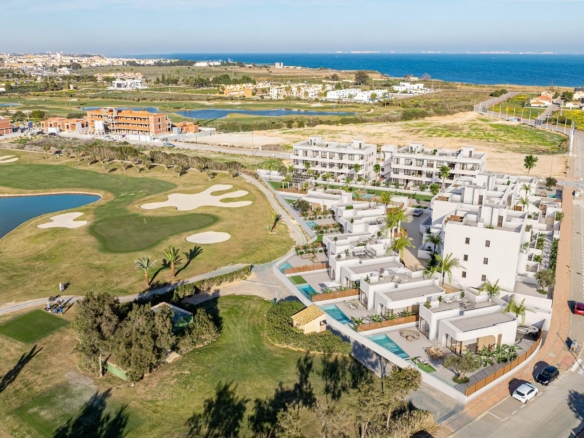
A rental licence Spain is wettelijk verplicht voor iedere eigenaar die zijn woning legaal als toeristisch verblijf wil verhuren. U registreert uw woning bij de bevoegde regionale toeristische dienst, ontvangt een uniek registratienummer en mag dat nummer pas daarna in elke advertentie vermelden. De regels zijn in Spanje regionaal bepaald: aan de Costa Blanca geldt de wetgeving van de Comunidad Valenciana, terwijl Andalusië, Catalonië en de Balearen strenger of zelfs bevroren zijn. Wie zonder geldige licentie verhuurt, riskeert boetes die kunnen oplopen tot tienduizenden euro’s. Met de juiste documenten en begeleiding regelt u dit echter vlot en beschermt u zowel uw investering als uw rendement.
Het tijdig regelen van uw toeristische licentie is de enige manier om zorgeloos én rendabel te verhuren binnen het wettelijk kader.
In dit artikel leggen wij u stap voor stap uit waarom de licentie verplicht is, hoe de procedure aan de Costa Blanca verloopt, welke documenten u nodig heeft en wat de boetes zijn bij illegale verhuur. Wij schrijven dit vanuit de praktijk van investeerders en verhuurders uit België, Nederland, Duitsland en Frankrijk die hun tweede verblijf of beleggingspand laten renderen.
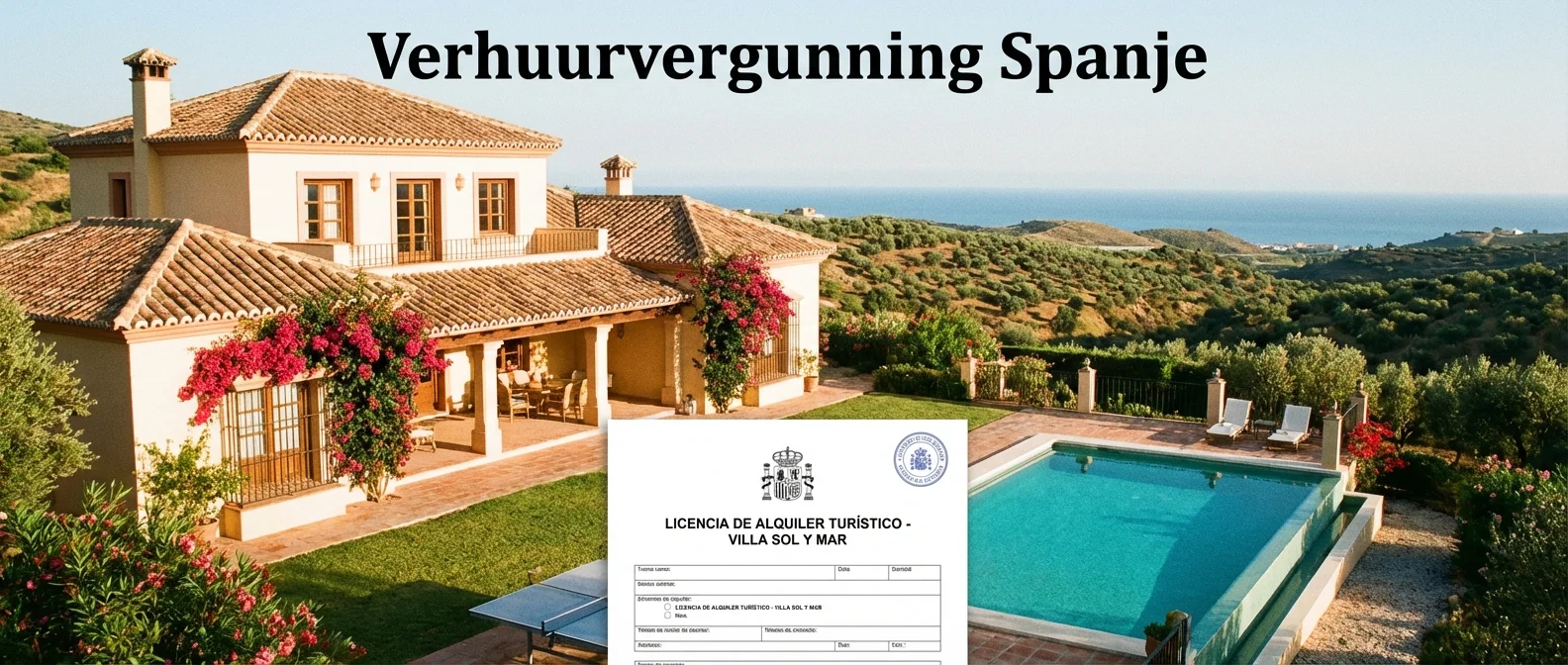
Waarom een verhuurvergunning in Spanje wettelijk verplicht is
Het dromen van een eigen stek onder de Spaanse zon is voor veel Belgen, Nederlanders, Duitsers en Fransen werkelijkheid geworden. Wie zijn eigendom wil laten renderen via toeristische verhuur, botst echter vaak op een muur van bureaucratie. De procedure om een officiële toeristische licentie te bemachtigen is de laatste jaren aanzienlijk complexer geworden door strengere regionale decreten en verhoogde controle op de kwaliteit van het logiesaanbod. Of u nu een appartement aan de Costa Blanca bezit of een rustieke finca in het binnenland: zonder de juiste papieren riskeert u niet alleen torenhoge boetes, maar ook een onmiddellijke verwijdering van uw woning van platformen zoals Airbnb of Booking.com.
De Spaanse overheid maakt een duidelijk onderscheid tussen residentieel gebruik en toeristische exploitatie. De aanvraag begint daarom steevast bij het verifiëren van het lokale bestemmingsplan en het bekomen van een conformiteitsattest van de gemeente. Dit vormt vaak de grootste struikelblok voor eigenaars die niet goed voorbereid zijn op de administratieve molen. Het registratienummer dat u uiteindelijk ontvangt, is geen formaliteit: het koppelt uw woning onherroepelijk aan uw fiscale identiteit in Spanje en geeft de autoriteiten de mogelijkheid om gegevens uit de toeristische registers te vergelijken met uw belastingaangiften.
Om de licentie succesvol aan te vragen, moet uw woning bovendien voldoen aan strikte technische vereisten. Denk aan de aanwezigheid van airconditioning en verwarming, en veiligheidsvoorzieningen zoals brandblussers en een EHBO-kit. Daarnaast dient u te beschikken over een certificate of occupancy of een occupancy permit, documenten die bevestigen dat de woning bewoonbaar is en voldoet aan de bouwvoorschriften. Het is een proces van lange adem waarbij nauwkeurigheid en geduld essentieel zijn om uw investering te beschermen tegen juridische onzekerheid. Wie van plan is een woning te kopen, doet er goed aan deze toets mee te nemen in de legal control of real estate in Spain, nog voor de aankoopakte wordt getekend.

De regels zijn regionaal: van Costa Blanca tot de Balearen
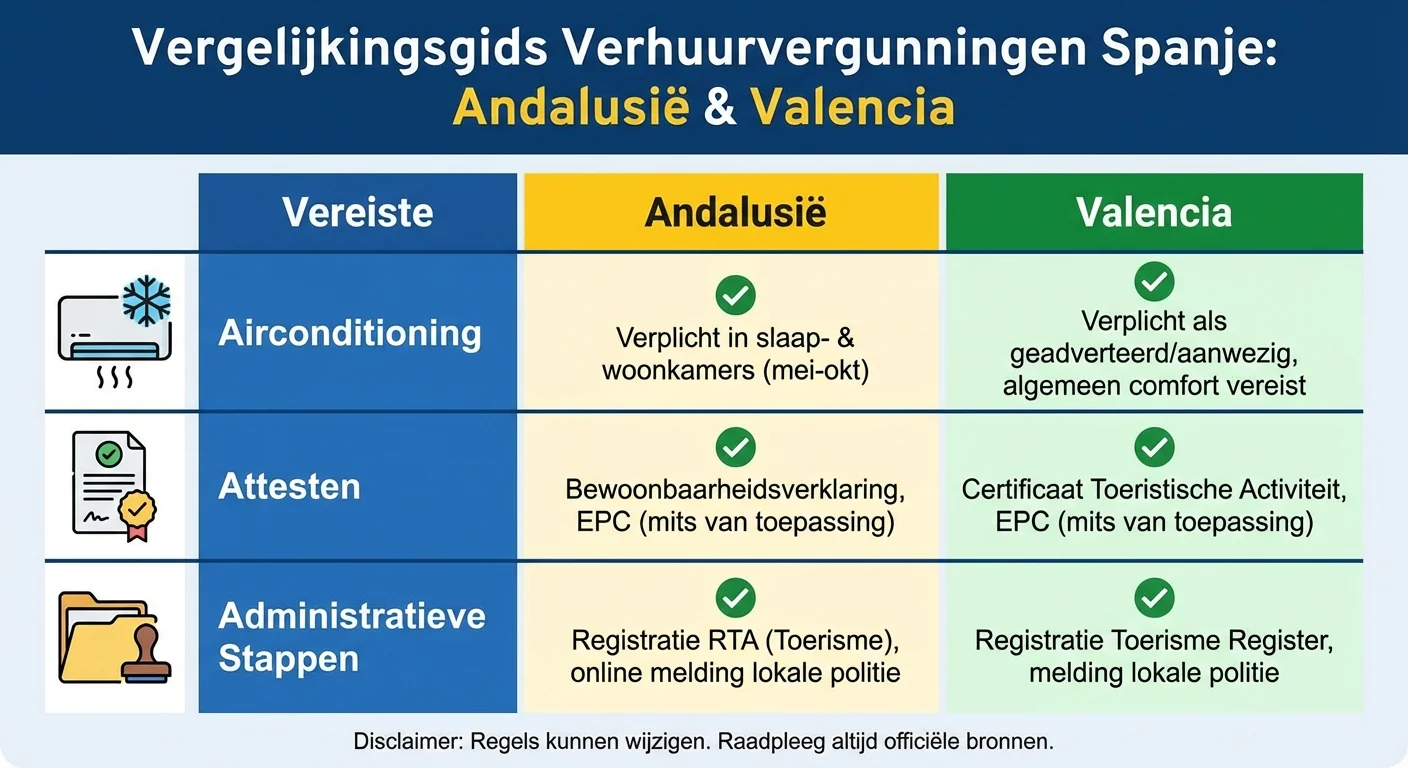
Spanje is onderverdeeld in autonome regio’s die elk hun eigen decreten uitvaardigen voor toeristische logies. Dit betekent dat de voorwaarden in Andalusië totaal anders kunnen zijn dan in de Comunidad Valenciana of op de Balearen. De nationale overheid schept enkel het algemene kader; de effectieve uitvoering en de specifieke eisen liggen volledig bij de regionale besturen. Dat zorgt vaak voor verwarring bij investeerders uit België, Nederland, Duitsland en Frankrijk die een meer gecentraliseerde regelgeving gewend zijn. Elke regio hanteert eigen termijnen, formulieren en technische vereisten voor de woning.
Comunidad Valenciana (Costa Blanca)
Voor wie investeert aan de Costa Blanca Noord (Dénia, Jávea, Altea, Moraira) of Zuid (Torrevieja, Orihuela Costa, Pilar de la Horadada) is de Comunidad Valenciana de bepalende regio. Sinds 2018 vereist deze regio een compatibiliteitsattest (certificado de compatibilidad urbanística) van de gemeente. Zonder dit document, dat bevestigt dat de woning volgens het bestemmingsplan als toeristisch verblijf mag dienen, krijgt u simpelweg geen registratienummer. De toegenomen vraag heeft geleid tot langere wachttijden in steden zoals Alicante en Valencia. Investeerders moeten beseffen dat elk detail van de eigendomsakte moet overeenstemmen met de werkelijke situatie ter plaatse, anders strandt het dossier.
Andalusië
In Andalusië, populair bij Vlamingen en Nederlanders, is de wetgeving de laatste jaren aanzienlijk verstrengd om de wildgroei aan vakantiewoningen in steden zoals Málaga en Sevilla in te perken. Een woning moet er voldoen aan strikte kwaliteitsnormen, zoals koeling in de zomer en verwarming in de winter, alvorens men een licentie kan aanvragen. Gemeenten hebben bovendien meer macht gekregen om de verhuur in bepaalde wijken volledig aan banden te leggen wanneer de leefbaarheid in het gedrang komt. Het is dus niet langer voldoende om enkel naar de regionale wet te kijken; de lokale stedenbouwkundige voorschriften zijn minstens even bepalend voor uw slaagkansen.
Catalonië en de Balearen
De Balearen (Mallorca en Ibiza) kennen wellicht de strengste regels van het land. Men werkt er met een zoneringsplan (PIAT) waarbij in veel zones een absoluut verbod geldt op nieuwe licenties voor appartementen. Enkel vrijstaande woningen komen in bepaalde gebieden nog in aanmerking, en zelfs dan moet men vaak ‘plazas’ (toeristische bedden) verwerven uit een beperkte pool. Daardoor kan de prijs van een licentie hoog oplopen, met een directe impact op uw rendement. Voor wie specifiek op zoek is naar luxevastgoed blijft Ibiza aantrekkelijk, maar de schaarste aan vergunningen is er reëel. Ook Catalonië verstrengt: in veel gemeenten geldt een melding (comunicación previa) en een (tijdelijke) bevriezing van nieuwe licenties in drukke kernen zoals Barcelona.
Een vaak vergeten aspect is de rol van de vereniging van mede-eigenaars (comunidad de propietarios). Sinds de wijziging van de Spaanse wet op horizontaal eigendom kunnen deze verenigingen met een drievierde meerderheid beslissen om toeristische verhuur in hun gebouw te beperken of te verbieden, of de gemeenschappelijke kosten voor dergelijke appartementen te verhogen. Zelfs als u aan alle regionale eisen voldoet, kan een negatief besluit van de algemene vergadering uw plannen dwarsbomen. Laat daarom de statuten en de notulen van de laatste vergaderingen grondig nalezen vóór de aankoop. Welke regio het meest geschikt is voor uw doelstellingen, leest u in ons overzicht van de best regions for property investment in Spain.
Stappenplan: zo vraagt u de toeristische licentie aan
Het verkrijgen van een toeristische licentie is geen gunst, maar een strikte wettelijke verplichting die per autonome regio verschilt. Toch volgt de procedure aan de Costa Blanca doorgaans een herkenbaar patroon. Onderstaande stappen vormen de rode draad van een aanvraag:
- Applying for a certificado de compatibilidad urbanística bij de gemeente om te bevestigen dat toeristische verhuur in uw zone en volgens het bestemmingsplan is toegestaan.
- Het verzamelen van alle eigendomsdocumenten, inclusief de akte (escritura) en uw persoonlijk identificatienummer voor buitenlanders (NIE).
- Het laten opmaken van een technisch rapport en het op orde brengen van de certificate of occupancy or occupancy permit.
- Het indienen van de declaración responsable bij de regionale toeristische autoriteit, waarin u verklaart aan alle wettelijke eisen te voldoen.
- Het registreren van de woning in het officiële toerismeregister om een uniek registratienummer te ontvangen, dat verplicht in elke advertentie vermeld moet worden.
- Het aanleggen van een officieel gastenboek en het voorzien van klachtenformulieren (hojas de reclamaciones) in de woning.
Een geldig NIE-nummer is een absolute basisvoorwaarde voor het hele traject. Hoe u dit als buitenlander aanvraagt, leest u in onze gids over het NIE number in Spain. Daarnaast is het tegenwoordig verplicht om de identiteitsgegevens van elke gast binnen 24 uur na aankomst door te geven aan de lokale politie of de Guardia Civil. Deze veiligheidsmaatregel wordt strikt opgevolgd en hoort bij iedere actieve licentie.

Verplichte documenten op een rij
- A valid NIE number (número de identidad de extranjero).
- De eigendomsakte van de woning (escritura).
- De cédula de habitabilidad of licencia de primera ocupación.
- Het stedenbouwkundig compatibiliteitsattest van de gemeente.
- Het bewijs van betaling van de lokale onroerendezaakbelasting (IBI).
- An official complaints book available to tenants.
- De goedkeuring (of het ontbreken van een verbod) van de comunidad de propietarios.
Een foutief of onvolledig dossier wordt door de lokale overheid onmiddellijk onontvankelijk verklaard, wat uw plannen voor een rendabele exploitatie maanden kan vertragen. Goede voorbereiding is dus letterlijk het halve werk.
Boetes bij illegale verhuur
De sancties voor verhuur zonder geldige licentie zijn niet mals. Afhankelijk van de regio en de ernst van de inbreuk lopen de boetes op van enkele duizenden euro’s tot tienduizenden euro’s, met aan de zwaarste kant van het spectrum bedragen die in sommige regio’s de grens van honderdduizend euro naderen. Daarbovenop riskeert u de onmiddellijke stopzetting van uw activiteit en verwijdering van uw advertenties van platformen zoals Airbnb en Booking.com. Omdat de toeristische registers steeds vaker gekoppeld worden aan de fiscale databanken, valt illegale verhuur bovendien snel op. Het niet aangeven van huurinkomsten terwijl u wél adverteert, is een rode vlag voor de Spaanse belastingdienst.
De boete is bovendien zelden het enige verlies: een geschorste woning genereert geen inkomsten, terwijl uw vaste kosten gewoon doorlopen. Wie de regelgeving negeert, brengt dus niet alleen zijn legaliteit, maar ook zijn rendement in gevaar. Andere klassieke valkuilen rond verhuur en vergunningen bespreken wij in ons artikel over Recognise illegal building in Spain, want een niet-geregulariseerde uitbreiding kan een licentie alsnog blokkeren.
Fiscale gevolgen en de link met uw rendement
Zodra de administratieve horde is genomen, begint het fiscale luik. De Spaanse fiscus maakt een duidelijk onderscheid tussen residenten en niet-residenten. Voor niet-residenten geldt de IRNR (impuesto sobre la renta de no residentes): u doet aangifte van uw huurinkomsten via het Model 210. Inwoners van de EU of de EER betalen 19% en mogen daarbij kosten aftrekken, zoals hypotheekrente, verzekeringen, lokale belastingen en onderhoud. Niet-EU-eigenaars betalen 24% over de bruto-inkomsten, zonder aftrek. Dat aftrekrecht voor EU-burgers verbetert het nettorendement aanzienlijk en is een belangrijke reden om uw boekhouding professioneel aan te pakken.
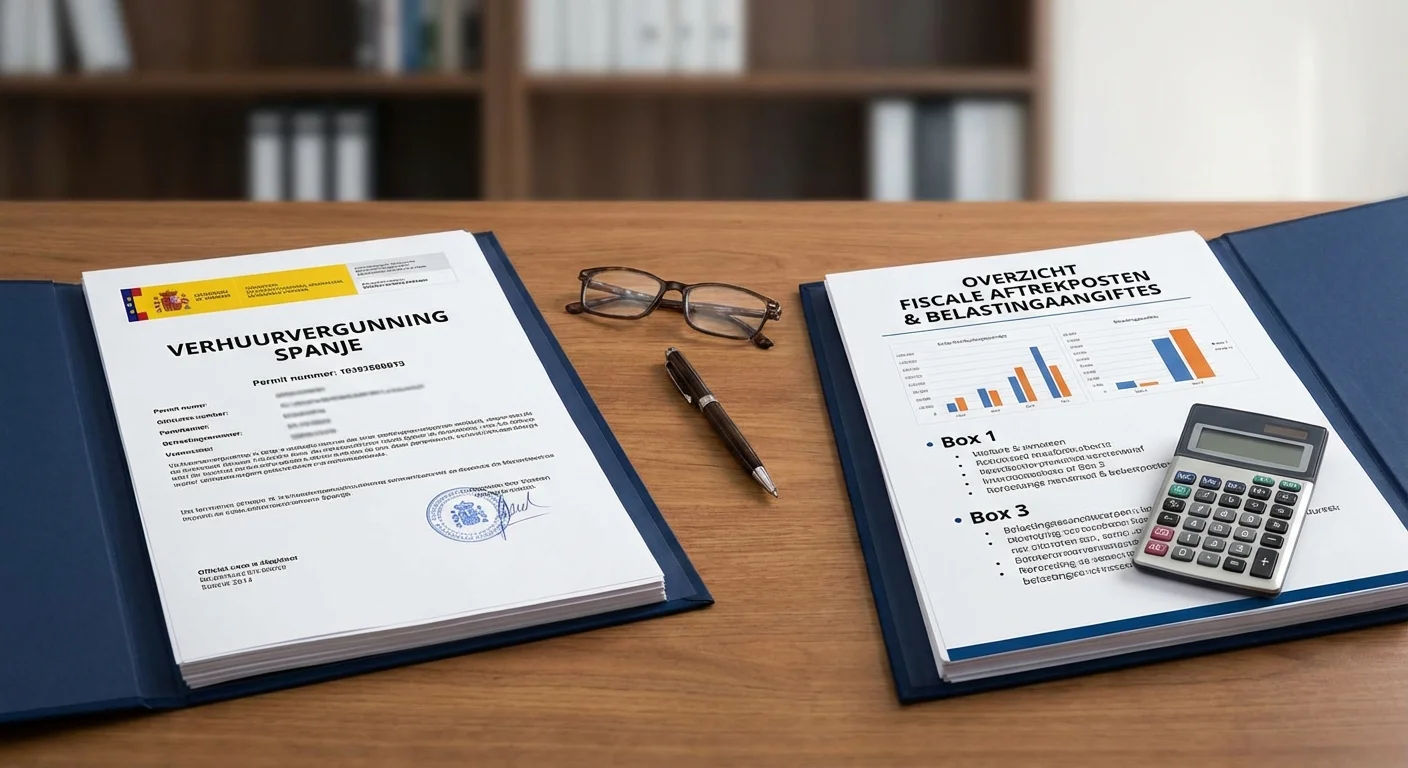
Een geldige licentie is dus geen kostenpost, maar de voorwaarde om uw vakantiewoning legaal en winstgevend te exploiteren. Voor een goed onderbouwde vakantiewoning aan de Costa Blanca ligt het netto huurrendement doorgaans tussen 4% en 7% per jaar, afhankelijk van locatie, bezetting en kostenstructuur. Hoe u dit cijfer concreet voor uw eigen pand berekent, leggen wij uit in onze gids over het Calculate the return on a holiday home in Spain. Wie de fiscale en juridische context van verhuur in de bredere strategie wil plaatsen, vindt het overkoepelende kader in onze pillar over real estate investments in Spain.
- Kwartaalaangifte van de IRNR via Modelo 210 voor niet-residenten (19% EU/EER, 24% niet-EU).
- Aftrekbaarheid van operationele kosten zoals onderhoud en sleutelbeheer voor EU-eigenaars.
- Verplichte registratie van huurders bij de lokale politie of Guardia Civil binnen 24 uur.
- Betaling van de jaarlijkse IBI (circa €200 per €100.000 woningwaarde) aan de gemeente.
- Afdracht van de lokale toeristenbelasting waar die van toepassing is.
Praktisch beheer is minstens zo belangrijk als de papieren. Wie zelf in België, Nederland, Duitsland of Frankrijk woont, kan onmogelijk elke check-in, schoonmaak of storing ter plaatse opvolgen. Professioneel Maintenance and key management in Spain zorgt ervoor dat uw woning altijd gastklaar is en dat u voldoet aan de wettelijke verplichtingen rond gastenregistratie en kwaliteit, zonder dat u zelf telkens hoeft af te reizen.
Veelgestelde vragen over de verhuurvergunning in Spanje
Wat is een verhuurvergunning in Spanje en waarom heb ik die nodig?
Het is een officiële registratie met een uniek registratienummer, verplicht voor iedereen die een vakantiewoning aan toeristen wil verhuren. Zonder dit nummer riskeert u zware boetes, omdat de regionale overheid en de Spaanse fiscus streng controleren op illegale verhuur en hun registers koppelen aan de belastingdatabanken.
Gelden in heel Spanje dezelfde regels?
Nee. De regels zijn regionaal bepaald. Aan de Costa Blanca geldt de wetgeving van de Comunidad Valenciana, die sinds 2018 een gemeentelijk compatibiliteitsattest vereist. Andalusië stelt strikte kwaliteitseisen, en Catalonië en de Balearen zijn nog strenger, met zoneringsplannen en (tijdelijke) bevriezingen van nieuwe licenties.
Welke documenten heb ik nodig voor de aanvraag?
U heeft minstens een geldig NIE-nummer, de eigendomsakte (escritura), een cédula de habitabilidad of licencia de primera ocupación, het gemeentelijk compatibiliteitsattest en een bewijs van betaling van de IBI nodig. Daarna dient u een declaración responsable in bij de regionale toeristische dienst en registreert u de woning in het toerismeregister.
Hoe hoog zijn de boetes bij illegale verhuur?
Afhankelijk van de regio en de ernst van de inbreuk variëren de boetes van enkele duizenden tot tienduizenden euro’s, in de zwaarste gevallen oplopend richting zes cijfers. Daarbovenop riskeert u stopzetting van uw activiteit en verwijdering van uw advertenties van Airbnb en Booking.com.
Wanneer moet ik mijn huurinkomsten aangeven?
Zodra u verhuurt, doet u als niet-resident per kwartaal aangifte via het Modelo 210. EU- en EER-inwoners betalen 19% en mogen kosten aftrekken; niet-EU-eigenaars betalen 24% over de bruto-inkomsten. Een geldige licentie en een correcte aangifte voorkomen problemen met zowel de Spaanse fiscus als uw belastingaangifte in eigen land.
How we can help you
Het regelen van de administratie rond uw vastgoed kan complex aanvoelen, maar met de juiste begeleiding verloopt alles vlotter dan u denkt. Ons team, geleid door vastgoedexpert en CEO Kenzo Fayot, begeleidt kopers en verhuurders uit België, Nederland, Duitsland en Frankrijk bij elke stap: van de aankoopbegeleiding en makelaardij over de juridische controle tot het volledige traject van uw property rental in Spain. Zo regelen wij uw toeristische licentie correct en houden wij uw woning conform en rendabel, terwijl u zich focust op het verwelkomen van uw gasten onder de Spaanse zon.
Wilt u weten of uw woning aan de Costa Blanca in aanmerking komt voor een licentie, of wenst u een rendementsberekening op maat? Contact us today voor persoonlijk advies en start zorgeloos met het legaal verhuren van uw droomwoning.