A NIE-nummer aanvragen is voor iedere buitenlandse koper, investeerder of emigrant de allereerste juridische stap in Spanje. Het NIE (Número de Identidad de Extranjero) is uw persoonlijke fiscale identificatienummer, en zonder dit nummer kunt u geen woning kopen, geen Spaanse bankrekening openen, geen nutsvoorzieningen op uw naam zetten en geen officieel arbeidscontract tekenen. Of u nu vanuit België, Nederland, Duitsland of Frankrijk een tweede verblijf zoekt aan de Costa Blanca, wilt investeren of definitief wilt emigreren: het regelen van uw NIE staat altijd bovenaan de lijst. In deze gids leggen wij u rustig en volledig uit wat een NIE is, waarom het verplicht is, hoe het verschilt van een residencia, en hoe u het stap voor stap aanvraagt in Spanje of via het consulaat in eigen land.
- Verplicht voor vastgoedtransacties, een bankrekening, nutsvoorzieningen en werk.
- Aan te vragen in Spanje bij de Policía Nacional, of via het Spaanse consulaat in België en Nederland.
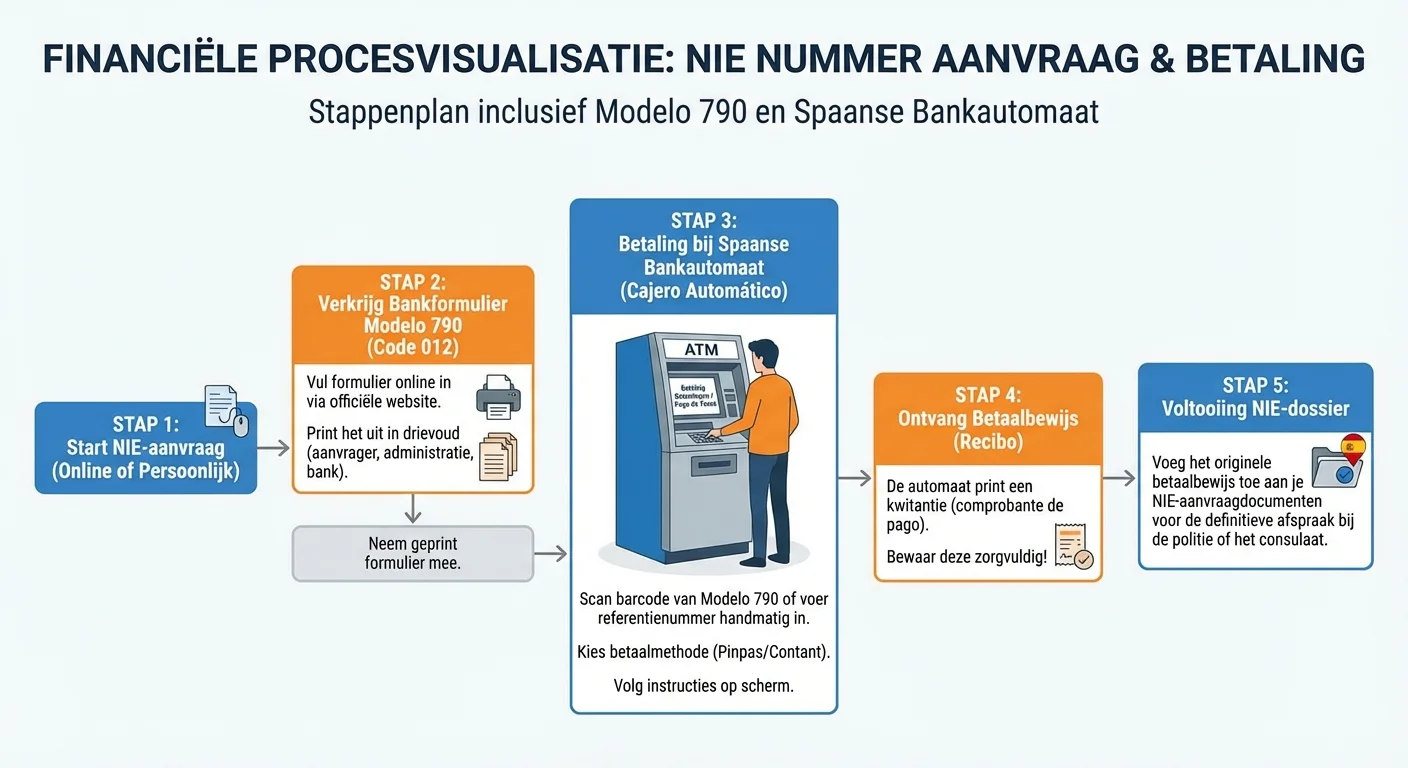
- Vereist een geldig paspoort, het formulier EX-15 en betaling van de tasa Modelo 790-012.
- Het nummer is uniek, persoonlijk en in principe levenslang geldig.
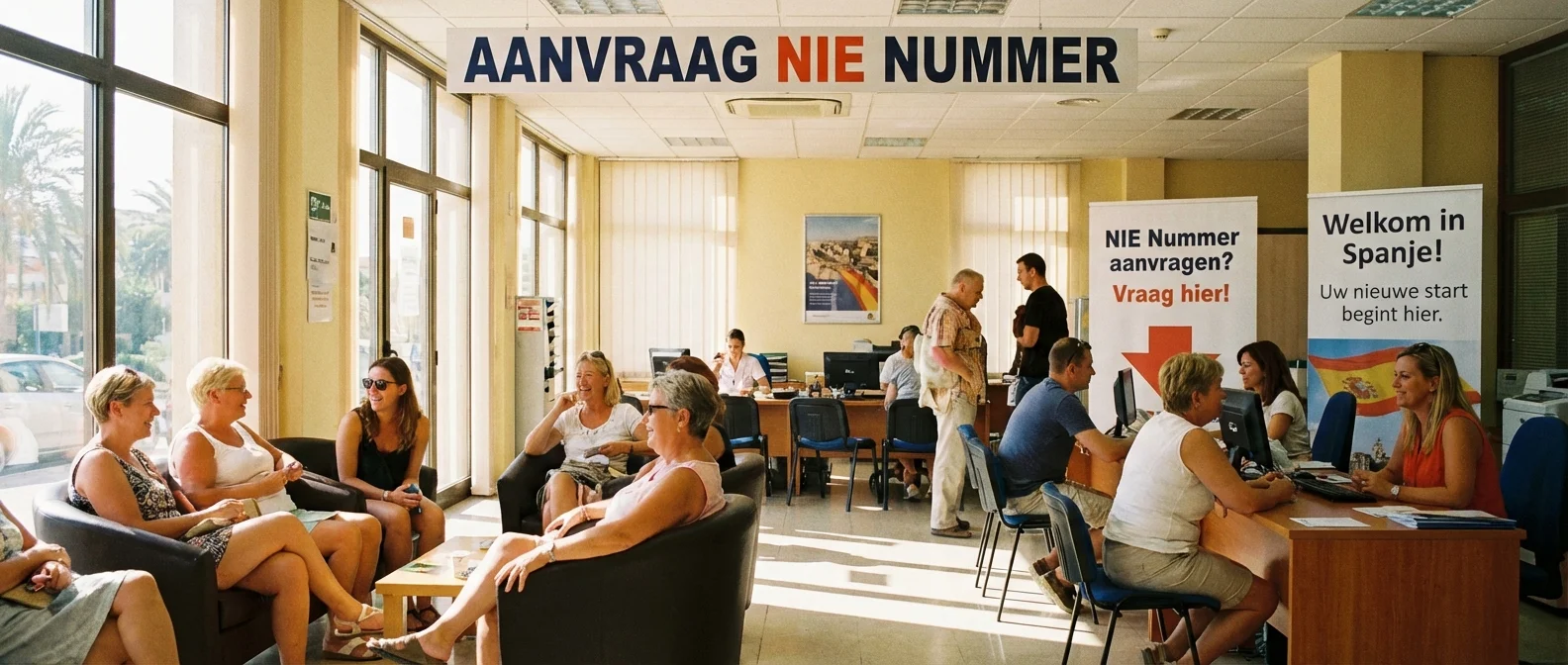
Wat is een NIE-nummer en waarom is het verplicht?
Zodra u plannen smeedt om tijd door te brengen in het zonnige Spanje, of dat nu voor een welverdiende vakantie, een werkperiode of een permanente verhuizing is, komt u onvermijdelijk de term NIE-nummer tegen. Dit acroniem staat voor Número de Identidad de Extranjero, het identiteitsnummer voor buitenlanders. Het is een uniek, persoonlijk en exclusief fiscaal identificatienummer dat door de Spaanse Directie-Generaal van de Politie wordt toegekend aan niet-Spanjaarden die economische, professionele of sociale belangen in het land hebben. Zonder dit nummer bent u in feite onzichtbaar voor de Spaanse administratie, wat zelfs de meest basale handelingen bemoeilijkt of onmogelijk maakt, voor zowel EU-burgers als burgers van buiten de Europese Unie.
Het NIE vormt de basis voor elke officiële handeling in Spanje en fungeert als uw digitale vingerafdruk binnen het administratieve systeem. Voor Belgen, Nederlanders, Duitsers en Fransen die een tweede verblijf of investering aan de Costa Blanca overwegen, is het daarom geen optionele formaliteit, maar een wettelijke voorwaarde om überhaupt te kunnen handelen.
The legal and practical need
In de praktijk is een NIE-nummer aanvragen essentieel voor een breed scala aan activiteiten die wij in België en Nederland als vanzelfsprekend beschouwen. Denkt u aan het openen van een lokale bankrekening, het afsluiten van een verzekering of het tekenen van een arbeidscontract. Ook voor grotere transacties, zoals de aankoop van een woning of een voertuig, is dit nummer wettelijk verplicht. Zelfs voor het installeren van nutsvoorzieningen zoals water, elektriciteit en internet in uw nieuwe woning zal de leverancier om deze identificatie vragen. Het is daarom raadzaam om dit proces zo vroeg mogelijk te starten, want de wachttijden bij consulaten en politiebureaus lopen vaak op, zeker in het hoogseizoen wanneer de vraag onder internationale kopers en investeerders piekt.

Het proces om dit nummer te verkrijgen kan soms overweldigend aanvoelen door de taalbarrière en de specifieke eisen van de Spaanse overheid. Vaak moet u formulieren invullen zoals de EX-15 en eerst de leges betalen bij een bank voordat uw aanvraag in behandeling wordt genomen. Belangrijk om te begrijpen: het nummer zelf wordt in principe voor het leven toegekend, hoewel het fysieke certificaat in sommige gevallen een beperkte geldigheidsduur kan hebben voor administratieve doeleinden. Het NIE is bovendien onlosmakelijk verbonden met de volgende stappen in uw aankoop, zoals de legal control of real estate in Spain en de uiteindelijke overdracht bij de notaris.
When should you take action?
U heeft een geldig Spaans identificatienummer nodig in onder meer de volgende situaties:
- Buying or selling a property in Spanish territory.
- Het openen van een Spaanse bankrekening of het afsluiten van een hypotheek.
- Registering with Spanish social security for work.
- Setting up a business or starting up as self-employed (autónomo).
- Paying taxes, such as income tax for non-residents.
- Applying for a Spanish driving licence or registering a car.
Het NIE-nummer is niet zomaar een formaliteit: het is de sleutel die de deur opent naar een legaal en zorgeloos leven onder de Spaanse zon.
Kortom, of u nu een vakantiehuis koopt, een tweede verblijf inricht of in Spanje gaat werken, het officiële NIE-nummer is onmisbaar voor uw succes. Wie de planning rond dit nummer goed in de hand houdt, voorkomt onnodige vertraging bij de rest van het aankooptraject.
Het verschil tussen een NIE en een residencia
De meest voorkomende verwarring bij nieuwkomers ontstaat tussen het NIE-nummer en de zogenaamde residencia. Hoewel beide documenten belangrijk zijn voor een zorgeloos verblijf, dienen ze totaal verschillende doelen binnen de Spaanse bureaucratie. Het is cruciaal om te begrijpen dat een identificatienummer niet automatisch betekent dat u ook het recht heeft om permanent in het land te verblijven. Veel aspirant-kopers uit België en Nederland denken onterecht dat zij met enkel een fiscaal nummer aan alle wettelijke verplichtingen voldoen, maar in de praktijk is dat slechts de eerste stap in een breder proces van legale vestiging aan de Spaanse kust.
Een NIE-nummer aanvragen is puur een administratieve handeling voor niet-ingezetenen die financiële of juridische transacties willen verrichten. Het NIE fungeert als uw persoonlijke fiscale identificatiecode in Spanje. U heeft het nodig voor vrijwel elke officiële handeling, zoals het openen van een bankrekening, het afsluiten van een nutscontract of het kopen van een woning. Het geeft u echter geen verblijfsstatus: u blijft officieel een toerist of een buitenlandse investeerder. Voor wie serieus overweegt te emigreren, is het goed om te weten dat dit nummer levenslang geldig blijft, ongeacht of u daadwerkelijk in Spanje gaat wonen of slechts af en toe uw vakantiehuis aan de Costa Blanca bezoekt.
Wanneer wordt een residencia noodzakelijk?
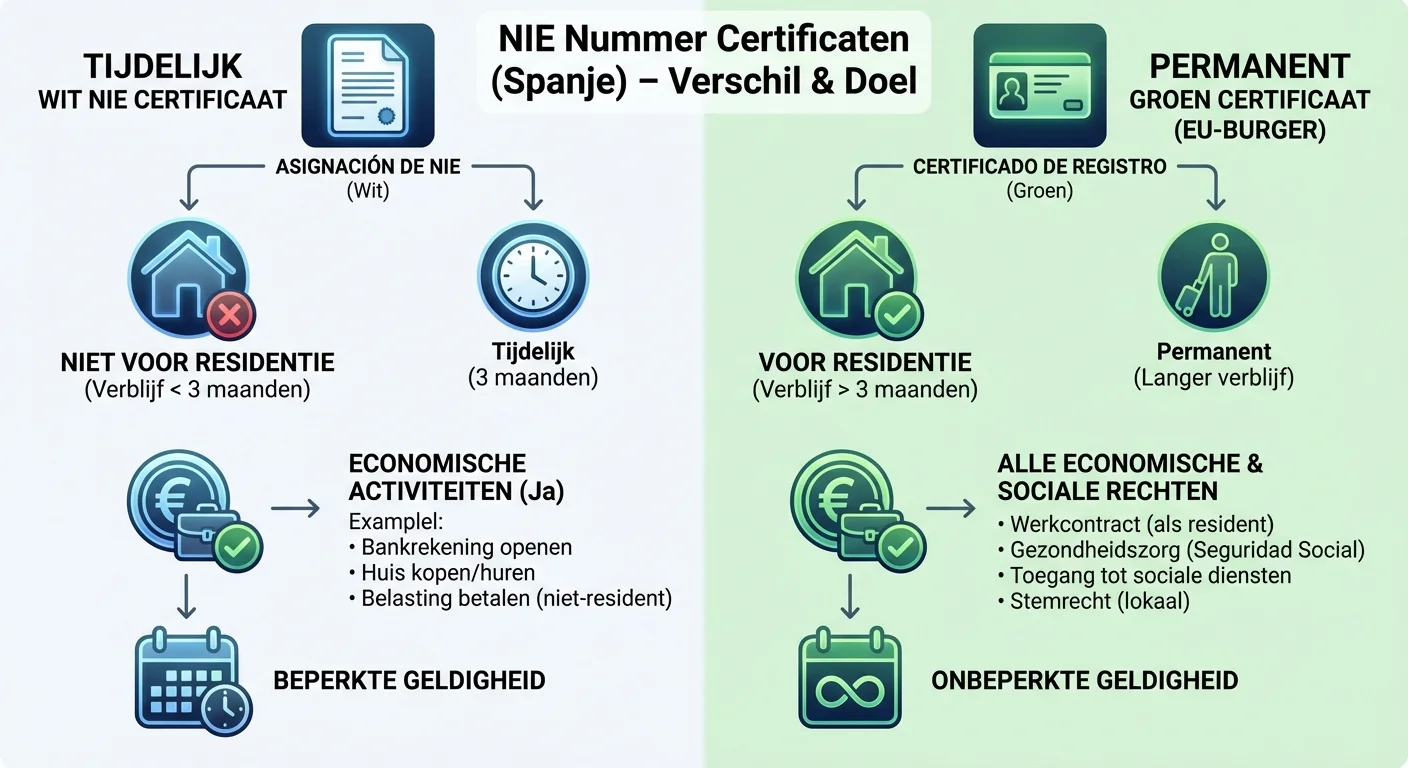
De residencia, voor EU-burgers officieel het Certificado de Registro de Ciudadano de la Unión, is verplicht als u langer dan drie maanden per jaar in Spanje verblijft. Waar het unieke NIE-nummer slechts een identificatie is, bewijst de residencia dat u een legale bewoner bent die beschikt over voldoende financiële middelen en een ziektekostenverzekering. Dit document is vaak een groen kaartje of een A4-formulier zonder foto, waarop uw gegevens en uw eerder verkregen fiscale nummer staan vermeld. Het is de formele bevestiging van uw status als inwoner van de Spaanse samenleving.
In practice, the hierarchy of documents looks as follows:
- Wit certificaat (A4): voor niet-residenten, bedoeld voor eenmalige transacties of korte verblijven.
- Groen certificaat (A4 of kaartformaat): voor EU-burgers die langer dan drie maanden in Spanje wonen of werken.
- TIE-kaart: het biometrische verblijfsdocument met foto en vingerafdrukken voor burgers van buiten de EU, inclusief hun persoonlijke identificatiecode.
- Padrón: de inschrijving in het bevolkingsregister van uw gemeente, los van het NIE.
Naast de papieren versies voor EU-burgers bestaat er voor burgers van buiten de Europese Unie dus de TIE-kaart. Hoewel deze kaart ook een NIE-nummer bevat, fungeert zij tevens als biometrisch identiteitsbewijs en is zij vaak gekoppeld aan specifieke visa, zoals het non-lucratieve visum. Ongeacht uw nationaliteit blijft het nummer zelf gedurende uw hele leven hetzelfde: het is de fysieke drager en de juridische status die veranderen naarmate uw situatie evolueert. Voor wie een woning zoekt, is een ervaren aankoopmakelaar in Spanje een baken van rust: hij vertelt u precies wanneer u van een tijdelijke status naar een permanente registratie moet overstappen.
Hoe vraagt u een NIE-nummer aan in Spanje?
Het zelfstandig bemachtigen van een NIE-nummer vereist een grondige voorbereiding en een flinke dosis geduld. In Spanje fungeert dit identificatienummer als de spil voor vrijwel elke officiële handeling, van het openen van een bankrekening tot het tekenen van een koopcontract voor vastgoed. De eerste cruciale stap is het bepalen van de juiste locatie voor uw aanvraag, want u kunt dit zowel in eigen land bij het Spaanse consulaat als rechtstreeks in Spanje bij een lokaal politiebureau regelen.
Veel aspirant-kopers kiezen ervoor om de procedure in Spanje te doorlopen tijdens een bezichtigingsreis, omdat dit vaak sneller gaat dan de wachttijden bij consulaten in België of Nederland, mits u tijdig een afspraak weet te bemachtigen via het digitale systeem van de overheid.
Administrative preparation and appointment
Zodra u besluit de aanvraag in Spanje te doen, plant u online een Cita Previa in via de officiële website van de openbare administratie. Een correcte voorbereiding van uw NIE-dossier maakt het verschil tussen succes en een directe afwijzing aan het loket. Het is van groot belang dat uw gegevens exact overeenkomen met die op uw identiteitsbewijs, want elke kleine typefout kan leiden tot een weigering bij de fysieke afspraak op het politiebureau.

Nadat de afspraak is bevestigd, verzamelt u de benodigde documentatie. Dit omvat doorgaans het ingevulde EX-15-formulier, een geldig paspoort met kopieën, en het bewijs van betaling van de tasa via het formulier Modelo 790-012. Het is raadzaam om ook documenten mee te nemen die de noodzaak van de aanvraag onderbouwen, zoals een voorlopig koopcontract of een verklaring van een advocaat. Vergeet niet dat de Spaanse bureaucratie strikt is: ontbrekende kopieën kunnen ertoe leiden dat u onverrichter zake naar huis wordt gestuurd, wat uw planning aanzienlijk vertraagt.
Visit to the Oficina de Extranjería
Op de dag van uw afspraak meldt u zich bij de aangewezen locatie, meestal een kantoor van de Policía Nacional of een Oficina de Extranjería. Hier overhandigt u alle documenten aan de ambtenaar, die uw gegevens verifieert in het systeem. Hoewel de sfeer formeel kan zijn, verloopt het proces meestal efficiënt als uw papierwerk op orde is. Na de verwerking ontvangt u vaak niet meteen het definitieve document, maar krijgt u instructies over wanneer en waar u het certificaat met uw unieke persoonlijke NIE-nummer kunt ophalen of hoe dit per e-mail wordt verzonden.
- Download en print het EX-15-aanvraagformulier dubbelzijdig uit.
- Betaal de bijbehorende tasa (Modelo 790-012) vooraf bij een lokale Spaanse bank.
- Neem zo nodig twee recente pasfoto’s mee, hoewel deze niet altijd strikt vereist zijn.
- Make sure you have a clear copy of all pages of your passport.
Wanneer u eenmaal uw nummer heeft ontvangen, kunt u zich richten op de praktische zaken van het woningbezit. Voor wie aan de Costa Blanca Noord oriënteert op Dénia, Jávea, Altea of Moraira, of in het zuiden op Torrevieja, Orihuela Costa en Pilar de la Horadada, is het NIE de onmisbare opstap naar de aankoop. Lees ook hoe het volledige traject werkt in onze gids over buying property in Spain.
NIE aanvragen via het consulaat of via volmacht
Niet iedereen wil of kan de aanvraag tijdens een reis in Spanje regelen. Gelukkig zijn er twee uitstekende alternatieven: de aanvraag via het Spaanse consulaat in België of Nederland, en de aanvraag op afstand via een notariële volmacht (poder).
Aanvraag via het Spaanse consulaat in België of Nederland
De Spaanse ambassade en de consulaten hanteren strikte richtlijnen voor de documentatie die nodig is om een NIE-aanvraag succesvol af te ronden. Het belangrijkste document is opnieuw het EX-15-formulier, dat volledig in het Spaans moet worden ingevuld. Daarnaast dient u te beschikken over een geldig legitimatiebewijs en een bewijsstuk dat de reden van uw aanvraag onderbouwt, zoals een voorlopig koopcontract. Het NIE fungeert immers als uw fiscale identiteit, waardoor de autoriteiten precies willen weten waarom u dit nummer op dit moment nodig heeft. Een heldere onderbouwing kan de verwerkingstijd aanzienlijk verkorten.
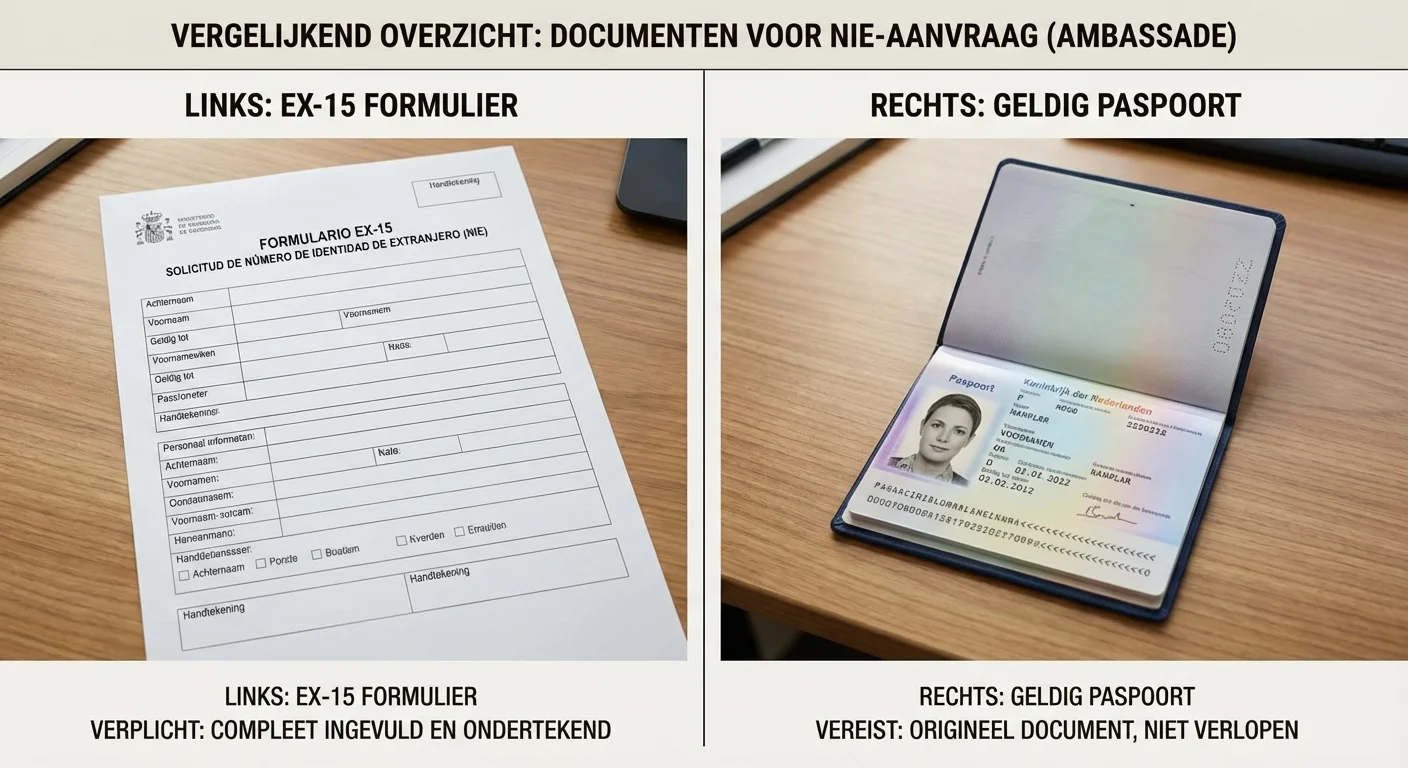
Het consulaat vereist vaak ook het bewijs van betaling van de tasa, de zogenaamde Modelo 790-012, die u vooraf voldoet. Zonder dit betaalbewijs neemt de ambtenaar uw dossier niet in behandeling, hoe compleet de rest van uw papierwerk ook lijkt. Houd er rekening mee dat u bij het consulaat doorgaans in persoon moet verschijnen, tenzij u een notariële volmacht heeft afgegeven aan een vertegenwoordiger. Zorg dat uw paspoort op de dag van de aanvraag nog minimaal zes maanden geldig is, en maak van elk document minimaal twee duidelijke kopieën voor het archief van het consulaat.
Aanvraag op afstand via volmacht (poder notarial)
Wanneer u nog in het buitenland verblijft maar alvast zaken wilt regelen, kunt u de aanvraag volledig uit handen geven via een notariële volmacht. Met deze poder notarial mag een gestor of advocaat namens u optreden, zodat u zelf niet fysiek aanwezig hoeft te zijn bij de afspraak. Dit is bijzonder handig voor Belgen, Nederlanders, Duitsers en Fransen die hun investering vanuit eigen land voorbereiden. Afhankelijk van uw situatie kunnen er extra documenten worden gevraagd, zoals een huwelijksakte of een bewijs van economische middelen; soms is een beëdigde vertaling daarvan nodig. Een gestructureerde, overzichtelijke documentenmap wekt vertrouwen en zorgt ervoor dat de officiële registratie van uw NIE soepel verloopt.
Een volledige documentenset is het halve werk bij de Spaanse bureaucratie: wie zijn papieren op orde heeft, ontvangt zijn nummer vaak sneller dan verwacht.
Benodigde documenten op een rij
Een goede voorbereiding voorkomt dat u onverrichter zake huiswaarts keert. Hieronder vindt u de documenten die u doorgaans nodig heeft, of u nu in Spanje of via het consulaat aanvraagt:
- Formulier EX-15: volledig in het Spaans ingevuld, dubbelzijdig geprint.
- Geldig paspoort: nog minimaal zes maanden geldig, inclusief duidelijke kopieën van alle pagina’s.
- Bewijs van betaling van de tasa: het formulier Modelo 790-012 met bankstempel.
- Onderbouwing van de reden: bijvoorbeeld een voorlopig koopcontract, arbeidscontract of verklaring van uw advocaat.
- Eventueel een notariële volmacht: indien een gestor of advocaat namens u optreedt.
- Aanvullende stukken: zoals een huwelijksakte of bewijs van economische middelen, afhankelijk van uw situatie.
Voor wie investeert in een nieuwbouwproject, zoals bij investing in Spanish new buildings, is een foutloze documentatie de sleutel tot een snelle overdracht bij de notaris. Twijfelt u over een Spaanse term of afkorting in uw papieren? Onze uitleg van Spanish abbreviations and terms helpt u snel op weg.
Hoe maakt u online een afspraak (Cita Previa)?
Het maken van een afspraak voor de NIE-aanvraag verloopt in Spanje vrijwel volledig digitaal, via het officiële portaal van de Sede Electrónica van de openbare administratie. Het verkrijgen van deze Cita Previa is vaak de meest uitdagende stap in het hele traject, omdat de beschikbaarheid van tijdstippen beperkt is en de vraag vanuit buitenlanders hoog blijft. U start het proces door naar de website van de immigratiedienst te navigeren, waar u de juiste provincie selecteert. Kies de regio waar u daadwerkelijk verblijft of vastgoed wilt kopen, want de lokale kantoren zijn strikt in hun jurisdictie.
Step-by-step navigation through the booking system
Na het selecteren van de juiste procedure wordt u doorgeleid naar een pagina met informatie over de benodigde documentatie, zoals het formulier EX-15 en het bewijs van betaling van de tasa (Modelo 790-012). Het systeem vraagt vervolgens om uw persoonlijke gegevens, waaronder uw paspoortnummer, volledige naam en nationaliteit. Het is van cruciaal belang dat deze gegevens exact overeenkomen met uw identiteitsbewijs, want elke kleine typefout kan leiden tot een weigering bij de fysieke afspraak. In de praktijk lopen veel aanvragers vast op het moment dat er geen beschikbare data worden getoond, met de melding dat er momenteel geen afspraken beschikbaar zijn.
Geduld en volharding zijn de belangrijkste deugden bij het navigeren door het Spaanse bureaucratische systeem.
Tips for a successful booking
Om uw kansen op een tijdslot te vergroten, adviseren experts om op specifieke momenten in te loggen, zoals vroeg in de ochtend op werkdagen, wanneer nieuwe slots worden vrijgegeven. Vergeet niet dat ook een goede financiële voorbereiding belangrijk is; lees bijvoorbeeld meer over de Property taxes in Spain for 2026 die gepaard gaan met het bezit van een woning. Na de bevestiging stuurt het systeem u een PDF met de details van de afspraak, die u absoluut moet uitprinten en meenemen naar het kantoor van de Policía Nacional.
- Check availability in the portal at different times daily.
- Zorg dat uw paspoort nog minimaal zes maanden geldig is op de datum van de afspraak.
- Houd uw telefoon bij de hand voor de SMS-verificatiecode tijdens het proces.
- Print the Cita Previa confirmation immediately after completing the booking.
Wat kost een NIE-nummer aanvragen?
Wanneer u van plan bent te investeren in Spaans vastgoed of voor langere tijd in het land te verblijven, is het verstandig een duidelijk beeld te hebben van de financiële verplichtingen rond deze procedure. De kosten van een NIE-aanvraag bestaan uit verschillende componenten die variëren afhankelijk van de methode die u kiest.
In de basis betaalt iedereen een standaard overheidstarief, de zogenaamde tasa, die jaarlijks door de Spaanse overheid wordt vastgesteld. Dit bedrag ligt voor de standaard administratieve handeling doorgaans rond de tien euro, maar dekt enkel de leges van de nationale politie en niet de eventuele servicekosten van tussenpersonen of juridische adviseurs die het proces voor u uit handen nemen.
Direct government costs and ancillary expenditure
Naast de verplichte tasa moet u rekening houden met indirecte kosten die vaak over het hoofd worden gezien. Als u de aanvraag persoonlijk in Spanje indient, denkt u aan reiskosten, eventuele overnachtingen en de tijd die u kwijt bent. Voor velen is het echter efficiënter om een gestor of advocaat in te schakelen die gespecialiseerd is in dit proces. Deze professionals rekenen honoraria die kunnen variëren van enkele tientallen tot enkele honderden euro’s, afhankelijk van de complexiteit van uw dossier en of zij ook de volmacht (poder notarial) voor u moeten regelen om de aanvraag op afstand te voltooien.
Het inschakelen van een expert kan uiteindelijk goedkoper zijn dan het maken van fouten in de documentatie, die vaak tot kostbare vertragingen bij de aankoop leiden. Indien u de aanvraag via een Spaans consulaat in België of Nederland laat verlopen, zijn de kosten soms iets hoger door aanvullende consulaire toeslagen, verzendkosten en eventuele beëdigde vertalingen. Een helder overzicht van álle aankoopkosten vindt u in onze toelichting op de kosten koper bij een huis in Spanje.
- Standaard overheidstarief (tasa Modelo 790-012): de verplichte basisprijs, doorgaans rond de tien euro.
- Honorarium gestor of advocaat: van enkele tientallen tot enkele honderden euro’s.
- Bijkomende kosten: reis, overnachting, beëdigde vertalingen of consulaire toeslagen.
Veelgemaakte fouten bij het aanvragen
Het verkrijgen van een Spaans fiscaal nummer lijkt op het eerste gezicht een eenvoudige handeling, maar in de praktijk lopen veel aanvragers tegen onnodige vertragingen aan door kleine slordigheden. Een van de meest voorkomende fouten is het onvolledig invullen van het officiële EX-15-formulier, waarbij cruciale details over de reden van de aanvraag worden vergeten of verkeerd aangevinkt. Een kleine inconsistentie in uw adresgegevens of een typefout in uw paspoortnummer kan er al voor zorgen dat uw dossier direct wordt afgewezen door de dienstdoende ambtenaar.
Daarnaast onderschatten veel mensen de geldigheid van hun documenten. Een paspoort dat bijna verloopt, of kopieën die niet duidelijk leesbaar zijn, vormen een groot risico. Ook is het van belang dat u de juiste tasa betaalt via het Modelo 790-012 vóór uw afspraak; zonder het betaalbewijs met de juiste bankstempel neemt de politie uw aanvraag niet in behandeling, hoe lang u ook in de rij heeft gestaan.
Logistical lapses and timing
Een andere kritieke fout is het niet tijdig reserveren van de Cita Previa, wat in populaire regio’s zoals de Costa Blanca soms maanden van tevoren moet gebeuren. Veel investeerders wachten tot het laatste moment, vlak voordat zij gaan negotiating the price of a Spanish property, om hun administratie op orde te brengen. Dat zorgt voor onnodige stress, want zonder dit nummer kan geen enkele officiële transactie plaatsvinden. Stel een NIE-nummer aanvragen daarom als hoogste prioriteit in uw planning, en vergeet niet dat u fysiek aanwezig moet zijn of een notariële volmacht moet afgeven.
- Het meenemen van onjuiste of onleesbare kopieën van het paspoort.
- Failure to demonstrate the economic or professional reason for the application.
- Using outdated versions of application forms.
- Forgetting the original documents and presenting only copies.
- Denken dat het NIE automatisch recht geeft op residentie, wat niet het geval is.
Tot slot maken aanvragers vaak de fout te denken dat het identificatienummer voor buitenlanders automatisch verblijfsrecht geeft. Dit nummer is puur fiscaal en administratief van aard en staat los van uw verblijfsstatus. Wie zekerheid wil over alle valkuilen, doet er goed aan vooraf te lezen waarom een gestor onmisbaar is bij investeren in Spanje.
Hoelang is een NIE-nummer geldig?
Een veelgestelde vraag onder buitenlandse kopers en toekomstige bewoners is of het NIE-nummer een vervaldatum heeft. In het verleden ontstond hier verwarring over, omdat de papieren certificaten een geldigheidsduur van slechts drie maanden vermeldden. Dat leidde tot de misvatting dat de registratie zelf zou verlopen, terwijl het enkel sloeg op de geldigheid van het fysieke document voor administratieve handelingen.
Tegenwoordig is de regelgeving duidelijker: het toegekende nummer is uniek, persoonlijk en in principe levenslang geldig. Toch moet u er rekening mee houden dat de fysieke papieren versie soms vernieuwd moet worden bij specifieke transacties, omdat notarissen en banken vaak een recent uittreksel vereisen om de legitimiteit van uw NIE te verifiëren. Bewaar daarom altijd een digitale kopie en weet hoe u een duplicaat kunt opvragen bij de nationale politie of het consulaat.
- The number never changes, even if you leave and return to Spain years later.
- Bij verlies van het document vraagt u een officieel duplicaat aan, geen nieuw nummer.
- Zorg dat uw paspoortgegevens gekoppeld aan het NIE altijd up-to-date zijn bij de autoriteiten.
Kortom, uw unieke NIE-nummer blijft uw hele leven bij u, ongeacht uw woonplaats. Het correct bewaren van uw administratie is de sleutel tot een zorgeloze investering in Spaans vastgoed.
Get help from a gestor or lawyer
Het aanvragen van een Spaans identificatienummer kan een behoorlijke uitdaging vormen voor buitenlanders die de lokale bureaucratie niet kennen. Hoewel het theoretisch mogelijk is om zelfstandig een NIE-nummer aan te vragen in Spanje, kiezen veel investeerders, kopers van een tweede verblijf en emigranten ervoor professionele hulp in te schakelen van een gestor of een gespecialiseerde advocaat. Deze professionals kennen de fijne kneepjes van het systeem, spreken de taal vloeiend en weten precies welke documentatie op welk moment vereist is bij de vreemdelingenpolitie of het consulaat.
The benefits of professional counselling
Wanneer u samenwerkt met een juridisch adviseur, profiteert u van een gestroomlijnde procedure waarbij u vaak niet eens fysiek aanwezig hoeft te zijn. De adviseur kan via een notariële volmacht namens u optreden, wat essentieel is als u nog in het buitenland verblijft. Naast administratief gemak biedt een advocaat extra zekerheid bij grotere transacties, zoals het controleren van contracten of het verifiëren van de status van een makelaar. Dat is belangrijk, want u moet altijd alert blijven op rogue estate agents in Spain who can take advantage of ignorance.
- Correcte invulling van het EX-15-formulier.
- Betaling van de bijbehorende tasa (Modelo 790-012).
- Guidance on scarcity arrangements (Cita Previa).
- Legal check on the validity of your foreigner identification number.
Een goede voorbereiding door een specialist voorkomt dat uw aanvraag voor een NIE-nummer wordt afgewezen op basis van vormfouten.
Kortom, de investering in een gestor verdient zichzelf vaak terug door de snelheid en gemoedsrust die het biedt. Het regelen van uw NIE is bovendien de logische opmaat naar de volgende stappen, zoals het afsluiten van een mortgage in Spain as a non-resident, waarvoor het nummer eveneens onmisbaar is.
How we can help you
Bij Investeer in Spanje begeleiden wij kopers, investeerders en emigranten uit België, Nederland, Duitsland en Frankrijk bij elke stap van hun Spaanse avontuur. Ons team, geleid door vastgoedexpert en CEO Kenzo Fayot, kent de Costa Blanca van Dénia, Jávea en Altea in het noorden tot Torrevieja, Orihuela Costa en Pilar de la Horadada in het zuiden, en weet als geen ander hoe de Spaanse administratie werkt. Van het regelen van uw NIE en de volmacht tot aankoopbegeleiding, investeringsadvies, hypotheekbemiddeling en juridische controle: wij nemen de bureaucratie uit handen zodat u zich kunt richten op uw toekomst onder de zon. Bekijk gerust onze volledige property services in Spain om te zien hoe wij u van begin tot eind ontzorgen.
Heeft u hulp nodig bij de aanvraag van uw NIE-nummer, of wilt u zeker weten dat uw dossier volledig aan de huidige wetgeving voldoet? Please feel free to contact us, with no obligation voor een persoonlijk adviesgesprek. Zo voorkomt u onnodige vertragingen door foutieve aanvragen of ontbrekende formulieren en begint u uw leven of investering in Spanje met een gerust hart.
Veelgestelde vragen over het NIE-nummer aanvragen
Wat is een NIE-nummer precies?
Een NIE-nummer (Número de Identidad de Extranjero) is een uniek, persoonlijk fiscaal identificatienummer voor buitenlanders die in Spanje willen wonen, werken of een woning willen kopen. Het is essentieel voor vrijwel alle administratieve en financiële transacties in het land en blijft in principe levenslang geldig.
Hoe kan ik een NIE-nummer aanvragen?
U kunt de aanvraag indienen bij een Spaans politiebureau of de Oficina de Extranjería als u al in Spanje bent, via het Spaanse consulaat in België of Nederland, of op afstand via een notariële volmacht. In alle gevallen vult u het formulier EX-15 in, toont u een geldig paspoort en betaalt u de tasa Modelo 790-012.
Waarom heb ik een NIE-nummer nodig in Spanje?
Zonder NIE kunt u geen bankrekening openen, geen contracten voor nutsvoorzieningen afsluiten, geen onroerend goed kopen of registreren en geen officieel arbeidscontract tekenen. Het dient als uw officiële identiteit voor de Spaanse belastingdienst en andere overheidsinstanties.
Wat is het verschil tussen een NIE en een residencia?
Het NIE is uitsluitend een fiscaal identificatienummer en geeft geen verblijfsrecht. De residencia (voor EU-burgers het Certificado de Registro de Ciudadano de la Unión) bewijst dat u officieel als bewoner geregistreerd staat en is verplicht als u langer dan drie maanden per jaar in Spanje verblijft. Het NIE-nummer blijft hetzelfde, ook nadat u een residencia heeft verkregen.
Hoelang duurt het om een NIE-nummer te krijgen?
De doorlooptijd hangt sterk af van de gekozen methode en de beschikbaarheid van afspraken. Bij een aanvraag in Spanje is het bemachtigen van een Cita Previa vaak de grootste hindernis en kan dit in populaire regio’s weken tot maanden duren. Met een goed voorbereid dossier en eventueel de hulp van een gestor verloopt de verwerking zelf doorgaans vlot. Begin daarom ruim op tijd.