Een hypotheek in Spanje als niet-resident is voor Nederlanders en Belgen goed haalbaar: Spaanse banken financieren doorgaans tot ongeveer 70% van de taxatiewaarde, met looptijden tot circa 25 à 30 jaar en een keuze tussen een vaste of variabele (Euribor-gebonden) rente. U brengt zelf de resterende eigen inbreng en de aankoopkosten (10–15% bovenop de koopprijs) mee. Het traject verloopt via een taxatie (tasación), een bindend aanbod in de vorm van een FEIN en een wettelijk verplichte reflectieperiode van tien dagen voordat u bij de notaris tekent.
Een eigen plek aan de Costa Blanca kopen is voor veel buitenlandse kopers een doordachte stap. Of u nu een tweede verblijf zoekt in het noorden rond Dénia, Jávea, Altea of Moraira, een verhuurinvestering overweegt in het zuiden bij Torrevieja, Orihuela Costa of Pilar de la Horadada, of als gepensioneerde definitief de zon opzoekt: de financiering is vaak de spil van uw plannen. In deze gids leggen wij u stap voor stap uit hoe een mortgage in Spain as a non-resident werkt, wat u kunt lenen, welke documenten u nodig heeft en waar u op moet letten. Zo komt u goed voorbereid en met realistische verwachtingen aan tafel bij een Spaanse bank.

Wat is een hypotheek in Spanje voor niet-residenten precies?
Een niet-resident is iemand die fiscaal niet in Spanje woont: u verblijft minder dan 183 dagen per jaar in het land en betaalt uw inkomstenbelasting in eigen land. Als Belg, Nederlander, Duitser of Fransman valt u vrijwel altijd in deze categorie wanneer u een vakantiewoning of beleggingspand koopt. Wilt u precies weten wanneer u wel of niet als resident geldt, lees dan onze toelichting over if you are a tax resident in Spain.
Spaanse banken behandelen niet-residenten anders dan inwoners. Omdat uw inkomen, vermogen en kredietgeschiedenis zich in het buitenland bevinden, hanteren zij voorzichtigere voorwaarden. Dat uit zich vooral in een lager financieringspercentage en een grondigere toets van uw dossier. Het goede nieuws: het is een ingesleten, dagelijkse praktijk. Banken aan de Costa Blanca zijn gewend om buitenlandse kopers te financieren.
The key features of financing for foreigners
De belangrijkste kenmerken van een Spaanse hypotheek voor niet-residenten zijn: een financiering tot ongeveer 70% van de taxatiewaarde of koopprijs (de laagste van beide telt), een verplichte taxatie door een erkend bureau, en een bindend aanbod (FEIN) met een wettelijke bedenktijd. De resterende 30% plus de aankoopkosten financiert u uit eigen middelen.
Why banks are adopting stricter rules
Voor een Spaanse bank is een lening aan een niet-resident risicovoller: bij betalingsproblemen is verhaal in het buitenland complexer. Daarom kijken banken kritisch naar uw verhouding tussen lasten en inkomen (doorgaans mag uw totale maandlast niet boven circa 30–35% van uw netto-inkomen uitkomen), naar de aard van uw inkomen (loondienst weegt zwaarder dan wisselend inkomen) en naar de getaxeerde waarde van de woning.
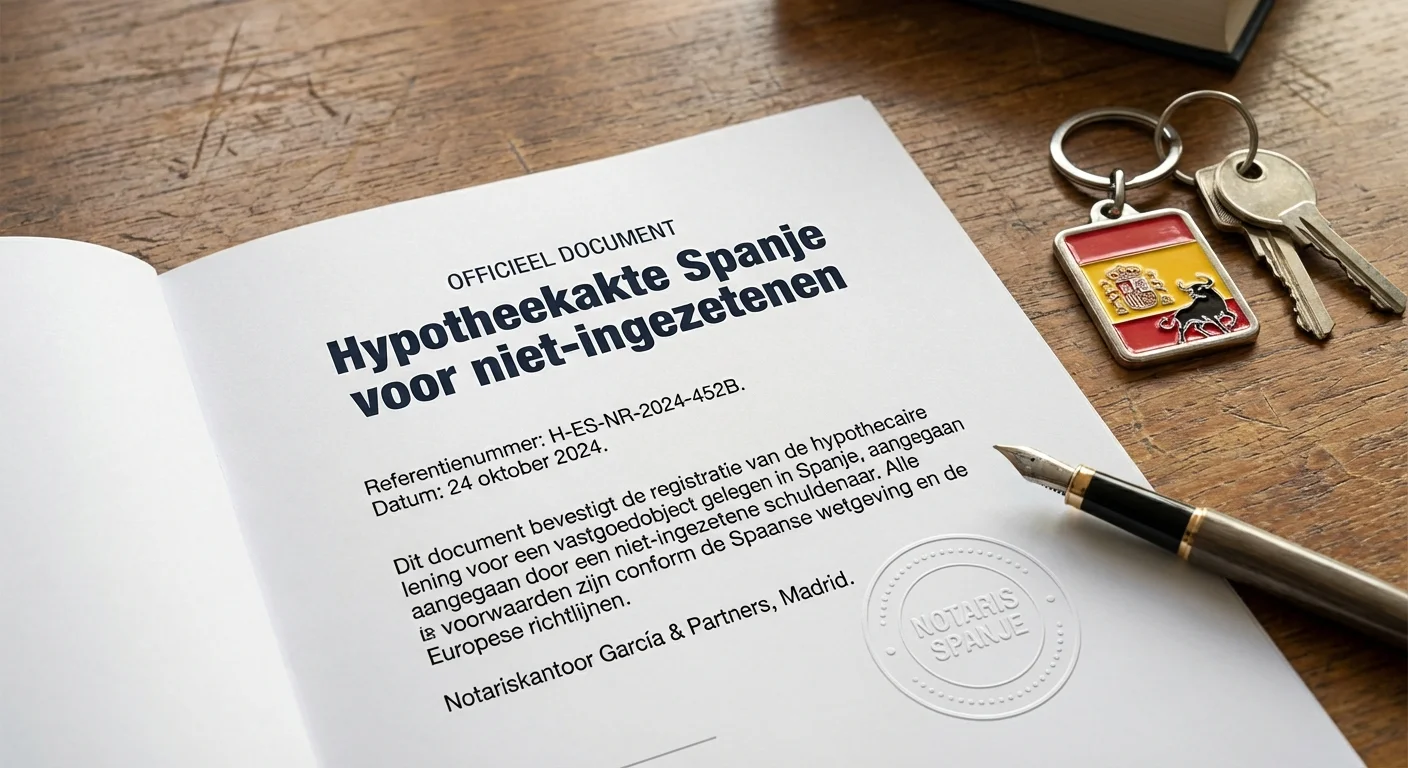
How much can you borrow as a non-resident in Spain?
Als niet-resident kunt u doorgaans tot ongeveer 70% of the valuation lenen. Koopt u een woning van €300.000 die op exact dat bedrag wordt getaxeerd, dan financiert de bank in de regel maximaal €210.000. U brengt zelf €90.000 eigen inbreng mee, plus de aankoopkosten. Houd er rekening mee dat de bank rekent met de láágste waarde: ligt de taxatie onder de koopprijs, dan daalt het bedrag dat u kunt lenen mee.
Financing rates and equity
Reserveer naast uw eigen inbreng altijd budget voor de bijkomende buyer's costs in Spain, die 10 tot 15% bovenop de aankoopprijs bedragen. Een rekenvoorbeeld voor een bestaande woning van €300.000: ongeveer €90.000 eigen inbreng (30%), plus pakweg €30.000 tot €45.000 aan overdrachtsbelasting, notaris-, register- en advocaatkosten. In totaal heeft u dus al snel €120.000 tot €135.000 aan eigen middelen nodig. Een eerlijke berekening vooraf voorkomt onaangename verrassingen.
Factors affecting loan amount
Hoeveel een bank u uiteindelijk wil lenen, hangt af van meerdere factoren tegelijk: uw aantoonbare en stabiele inkomen, uw bestaande schulden en lasten in eigen land, uw leeftijd (zie hieronder), het type woning en de ligging. Een goed verhuurbare woning in een gewilde kustplaats wordt als waardevaster gezien dan een afgelegen object. Voor wie de koop deels als belegging ziet, helpt onze gids over het Calculating the return on a holiday home om de cijfers realistisch in te schatten; een netto huurrendement van 4 tot 7% per jaar is een gangbaar richtcijfer.

Rente, looptijd en leeftijdsgrenzen
De rente, de looptijd en uw leeftijd hangen in Spanje nauw samen. Begrijpt u deze drie elementen, dan kunt u de aanbiedingen van verschillende banken eerlijk met elkaar vergelijken en de financieringsvorm kiezen die bij uw situatie past.
Vaste, variabele of gemengde rente
Spaanse banken bieden grofweg drie rentevormen. Bij een vaste rente staat uw maandlast voor de hele looptijd vast: maximale zekerheid, doorgaans tegen een iets hoger starttarief. Bij een variabele rente betaalt u de Euribor plus een opslag van de bank; deze beweegt mee met de markt en kan dus dalen of stijgen. Daarnaast bestaat een gemengde (mixta) rente, waarbij u de eerste jaren een vaste rente betaalt en daarna overgaat op een variabel tarief. Een diepere vergelijking vindt u in ons artikel over Refinancing your mortgage in Spain, waarin ook de afweging tussen rentevormen aan bod komt.
Looptijd en leeftijdsgrenzen
De looptijd van een Spaanse hypotheek voor niet-residenten ligt doorgaans tussen 20 en 30 jaar. Hierbij geldt een belangrijke leeftijdsgrens: de meeste banken willen dat de lening volledig is afgelost rond uw 75e, soms 80e levensjaar. Bent u 55 jaar, dan biedt een bank u dus vaak een looptijd van maximaal 20 jaar. Voor gepensioneerden en oudere kopers is dit een cruciaal aandachtspunt, omdat een kortere looptijd de maandlasten verhoogt en daarmee uw maximale leencapaciteit beperkt.

Benodigde documenten voor uw hypotheekaanvraag
Een Spaanse bank beoordeelt uw aanvraag vrijwel volledig op papier. Hoe completer en overzichtelijker uw dossier, hoe sneller en gunstiger de bank beslist. Een gedegen voorbereiding van uw documentatie is daarom de belangrijkste stap die u zelf in de hand heeft. In onze uitgebreide checklist met benodigde documenten voor een hypotheek in Spanje staat alles op een rij; hieronder vatten wij de hoofdlijnen samen.
Personal and financial supporting documents
Reken op de volgende stukken voor uzelf:
- Een geldig paspoort of identiteitskaart en uw NIE-number (uw Spaanse fiscale identificatienummer);
- Inkomensbewijs: recente loonstroken en een werkgeversverklaring, of bij zelfstandigen uw jaarcijfers en winst-en-verliesrekeningen;
- Uw belastingaangiften van de afgelopen één à twee jaar;
- Bankafschriften van de laatste maanden, die uw inkomsten en bestedingspatroon laten zien;
- Een overzicht van uw lopende leningen en verplichtingen, zoals een hypotheek in eigen land.
Documenten worden vaak in beëdigde vertaling gevraagd. Houd er rekening mee dat de bank meestal verlangt dat u een Spaanse bankrekening opent waarop de maandtermijnen worden afgeschreven.
Documents specific to the property
Naast uw persoonlijke dossier beoordeelt de bank ook de woning zelf. Hiervoor zijn een recente note simple uit het eigendomsregister, het voorlopige koopcontract en de taxatie nodig. De nota simple toont wie de juridische eigenaar is en of er schulden of beslagen op het pand rusten. Een grondige legal review vooraf is onmisbaar, zowel voor de bank als voor uw eigen gemoedsrust.

De taxatie (tasación): de basis van uw financiering
The tasación is de officiële taxatie van de woning door een door de Bank van Spanje erkend taxatiebureau. Dit rapport is bepalend, want het maximale leenbedrag wordt berekend over de getaxeerde waarde, niet automatisch over de koopprijs. De kosten van de taxatie (vaak enkele honderden euro’s) komen doorgaans voor uw rekening en betaalt u ook als de hypotheek uiteindelijk niet doorgaat.
Valt de taxatie lager uit dan de overeengekomen koopprijs, dan daalt het bedrag dat u kunt lenen en moet u meer eigen inbreng meebrengen. Het is daarom verstandig de uitkomst van de taxatie af te wachten voordat u zich definitief vastlegt. Wij begeleiden u graag bij de aanvraag van uw hypotheek in Spanje, inclusief de planning en opvolging van de taxatie.

Het aanvraagproces stap voor stap
Een hypotheek in Spanje als niet-resident afsluiten verloopt langs een aantal vaste stappen. Wie de volgorde kent, houdt het overzicht en voorkomt vertraging.
- Oriëntatie en NIE-nummer: u vraagt uw NIE-nummer aan en opent een Spaanse bankrekening; beide zijn onmisbaar om verder te kunnen.
- Voorlopig akkoord: u dient uw dossier in en de bank geeft een eerste, indicatieve goedkeuring op basis van uw inkomen en de woning.
- Taxatie (tasación): een erkend bureau taxeert de woning; de uitkomst bepaalt het definitieve leenbedrag.
- De FEIN: de bank stelt het bindende aanbod op (zie hieronder) en u krijgt de wettelijke bedenktijd.
- Notariële akte: na de reflectieperiode tekent u de hypotheek- en eigendomsakte bij de notaris, waarna de woning op uw naam komt.
The role of the bank and the notary
De bank financiert en de notaris bewaakt de juridische zuiverheid van de transactie. De notaris in Spanje controleert de identiteit van de partijen, leest de akte voor en bevestigt dat aan alle wettelijke vereisten is voldaan, waaronder de verplichte reflectieperiode. Pas wanneer alles klopt, wordt de akte ondertekend en ingeschreven in het eigendomsregister.

De FEIN en de verplichte reflectieperiode van 10 dagen
The FEIN (Ficha Europea de Información Normalizada) is het bindende, gestandaardiseerde hypotheekaanbod dat de bank u verstrekt. Hierin staan alle voorwaarden zwart op wit: het leenbedrag, de rente en het rentetype, de looptijd, de maandlast, de kosten en de eventuele verzekeringen. De FEIN maakt aanbiedingen van verschillende banken onderling vergelijkbaar.
Na ontvangst van de FEIN geldt een wettelijk verplichte reflectieperiode van tien dagen. In deze periode mag u niet tekenen; de tijd is bedoeld om de voorwaarden rustig door te nemen, advies in te winnen en bewust te beslissen. Tijdens deze fase bezoekt u ook de notaris voor een kosteloze toelichting op de akte. Deze consumentenbescherming voorkomt overhaaste beslissingen. Lees meer in onze uitleg over de FEIN in Spanje.

Het belang van uw NIE-nummer bij de financiering
Zonder NIE-nummer komt u geen stap verder. Het NIE number (Número de Identidad de Extranjero) is uw fiscale identificatie in Spanje en is verplicht om een bankrekening te openen, een hypotheek aan te vragen, belasting te betalen en de eigendomsakte te ondertekenen.
The link between tax and banking
Via uw NIE-nummer koppelt de Spaanse fiscus uw bezit, uw bankrekening en uw belastingverplichtingen aan elkaar. Als niet-resident krijgt u onder meer te maken met de jaarlijkse aangifte van fictief inkomen (imputed income) wanneer u de woning niet verhuurt, en met de belasting op huurinkomsten (IRNR, 19% binnen de EU/EER met aftrek van kosten) wanneer u dat wel doet. Een goed overzicht hiervan vindt u in onze gids over Property taxes in Spain for 2026. Regel uw NIE-nummer dus vroeg, want het is de sleutel tot het hele traject.

Bijkomende kosten en belastingen bij de koop
Een hypotheek dekt de aankoopprijs deels, maar niet de bijkomende kosten. Houd rekening met 10 tot 15% bovenop de koopprijs aan kosten koper. Welk percentage precies geldt, hangt af van het type woning.
Taxes in new construction versus existing construction
At a bestaande woning betaalt u overdrachtsbelasting (ITP). In de Comunidad Valenciana, waar de Costa Blanca ligt, daalt dit tarief vanaf 1 juni 2026 van 10% naar 9% voor woningen tot €1.000.000. Bij new building betaalt u in plaats daarvan 10% IVA (btw) plus de zegelbelasting AJD. De afweging tussen beide leest u in ons artikel over new-build or existing properties in Spain. Bovenop deze belasting komen de notaris-, register- en advocaatkosten.
Annual cost after purchase
Na de aankoop krijgt u te maken met terugkerende lasten: de gemeentelijke onroerendgoedbelasting IBI (ongeveer €200 per €100.000 woningwaarde), eventuele kosten van een vereniging van eigenaren, nutsvoorzieningen en verzekeringen. Bezit u meerdere panden, dan kan de vermogensbelasting in beeld komen, met een drempel van ongeveer €700.000 netto per persoon (regionaal variërend). Wilt u uw woning na aankoop zorgeloos beheren of verhuren, dan ondersteunen wij u met maintenance and key management en met de verhuur van uw vastgoed.

Verschillen tussen Spaanse en Nederlandse of Belgische hypotheken
Wie gewend is aan de hypotheekmarkt in Nederland of België, merkt enkele duidelijke verschillen. In Spanje geldt geen hypotheekrenteaftrek zoals Nederlanders die kennen, en de financiering is met circa 70% behoudender dan de soms hogere percentages in eigen land. Ook is de variabele rente, gekoppeld aan de Euribor, in Spanje van oudsher gangbaarder, al kiezen steeds meer buitenlandse kopers nu bewust voor de zekerheid van een vaste rente. Tot slot speelt de eigen inbreng een grotere rol: u brengt meer eigen geld mee dan u in eigen land wellicht gewend bent.
Veelgemaakte fouten en hoe u ze voorkomt
De meeste problemen ontstaan niet door de hypotheek zelf, maar door onvoldoende voorbereiding. Een paar valkuilen komen telkens terug.
Financial preparation and documentation
- De aankoopkosten onderschatten: reken altijd met 10–15% extra, bovenop uw eigen inbreng van 30%.
- Te laat met het NIE-nummer: zonder NIE staat het hele proces stil. Regel het als eerste.
- Geen rekening houden met de taxatie: leg u niet definitief vast voordat de tasación bekend is.
- De woning niet juridisch laten controleren: sla nooit de legal review over.
- Aanbiedingen niet vergelijken: gebruik de FEIN om de voorwaarden van meerdere banken naast elkaar te leggen.
Wie zich laat begeleiden door een ervaren partij, voorkomt deze fouten vrijwel altijd. Onbekend met de Spaanse vakterminologie? Onze lijst met Spanish abbreviations and terms helpt u op weg.
How we can help you
At Invest in Spain begeleiden wij Belgen, Nederlanders, Duitsers en Fransen van het eerste oriënterende gesprek tot de handtekening bij de notaris. Ons team, geleid door vastgoedexpert en CEO Kenzo Fayot, kent de Spaanse banken, de lokale markt van de Costa Blanca en de fiscale finesses voor niet-residenten. Wij helpen u met de hypotheekaanvraag van A tot Z: van het opbouwen van een sterk dossier en het vergelijken van bankaanbiedingen tot de coördinatie van taxatie, NIE-nummer en notaris. Of u nu een tweede verblijf, een verhuurinvestering of een definitieve plek onder de zon zoekt, wij zorgen dat uw financiering soepel en zonder verrassingen verloopt. Bekijk gerust ons volledige aanbod aan property services in Spain.
Wilt u weten wat in uw situatie haalbaar is? Please feel free to contact us, with no obligation en wij denken graag met u mee over uw mogelijkheden.
Veelgestelde vragen over een hypotheek in Spanje als niet-resident
Hoeveel kan ik lenen als niet-resident in Spanje?
Spaanse banken financieren niet-residenten doorgaans tot ongeveer 70% van de taxatiewaarde van de woning. De resterende 30% plus de aankoopkosten van 10 tot 15% brengt u zelf in. De bank rekent altijd met de laagste van koopprijs of taxatiewaarde, dus een tegenvallende taxatie verlaagt het bedrag dat u kunt lenen.
Welke documenten heb ik nodig voor een Spaanse hypotheek?
U heeft uw paspoort en NIE-nummer nodig, inkomensbewijs (loonstroken of jaarcijfers), belastingaangiften van de afgelopen één à twee jaar, recente bankafschriften en een overzicht van uw lopende schulden. Voor de woning vraagt de bank een recente nota simple, het koopcontract en de taxatie. Documenten worden vaak in beëdigde vertaling verlangd.
Wat is de FEIN en de reflectieperiode van 10 dagen?
De FEIN is het bindende, gestandaardiseerde hypotheekaanbod waarin alle voorwaarden staan: bedrag, rente, looptijd, maandlast en kosten. Na ontvangst geldt een wettelijk verplichte reflectieperiode van tien dagen waarin u niet mag tekenen. Deze bedenktijd beschermt u en geeft u de ruimte om de voorwaarden rustig te beoordelen en bij de notaris toe te laten lichten.
Kan ik kiezen tussen een vaste en een variabele rente?
Ja. Spaanse banken bieden een vaste rente (vaste maandlast, maximale zekerheid), een variabele rente (Euribor plus een opslag, beweegt met de markt mee) en een gemengde rente (eerst vast, daarna variabel). De keuze hangt af van uw behoefte aan zekerheid en uw verwachtingen over de rente-ontwikkeling.
Heb ik een NIE-nummer nodig voor een hypotheek?
Ja, het NIE-nummer is verplicht. U heeft het nodig om een Spaanse bankrekening te openen, de hypotheek aan te vragen, belasting te betalen en de eigendomsakte te ondertekenen. Regel uw NIE-nummer daarom als eerste stap, want zonder dit nummer staat het hele aankoopproces stil.