Buying a penthouse in Spain means investing in the top end of the market: a spacious roof terrace or solarium, unobstructed panoramic views of the Mediterranean Sea, and a level of privacy that a standard flat rarely offers. For affluent buyers from Belgium, the Netherlands, Germany and France, an ático (the Spanish term for a penthouse) combines an exceptional lifestyle with attractive rental potential. However, a successful purchase does require a structured approach: applying for your NIE-property number, an independent legal inspection, arranging financing and accurately estimating the buyer’s costs. In this definitive guide, we take you through every stage, with a particular focus on the Costa Blanca and luxury properties in Ibiza.
Anyone dreaming of an exclusive holiday in the sun will find that a penthouse in Spain not only offers a wonderful living experience, but can also be a sound investment that retains its value and provides a high standard of living.
Choosing the right location, drawing up an accurate budget and devising a well-thought-out strategy are essential for long-term success. Below you will find the key points at a glance, after which we will go into each aspect in detail.
- Make sure you apply for your compulsory NIE number in good time and open a Spanish bank account.
- Always engage a local, independent solicitor to carry out the legal review.
- Please bear in mind that there will be additional costs for the buyer of around 10 to 15 per cent on top of the purchase price.
- Check the legal status of the roof terrace and the community charges before you sign.

What makes a penthouse (ático) in Spain so special?
Before you buy a penthouse in Spain, it is worth understanding exactly what distinguishes an ático from a standard flat. In the Spanish property market, an ‘ático’ is the property on the top floor of a block, almost always featuring a spacious private terrace or a so-called ‘solárium’: an open-air roof area that you can furnish as you see fit. It is precisely this outdoor space that adds value. Whilst a flat on a middle floor often has a modest balcony, a penthouse offers dozens of square metres of extra outdoor living space, often with room for a dining area, lounge set, jacuzzi or even a small private swimming pool.
The second feature is the view. As an ático rises above the surrounding buildings, you can enjoy an unobstructed panorama: the Mediterranean Sea, the marina, the mountains of the Northern Costa Blanca or the skyline of a bustling coastal town. For many buyers from Belgium and the Netherlands, this visual aspect is the deciding factor, as it fundamentally changes the day-to-day living experience.
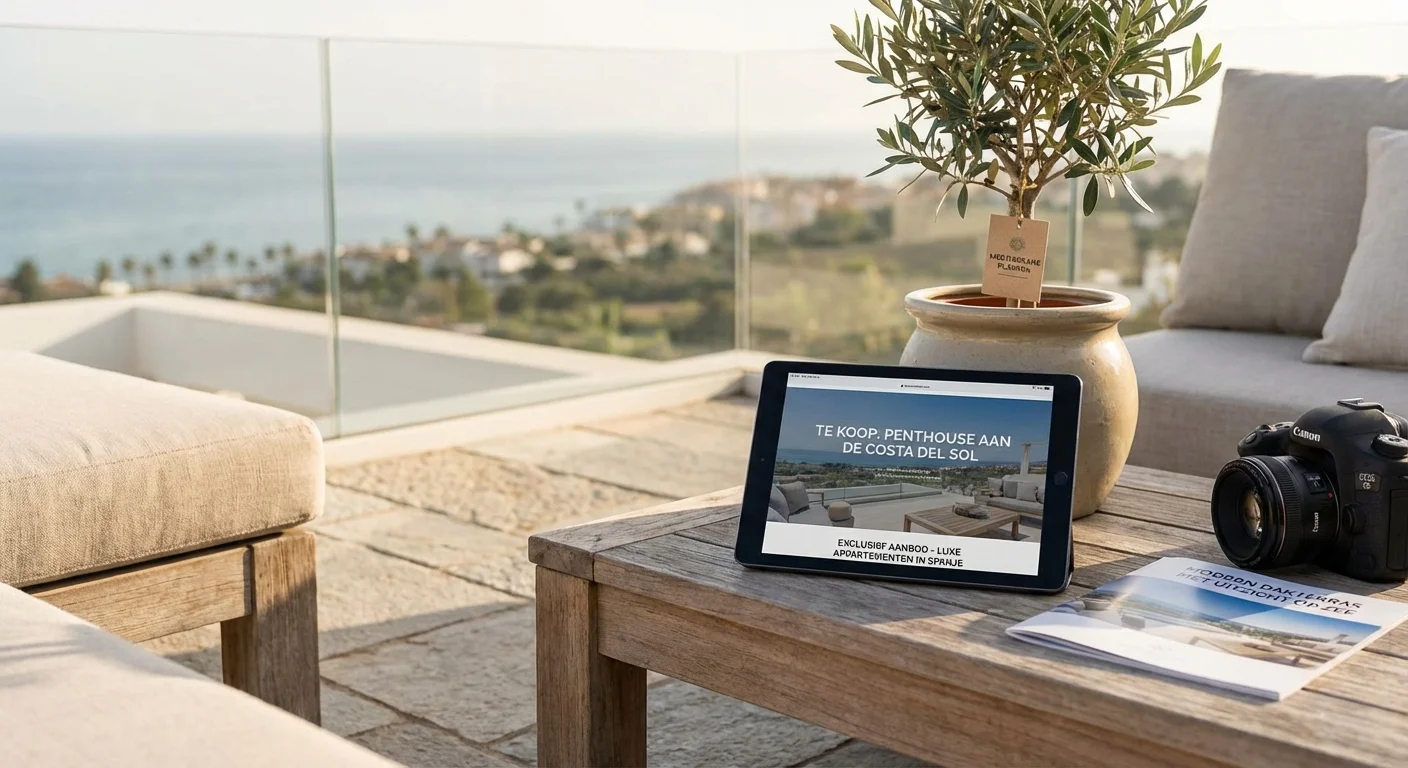
Thirdly, there is the issue of privacy. By definition, a penthouse has no neighbours above it, which significantly reduces noise disturbance. Moreover, there are often fewer shared walls, making the living experience feel more peaceful and exclusive. For pensioners seeking peace and quiet, for expats working from home and for investors looking for a distinctive rental property, this is a major advantage. It also explains why an ático generally retains a higher resale value than a comparable flat on a lower floor.
The advantages of the top floor at a glance
“A penthouse is more than just a home; it is a symbol of success and a guarantee of unobstructed views that inspire you day after day.”
- Maximum privacy without upstairs neighbours who might cause noise nuisance.
- Large outdoor spaces that serve as a natural extension of the living room.
- A higher resale value and strong demand in popular coastal areas.
- Optimal natural light throughout the day, a hallmark of modern Spanish architecture.
- An attractive property for holiday lets, thanks to the terrace and the view.
Why a penthouse in Spain is appealing: lifestyle and return on investment
For many buyers, the dream of owning a home under the Spanish sun is inextricably linked with freedom, comfort and prestige. A penthouse in Spain is no longer just a distant dream, but a strategic choice for those seeking a superior quality of life. The combination of a favourable climate, the relative proximity to Belgium, the Netherlands and Germany, and the architectural masterpieces along the Costa Blanca makes this investment particularly attractive. You swap the grey northern winters for more than three hundred hours of sunshine a year, whilst you can be back home within a few hours via Alicante or Valencia.
Alongside the emotional aspect, financial stability plays a major role. Spain has a tax structure which, if properly managed, offers opportunities for investors wishing to diversify their capital. Due to the continued popularity of the coast, demand for high-quality homes remains high, which is favourable for long-term value growth. Anyone who looks into Investing in property in Spain, has discovered that a penthouse is one of the most sought-after properties in the luxury market.
The rental potential deserves special attention. Penthouses are extremely popular on the holiday rental market due to their terrace, views and exclusive appeal, which translates into higher weekly rates and higher occupancy rates. A net rental yield of 4 to 7 per cent per year is a realistic benchmark for a well-located holiday home. If you’d like to work this out in detail, our page on the calculating the return on a holiday home to get you started. Please bear in mind, however, that letting to tourists in the Comunidad Valenciana requires an official rental licence is required; without that licence, you risk heavy fines.
When you choose a luxury property on the top floor, you are therefore investing in two things at once: a unique lifestyle and a rental property that retains its value. These properties often feature spacious roof terraces, private swimming pools and a standard of finish that far exceeds that of standard-build properties. For Belgian buyers taking this step, it is wise to go through the entire process of Buying property in Spain as a Belgian to examine thoroughly, and also the broader A comprehensive guide to buying property in Spain to be consulted.
The best locations on the Costa Blanca for a penthouse
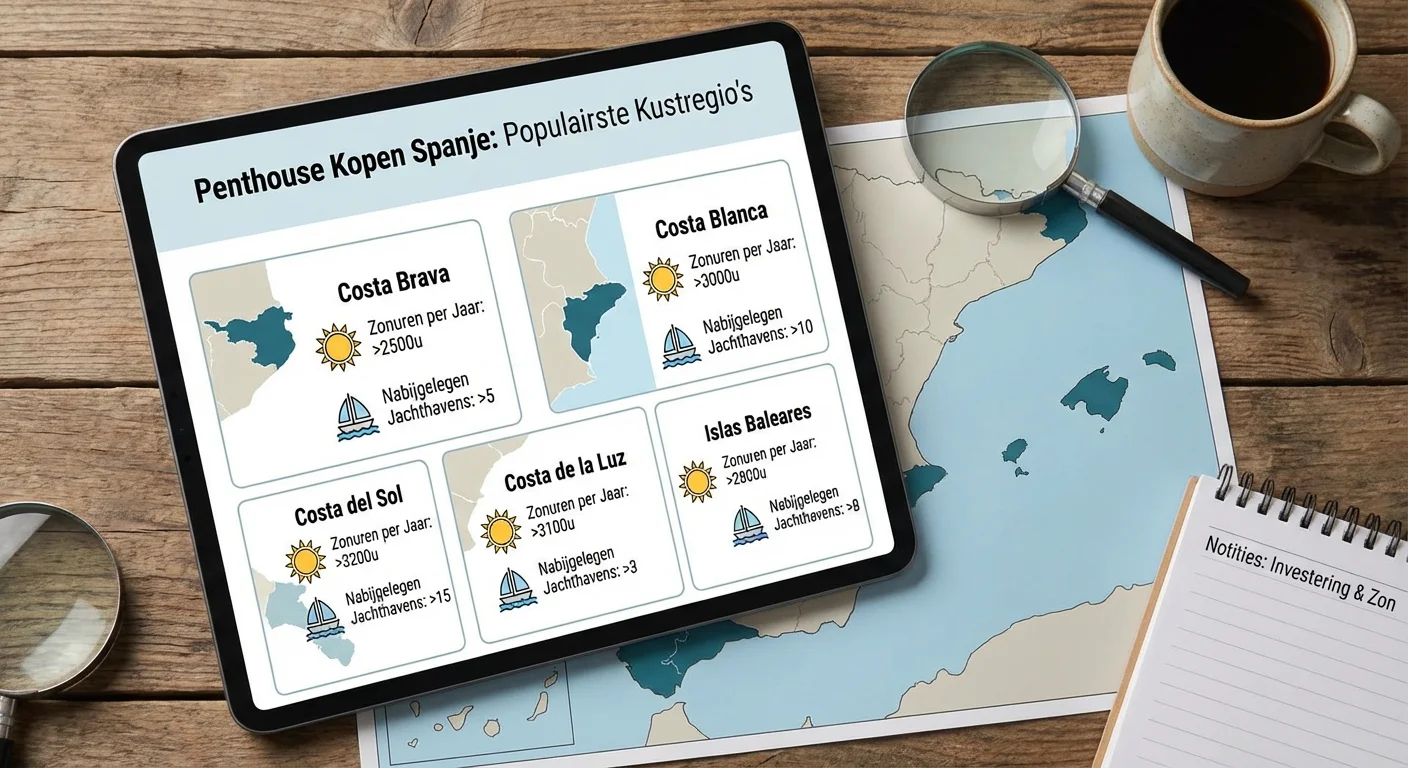
Choosing the right location is essential when considering a luxury property on the Mediterranean. Spain offers an enormous variety of coastlines, but for buyers from Belgium, the Netherlands, Germany and France, the Costa Blanca consistently stands out thanks to its excellent value for money, its accessibility via Alicante Airport and the wide range of both new-build and existing properties on offer. Many buyers prefer locations with a proven track record in terms of value retention and rental potential. Those wishing to explore a wider range of options will find valuable insights in our overview of the best regions for property investment.
Torrevieja and the Southern Costa Blanca
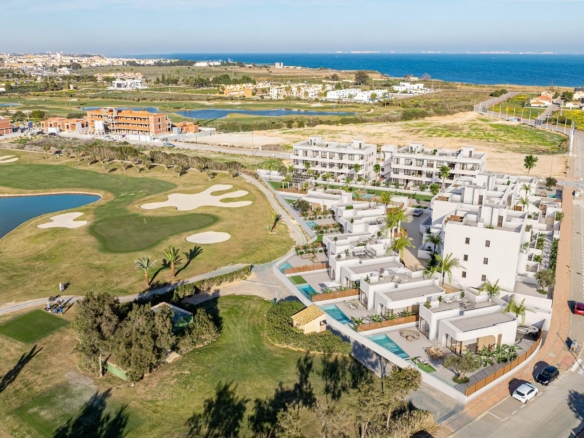
In the south, Torrevieja is an accessible and lively base. The town is known for its salt lakes, which offer a favourable microclimate, a wide range of modern flats and penthouses, and attractive prices compared to the northern coast. For investors looking to let properties all year round, this is an attractive market due to the constant demand. The neighbouring towns of Orihuela Costa and Pilar de la Horadada, on the southern Costa Blanca, also offer spacious sun terraces on penthouses with views over the sea and the golf courses.
Calpe, Altea and Dénia: the Northern Costa Blanca
A little further north, the Costa Blanca North offers a greener, more mountainous and more exclusive atmosphere. Calpe, with its iconic Peñón de Ifach, combines a lively promenade with high-quality new-build properties, where penthouses offer spectacular views over the rock and the bay. Altea is known as the artistic heart of the coast, with a charming old town, a marina and properties where taste and exclusivity come together. Dénia, with its castle, harbour and direct ferry link to Ibiza, attracts buyers seeking tranquillity, fine dining and authenticity. In these towns, as well as in the nearby towns of Jávea and Moraira, a penthouse is often more affordably priced than in the fashionable seaside resorts of Andalusia, without compromising on comfort or hours of sunshine.
“The northern Costa Blanca is particularly green and mountainous, offering a unique view from your roof terrace that you rarely find on the busier southern coast.”
Ibiza and the Balearic Islands for the very top end of the market
For those seeking absolute exclusivity, the Balearic Islands – and Ibiza in particular – are the ultimate destination. Demand for high-end property on the islands consistently outstrips supply, resulting in a very stable and prestigious market. A penthouse in Ibiza is an investment in scarcity: limited supply, an international clientele and a lifestyle that cannot be found anywhere else in Europe. The choice between the Costa Blanca and Ibiza ultimately depends on your budget, your letting objectives and your personal preferences.
- Torrevieja and Orihuela Costa: affordable prices, strong rental potential and year-round demand.
- Calpe and Dénia: spectacular views, marinas and excellent value for money.
- Altea, Jávea and Moraira: Exclusivity, nature and charm on the Northern Costa Blanca.
- Ibiza: the very top end of the market, characterised by extreme scarcity and international prestige.
The step-by-step guide: buying a penthouse safely in Spain
The buying process always begins with thorough preparation and a clear definition of your housing requirements and budget. As the Spanish property market differs significantly from those in Belgium and the Netherlands, it is wise not to rush into things. You must take into account local regulations, the structural condition of the building and, particularly in the case of an ático, the legal status of the roof terrace. By following a structured plan, you minimise financial risks and ensure the transfer goes smoothly.
Step 1: NIE number and bank account
The first formal step is to apply for an NIE number (Número de Identidad de Extranjero), the identification number that is mandatory for every foreign buyer and essential for any official transaction, from signing the deed to connecting utilities. In our detailed guide to the Apply for NIE number You can read exactly how this works. At the same time, you will need to open a Spanish bank account, which you will need to pay for the property, taxes and the monthly community charges.
Step 2: Arranging financing
Decide early on in the process how you will finance the purchase. Spanish banks generally grant mortgages to non-residents for up to around 70 per cent of the valuation; you will need to cover the other costs and the remaining purchase price from your own funds. Thoroughly preparing your application, including proof of income, tax returns and bank statements, will speed up the process considerably. Make sure you look into the options for a Mortgages in Spain for non-residents, and see which ones Documents you need for a Spanish mortgage. We would be happy to assist you with the Applying for a mortgage in Spain.
Step 3: Legal due diligence
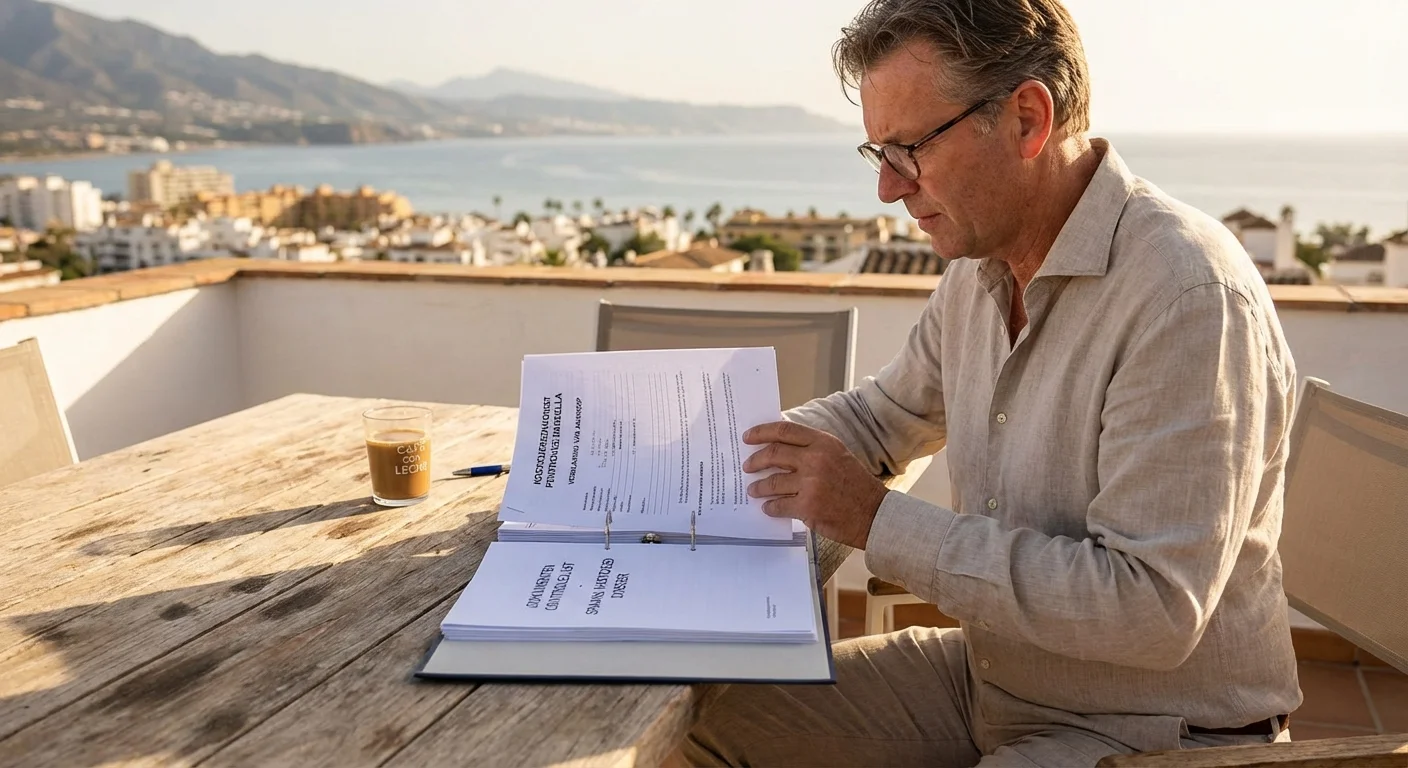
Once you have found a suitable property, the due diligence phase begins, during which an independent solicitor checks that there are no outstanding debts against the property. This is particularly important in the case of a penthouse: otherwise, you could be held liable for any outstanding service charges or unpaid bills from the previous owner. The solicitor will check the Note Simple at the Land Registry to verify who the rightful owner is and whether all alterations — such as a conservatory, pergola or terrace extension — have been legally authorised. A thorough legal control of real estate in Spain is the key to protecting your investment. Our guide to the Note Simple explains why this document is crucial; an online extract costs just 9.02 euros plus VAT via registradores.org.
“Security when buying Spanish property lies in the details of the legal due diligence and the local expertise of your advisers.”
Step 4: Booking, Contrato de Arras and the solicitor
Once the legal checks have been successfully completed, you formalise the agreement in the Contrato de Arras, the official provisional purchase contract in which the price and completion date are set out. The final transfer takes place at a Spanish notary’s office, where the Escritura de Compraventa is signed by both parties. In Spain, the notary has a supervisory role but does not carry out a comprehensive structural survey; that remains your own responsibility. In our explanation of the the role of the notary in Spain you can read exactly what to expect at this stage. Once you have signed the contract and made payment, you will receive the keys and will officially be the owner.
- Applying for an NIE number and opening a Spanish bank account.
- Verification of the Nota Simple and the legal status of the roof terrace.
- Payment of the deposit via a secure escrow account.
- Signing of the Escritura at the notary’s office and registration in the register.
Buyer’s costs for a penthouse in Spain
Realistic budgeting is essential. On top of the purchase price, you will usually pay 10 to 15 per cent in additional buyer’s costs. The largest item is the transfer tax or VAT. For existing properties, you pay the transfer tax ITP; in the Valencian Community, where the Costa Blanca is located, this rate will fall from 10 to 9 per cent from 1 June 2026 for properties valued at up to 1,000,000 euros. For a new-build property, you will instead pay 10 per cent IVA (VAT) plus the AJD-stamp duty. If you’d like to work out the exact amount, please use our tool for calculating the buyer’s costs.
In addition, there are the costs for the notary, registration in the land registry and your independent solicitor. You should also take into account the valuation (tasación) if you are taking out a mortgage, as well as any bank charges. If you are considering a new-build property, it is worth comparing the differences between new-build and existing properties It is worth looking into carefully, as the tax regime and the completion guarantees differ.
In addition to the one-off costs, there are annual charges. You pay the IBI, the Spanish property tax, which amounts to approximately 200 euros per 100,000 euros of the property’s value and varies from municipality to municipality. If you do not let out your property, a notional income (imputed income) applies: 19 per cent of 1.1 per cent of the cadastral value (in the event of a revaluation within ten years) or of 2 per cent. If you do let out your property, as a non-resident you will pay IRNR: 19 per cent for residents of the EU and the EEA (with expenses being deductible via Form 210) and 24 per cent on gross income for non-EU residents. Furthermore, where net assets exceed approximately 700,000 euros per person, capital gains tax may also apply, with regional variations.
Points to note: community, maintenance and letting licence
A penthouse comes with specific considerations that you need to take into account before purchasing. Anyone who underestimates these runs the risk of unpleasant surprises after the transfer of ownership.
Community charges and the Owners’ Association
When you make a purchase, you automatically become a member of the Comunidad de Propietarios, the Spanish Association of Homeowners. This involves monthly charges for the maintenance of the lift, the swimming pool, the gardens and other communal facilities. Always request the minutes of the most recent meetings to check whether any major renovations or special contributions (derramas) are planned. Furthermore, ensure that the exclusive use of the roof terrace is clearly set out in writing in the articles of association; in the case of an ático, this terrace is often the most valuable part of the property.
Maintenance of the roof terrace and outdoor area
As a penthouse is directly exposed to strong sunlight and salty sea air, the terrace requires proactive maintenance. Regular inspections of the drainage system and sealant edges prevent costly water damage during the rare but heavy Spanish downpours. For owners who do not live in Spain all year round, professional property management is often the best solution: a local manager carries out periodic checks, airs the property, collects the post and keeps facilities such as air conditioning and the swimming pool in top condition. Our article on the advantages of professional key management Please explain this in more detail.
“A well-maintained outdoor space is the calling card of any penthouse and plays a major role in determining its luxurious appearance, its marketability and the comfort of living there.”
Essential maintenance tips for your patio
- Cleaning of drains to prevent blockages during heavy downpours.
- Protecting wooden decking or furniture against UV radiation.
- Inspection of the irrigation systems for your roof garden or planters.
- Inspection of the outdoor lighting and railings for corrosion caused by sea air.
The letting licence
If you wish to let your penthouse to tourists, you will need an official tourist letting licence in the Comunidad Valenciana. Without this licence, short-term lettings are not permitted and you risk being fined. It is advisable to check whether you can obtain a licence before you buy, particularly if rental income is a key factor in your decision to invest. Our guide to the rental licence in Spain and our service regarding property rental in Spain We’ll help you with this.
How we can help you with your penthouse in Spain
At Invest in Spain, we guide high-net-worth buyers and investors from Belgium, the Netherlands, Germany and France through every stage of purchasing a penthouse on the Costa Blanca and in Ibiza. Our team is led by a property expert and CEO Kenzo Fayot and speaks your language, knows the local market and takes care of everything from purchase support and investment advice to legal due diligence, mortgages, letting and maintenance. In this way, we combine personalised service with the reassurance of having a reliable local partner. You can find a comprehensive overview of our full range of services on our page at property services in Spain, and if you’d like to have a look around for yourself, you can browse our selection to searching for property in Spain.
Whether you’re dreaming of an ático with a solárium in Calpe, a spacious penthouse in Torrevieja or an exclusive property in Ibiza: we’ll ensure that the legal details, the NIE number, the financing and the transfer at the notary’s office go smoothly. Are you ready to make the move south and invest in exclusive property under the Spanish sun? Get in touch with us today, with no obligation to arrange a personal consultation about the current properties on offer and receive guidance at every stage of this unique buying process.
Frequently asked questions about buying a penthouse in Spain
What are the buyer’s costs when buying a penthouse in Spain?
In addition to the purchase price, you should allow for approximately 10 to 15 per cent in buyer’s costs. For existing properties, you will pay transfer tax (ITP), which in the Valencian Community will be reduced from 10 to 9 per cent from 1 June 2026 for properties valued at up to 1,000,000 euros. For new-build properties, you will pay 10 per cent VAT plus AJD stamp duty. On top of this, there are fees for the notary, property registration and your independent solicitor.
Do I need a letting licence to let out my penthouse?
Yes. An official letting licence is required for tourist lettings in the Comunidad Valenciana, where the Costa Blanca is located. Without a licence, short-term lettings are not permitted and you risk being fined. You should therefore check whether a licence is feasible before you buy, particularly if rental income is a key objective.
What makes an ático (penthouse) different from a normal flat?
An ático is a flat on the top floor, almost always featuring a spacious roof terrace or solarium, unobstructed panoramic views and extra privacy with no neighbours above. This combination provides more outdoor living space, greater comfort, a strong rental profile and, generally, a better resale value.
Which locations on the Costa Blanca are the most suitable?
On the southern Costa Blanca, Torrevieja, Orihuela Costa and Pilar de la Horadada offer affordable prices and strong rental potential. On the northern Costa Blanca, Calpe, Altea and Dénia stand out for their exclusivity, natural surroundings and views. For the very top end of the market, Ibiza is the most prestigious choice.
As a non-resident, can I get a mortgage for a penthouse?
Yes. Spanish banks generally grant mortgages to non-residents for up to around 70 per cent of the valuation. You will need to cover the remaining amount and the buyer’s costs from your own funds. A well-prepared application, including proof of income and tax returns, will significantly speed up the approval process.