The best regions for property investment in Spain For most buyers, the Costa Blanca (both North and South), the Costa del Sol, the The Costa Cálida around Murcia, the Balearic Islands and the major cities Madrid, Valencia and Málaga. The Costa Blanca is our core area and generally offers the best value for money in terms of purchase price and net rental yield, whilst the Costa del Sol and the Balearic Islands are particularly attractive for the higher-end market. Which region is right for you depends on your budget, your letting plans and whether you intend to stay there yourself.
In this guide, we take you on a step-by-step tour of the regions that really matter. We do this based on years of experience with buyers from Belgium, the Netherlands, Germany and France: investors looking for a second income, families seeking a second home, and pensioners who want to combine their winter holidays with a sensible investment. For each of these profiles, the ideal region is slightly different.
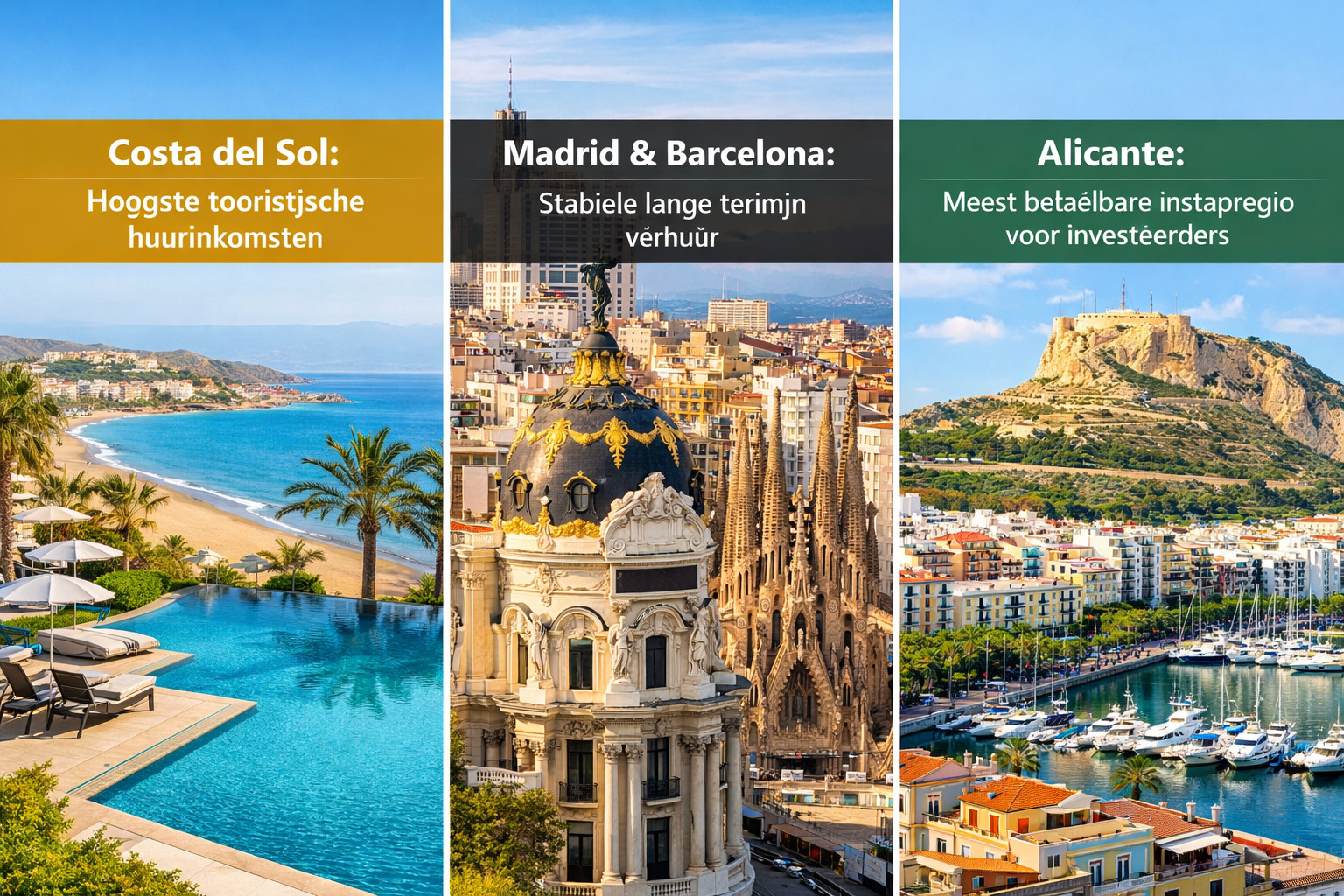
Why invest in Spanish property now?
The Spanish property market is in a healthy phase. Following years of recovery and a sensible realignment of prices, demand for high-quality properties on the coast and in the major cities continues to rise. For you as a buyer, this means that well-located properties retain their value and, in many areas, are still increasing in value. Furthermore, Spain is one of the most visited countries in the world, which keeps the rental market buoyant all year round.
For a holiday home in a good location, a net rental yield of around 4 to 7% per year is a realistic benchmark. Exactly how much you’ll be left with depends on the purchase price, the occupancy rate and local costs. If you’d like to work this out for a specific property, our guide to Calculate the return on a holiday home in Spain to get you started. It’s a good idea to have a clear idea of the Taxes for property investors in Spain, as these also help determine your final net profit.
As well as the return on investment, the climate plays an undeniable role. Many buyers are looking not only for a financial return, but also for a place where they themselves would enjoy staying. It is this dual benefit that makes the Spanish market so special. The airports at Alicante and Valencia, with direct flights from Brussels, Charleroi, Amsterdam and Eindhoven, provide excellent access to the Costa Blanca and ensure your property remains accessible all year round, both for you and for your tenants.
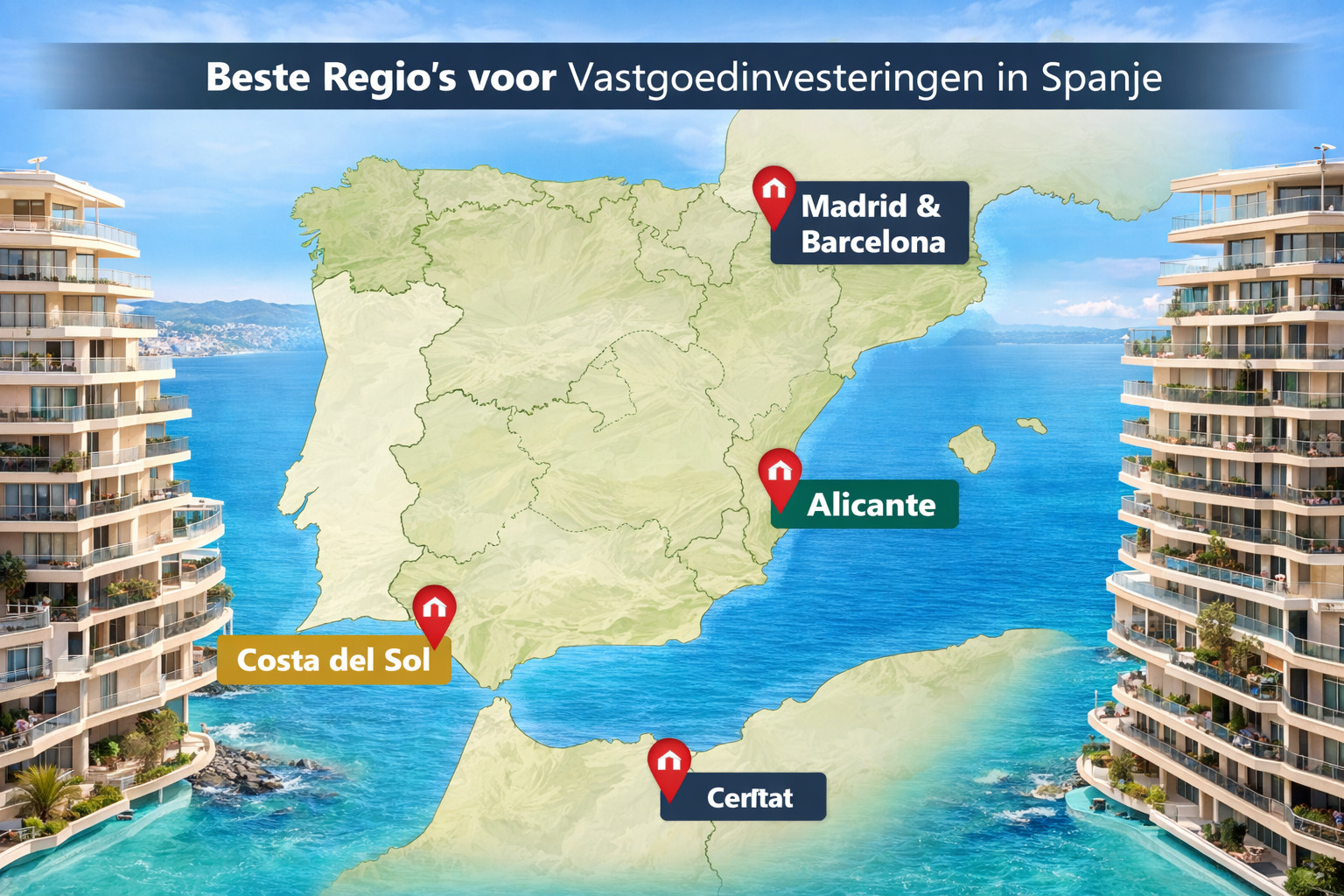
It is important to understand that the Spanish market is not a homogeneous whole. What works on the Costa del Sol may turn out differently on the Costa Blanca or in a major city such as Madrid. Local taxes, the availability of international schools, the quality of healthcare and, above all, the rules governing letting licences vary greatly from one autonomous region to another. A sensible choice therefore always begins with an honest analysis of your own goals, followed by identifying the region that best suits them.
The Costa Blanca: our core area and the most accessible entry point
The Costa Blanca is the area we know inside out and where we operate on a daily basis. This coastal strip in the province of Alicante is often the wisest choice for two reasons. Firstly, purchase prices are generally lower than on the Costa del Sol, which in practice leads to a higher net initial yield. Secondly, the region forms part of the Comunidad Valenciana, where the process of obtaining a tourist rental licence is currently less onerous than in, for example, Catalonia or the Balearic Islands. This makes the Costa Blanca ideal for anyone who actually wishes to let out their property.
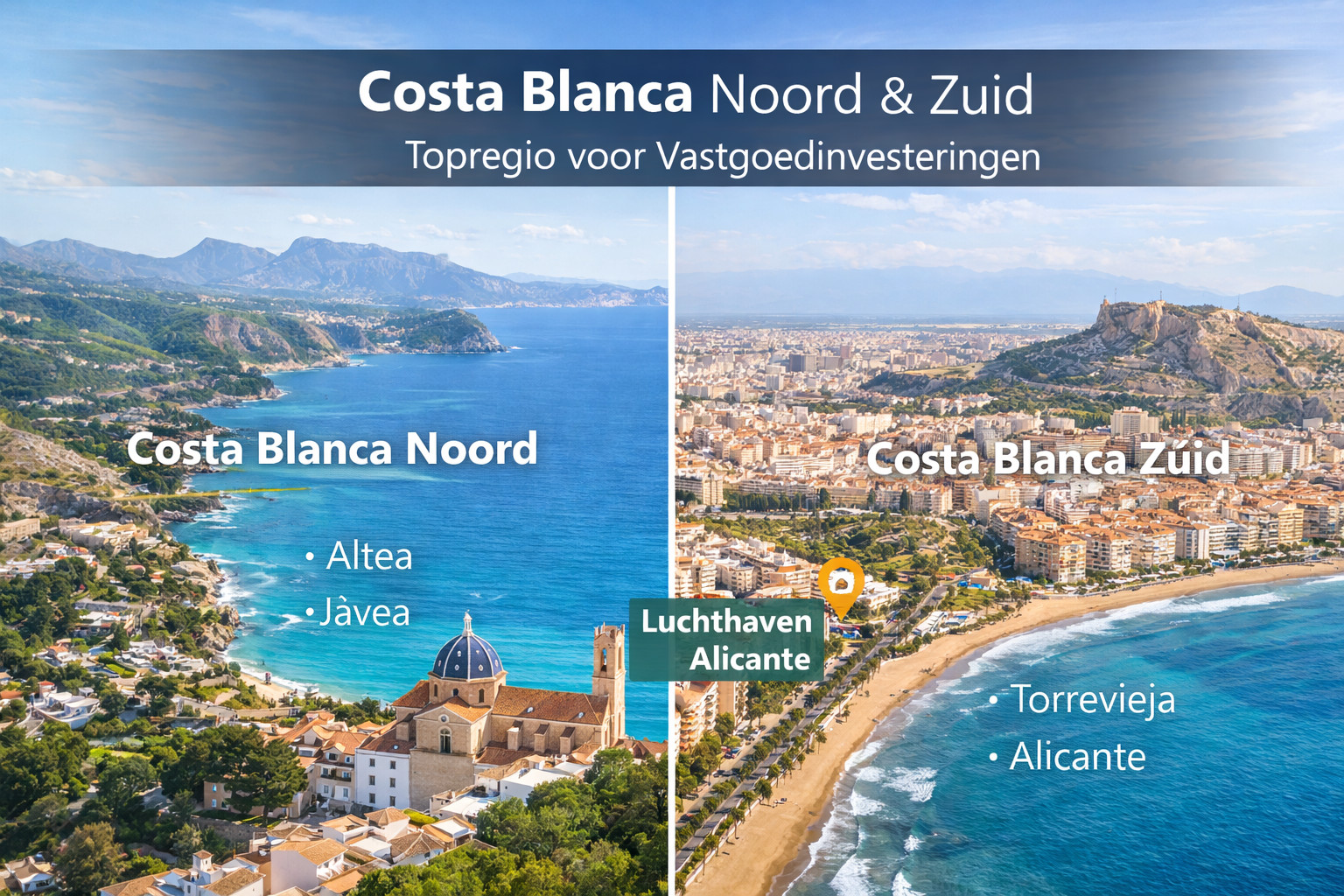
Northern Costa Blanca: Dénia, Jávea, Moraira and Altea
The northern part of the Costa Blanca is greener and more mountainous, with a more exclusive feel. Towns such as Dénia, Jávea (Xàbia), Moraira and Altea are popular with Belgian, Dutch and German buyers seeking tranquillity, natural surroundings and an authentic Spanish character. The sea-view villas in this area retain their value exceptionally well and appeal to a high-spending rental market. For those looking for a second home that is also a sound investment, the Northern Costa Blanca is one of the most attractive options in the whole country.
Southern Costa Blanca: Torrevieja, Orihuela Costa and Pilar de la Horadada
The south is flatter, sunnier and more affordable. Torrevieja, Orihuela Costa and Pilar de la Horadada offer modern flats and terraced houses at competitive entry-level prices, often close to beaches and golf courses. Thanks to the mild climate, the rental season here extends well beyond the summer months, which boosts occupancy rates. For first-time investors and retired winter visitors, this is an ideal region: low entry costs, high liquidity and a wide range of new-build properties. If you’d like to weigh up whether a new-build or an existing property is a better fit, read our comparison of new-build or existing properties in Spain.
The Costa del Sol: the luxury sector in Marbella and Estepona
The Costa del Sol, situated in Andalusia, remains an undisputed favourite in the high-end market. Marbella and Estepona attract an international and affluent clientele all year round, ensuring constant demand for luxury holiday homes. The sun shines here for more than three hundred days a year, and the scarcity of prime beachfront building plots keeps the value of top locations high. Furthermore, Andalusia currently has a favourable regime for tourist letting licences, making the region attractive for rental investment.
These qualities are offset by a higher entry price. The price per square metre on the Costa del Sol is generally considerably higher than on the Costa Blanca, which means that the net initial yield is often slightly lower. For those with substantial capital who wish to invest in a prestigious location, this is an excellent choice. For those seeking a higher return per euro invested, the Costa Blanca generally remains a more attractive option.
The Costa Cálida around Murcia: the rising star
More and more buyers are turning their attention to the Costa Cálida in the Murcia region, just south of the Costa Blanca. Although less well-known than its neighbours, this area offers strong growth potential thanks to new resorts, golf destinations and improved transport links. Land prices here have not yet peaked, meaning you can get in at a relatively early stage. For investors seeking medium-term capital appreciation, the Costa Cálida is a serious option that we would be happy to analyse with you.
The Balearic Islands: a sound investment, but bear in mind the letting regulations
Mallorca and Ibiza remain a safe haven for high-net-worth buyers. The scarcity of building land keeps prices high, and the stability of property values on these islands is unrivalled. However, an important caveat is worth noting: the regulations governing tourist letting licences in the Balearic Islands are considerably stricter and are sometimes suspended. If letting forms a significant part of your return on investment, it is crucial to check in advance whether a licence is even available. We will investigate this for you before you commit; you can find further background information in our explanation of the rental licence in Spain.
Urban opportunities: Madrid, Valencia and Málaga
Those who prefer urban property will find that the major cities offer a market with year-round demand that is less dependent on seasonal tourism. This ensures a stable cash flow and high liquidity: a property in the city is generally sold more quickly than one in a remote rural area.
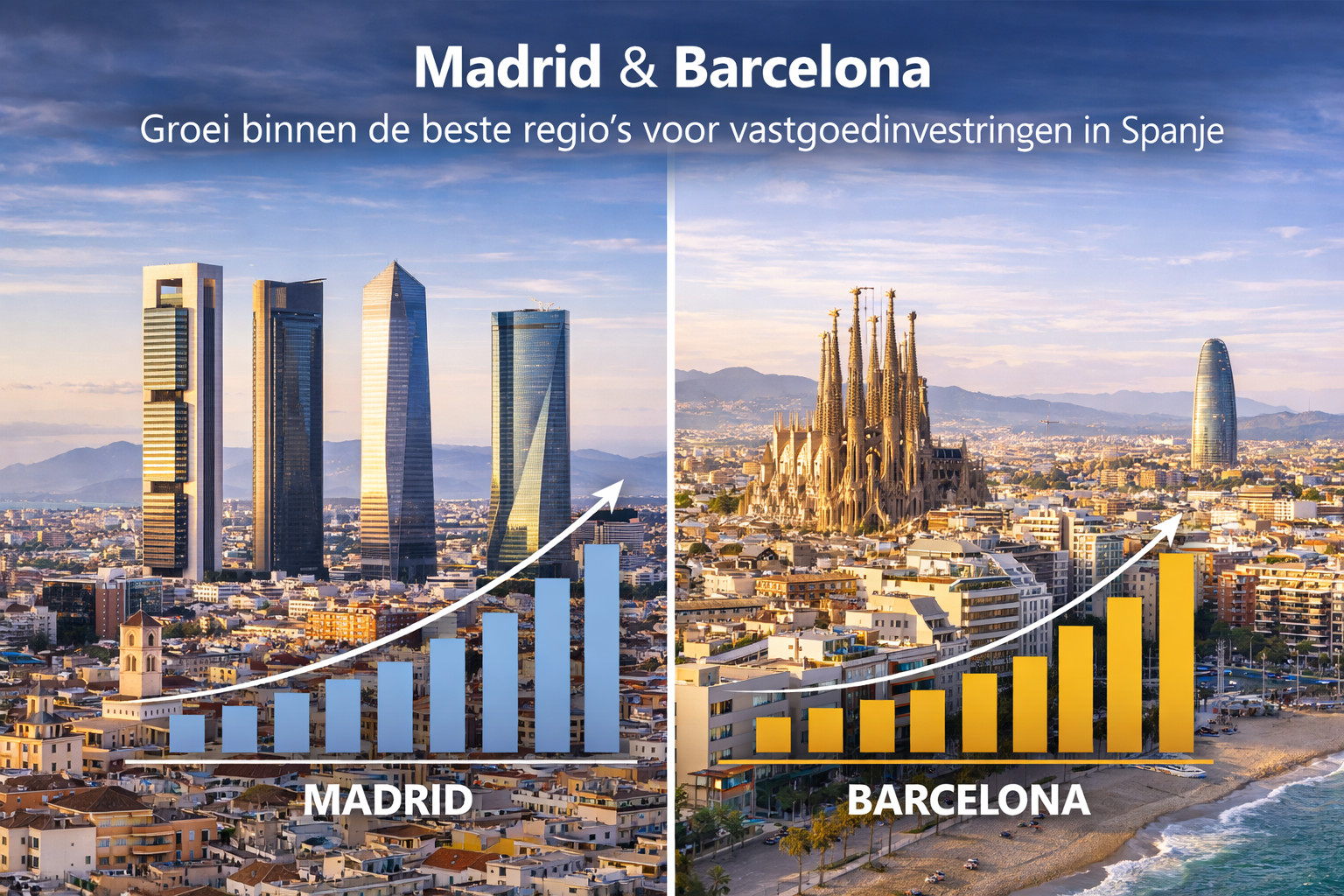
Madrid As the capital, it benefits from a strong domestic economy and a steady influx of expats, students and professionals. The rental market is tight, which supports prices. Prestigious neighbourhoods offer stable returns, whilst up-and-coming neighbourhoods have greater growth potential. Valencia combines beach life with urban culture at prices lower than in Madrid or Barcelona, and is regarded by many as one of the most attractive cities in terms of the balance between quality of life and return on investment. Málaga Finally, it combines city life with proximity to the Costa del Sol and an excellent airport, making it particularly attractive for both rental and owner-occupation.
What should you bear in mind when choosing a region?
When comparing regions, it helps to look at a set number of factors. This prevents an attractive purchase price from masking a less favourable return or a difficult letting regime.
- Rental licence: The Valencian Community (Costa Blanca) and Andalusia are currently more favourable than Catalonia and the Balearic Islands, where licences are sometimes difficult to obtain or have been put on hold.
- Net return: You can expect a figure of between 4 and 7% per year for a well-located holiday home, after deducting costs.
- Accessibility: Being close to an airport with direct flights to your home country increases both your own convenience and the property’s rental appeal.
- Liquidity: In popular areas and major cities, you’ll be able to sell your property more quickly should the need arise.
- Entry price versus return: The Costa Blanca generally offers a higher initial yield, whilst the Costa del Sol and the Balearic Islands offer greater prestige and value retention in the luxury segment.
For a structured approach to the entire process, please visit our page on real estate investments in Spain, where we explain the strategic considerations in greater detail. If you are considering letting on a larger scale or another asset class, then investing in commercial property in Spain well worth a look.
Being well prepared from a legal perspective when buying as a foreign buyer
Spain offers great opportunities, but the administrative procedures can seem complex to foreigners. Proper preparation helps to avoid costly mistakes. The very first step is to apply for a NIE-number (Número de Identidad de Extranjero); without this tax identification number, you cannot register a property or set up utility connections. We will guide you through this process from start to finish, as described on our page about the Apply for NIE number.
Before you sign, an independent inspection of the property is essential. Check the title deed (Note Simple) verify this, check that there are no debts or mortgages on the property, and examine the local planning regulations. Our legal control of real estate in Spain covers exactly these points, so you can buy with confidence.
- Check the title deed (Nota Simple) at the land registry.
- Verify that there are no outstanding debts or mortgages on the property.
- Research the municipality's local zoning plans.
- Check in advance whether a tourist accommodation licence is available in your chosen region.
Finally, please bear in mind the transfer tax and notary fees, which vary from one autonomous region to another. We’re here to help you even after the purchase: with professional Key management in Spain and a complete property rental in Spain We take care of all aspects of managing and letting your property.

How we can help you
At Invest in Spain (part of the Luxe Vastgoed Group), our team, led by property expert and CEO Kenzo Fayot, assists buyers from Belgium, the Netherlands, Germany and France on a daily basis. Whether you’re looking for a second home, a rental property to generate extra income or a stable investment for your retirement, we’ll help you identify the region and property that best suit your goals. The Costa Blanca is our home, but our expertise extends far beyond it.
From the initial assessment and selection via our estate agent in Spain from legal advice and financing to post-purchase management: you’ll find all our property services in Spain All in one place, clearly laid out. If you’d like to find out who we are and how we work, read on about us.
Are you ready to take the next step? Please feel free to contact us, with no obligation for a personal consultation. Together with you, we will look at which region and which property best suit your budget, your return expectations and your preferred risk profile.
Frequently asked questions about the best regions for property investment in Spain
What are the best regions for property investment in Spain?
For most buyers, these are the Costa Blanca (North and South), the Costa del Sol, the Costa Cálida around Murcia, the Balearic Islands and the major cities of Madrid, Valencia and Málaga. The Costa Blanca generally offers the best value for money in terms of purchase price and net return, whilst the Costa del Sol and the Balearic Islands are particularly attractive in the higher price bracket.
Which region offers the highest rental yield?
The Costa Blanca often comes out on top because purchase prices are lower than on the Costa del Sol, resulting in a higher net initial yield. For a well-located holiday home, expect a net annual yield of between 4 and 7%. This advantage is further enhanced by the more flexible letting regulations in the Comunidad Valenciana.
Can I let my property in Spain to tourists?
That depends on the region. In the Valencian Community (Costa Blanca) and Andalusia (Costa del Sol), a tourist rental licence is currently relatively easy to obtain. In Catalonia and the Balearic Islands, the regulations are stricter and licences are sometimes put on hold. We always check this in advance, so that you don’t face any surprises.
What is the difference between the Costa Blanca and the Costa del Sol?
The Costa Blanca is generally more affordable and therefore often offers a higher net initial yield, with Alicante as its main airport. The Costa del Sol focuses more on the luxury segment around Marbella and Estepona, with higher prices but a strong international appeal. Which is right for you depends on your budget and objectives.
How easy is it to get to the Costa Blanca from Belgium and the Netherlands?
Very good. Alicante and Valencia airports serve the Costa Blanca and offer direct flights from destinations including Brussels, Charleroi, Amsterdam and Eindhoven. This excellent accessibility enhances both your own convenience and the year-round rental potential of your property.