The best schools in Spain for families moving there from Belgium, the Netherlands, Germany and France are those that strike the right balance between the language of instruction, a recognised curriculum and proximity to your home. Along the Costa Blanca, around Alicante, Dénia, Jávea and Torrevieja, you will find an exceptionally high concentration of international schools offering British, International Baccalaureate (IB), Dutch or French curricula, alongside excellent state (público), state-subsidised (concertado) and private education. We assist families who are relocating on a daily basis with their choice of home, with the choice of school often being the starting point. In this article, you can read about how the Spanish school system is structured, the different types of schools available, how enrolment and registration (empadronamiento) work, what the costs are, and where to find the best schools on the Costa Blanca.
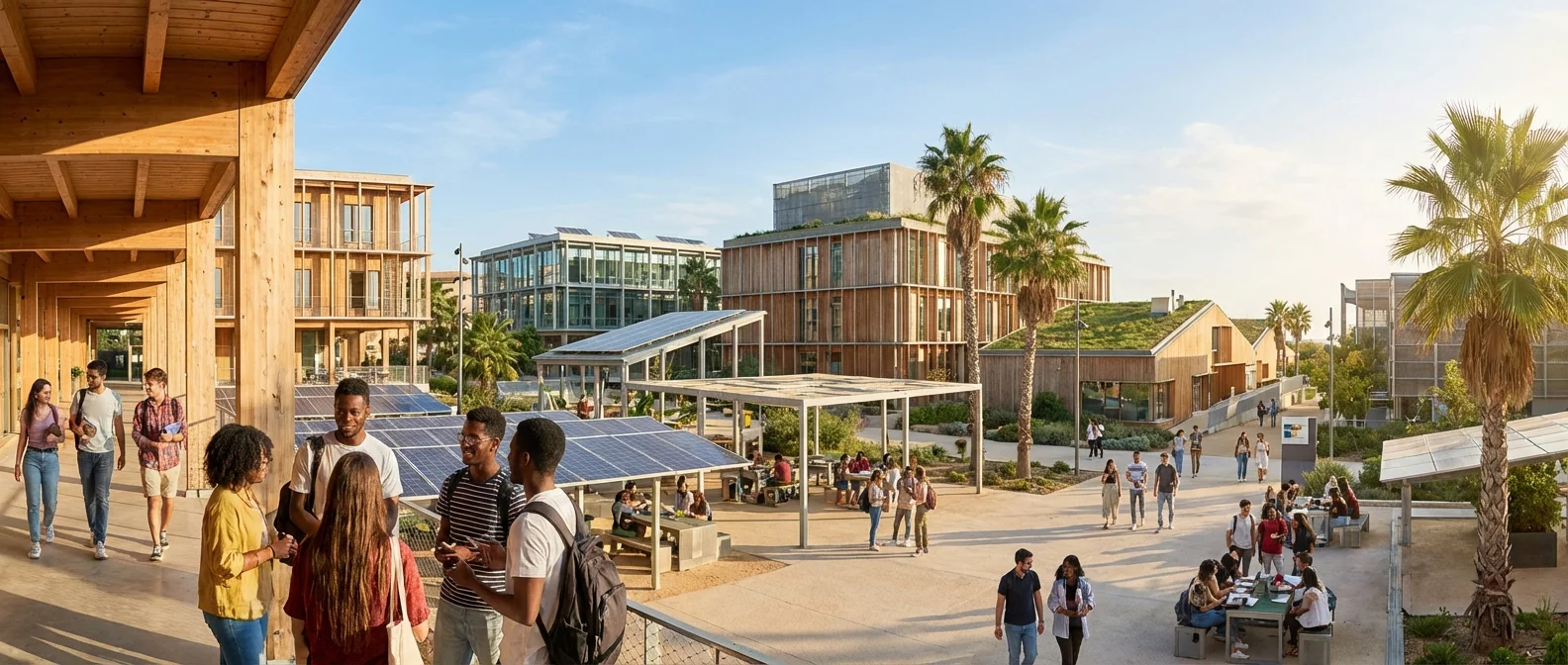
The Spanish school system: from infantil to bachillerato
If you are considering moving to Spain, understanding the local school system is one of the top priorities for your family. The Spanish education system is renowned for its accessibility and its warm, inclusive culture, which is deeply rooted in society. Compulsory education applies to children aged six to sixteen, but most children start school much earlier, precisely to help them learn the language more quickly. The system is closely aligned with European standards, meaning that any qualifications your child obtains in Spain are fully recognised throughout the European Union.
The structure is divided into four distinct stages. It is worth familiarising yourself with this structure, as your child’s entry into the system depends on their age and previous years of schooling in their country of origin:
- Early Years Education (pre-school education): for children aged 0 to 6. This stage is optional, but is strongly recommended for expat children as language acquisition takes place effortlessly and through play.
- Primary Education (primary schooling): Compulsory education for children aged 6 to 12, spread over six school years.
- ESO (Compulsory Secondary Education): compulsory secondary education for pupils aged 12 to 16, which leads to the ‘Graduado en ESO’ certificate.
- Bachillerato: the two-year university preparatory course for pupils aged 16 to 18, comparable to the upper years of the Dutch vwo or the Belgian ASO.
In the early years, the emphasis is on motor skills development and basic skills, whilst in the later years, the focus is on preparing pupils for higher education. In addition to core academic subjects such as maths, language and science, Spanish schools place great emphasis on sport, the arts and social skills, which contribute to the child’s holistic development. The transition between levels is seamless thanks to a standardised assessment system monitored by the education inspectorate.

Types of schools: state, state-subsidised, private and international
In Spain, you generally have a choice of three types of state school, plus the international schools, which are the deciding factor for many expat families. Each category has its own admissions policy, fee structure and educational approach. The choice you make will directly influence your child’s daily routine, language development and level of integration into the local community.
State schools (public education)
State schools form the backbone of the Spanish education system. They are funded by the state and are, in principle, free of charge; parents only pay for books, materials and any extras. The language of instruction is usually Castilian Spanish, although in regions with a co-official language – such as Valencian on the Costa Blanca or Catalan in Catalonia – lessons are also taught in that language. For families seeking rapid language acquisition and full immersion in Spanish culture, this is often the most effective route, provided your child starts at a young age. In the popular coastal areas, teachers are also accustomed to pupils who speak other languages and often offer extra support to help overcome the language barrier.
Colegios concertados (state-subsidised schools)
Concertados are private schools that are largely subsidised by the government, which means that the parental contribution remains relatively low compared with fully private institutions. Many of these schools have a religious, usually Catholic, background, but they must adhere to the national curriculum and the official admission rules. This type of school offers an attractive middle ground: you get the smaller class sizes and discipline of a private school, combined with the accessibility and affordability of the state system. For many local families as well as foreign buyers of second homes, the ‘concertados’ are therefore a popular choice.

Private schools and international schools
For those seeking exclusivity or a familiar international curriculum, fully private schools are the ideal choice. They receive no government funding and rely on school fees, which gives them the freedom to offer their own teaching methods, modern facilities and a wide range of extracurricular activities. This category also includes international schools, which are often the most important option for families emigrating from Belgium, the Netherlands, Germany and France. Teaching here follows systems such as:
- The British curriculum offering IGCSE and A-levels, by far the most common international curriculum on the Costa Blanca.
- The International Baccalaureate (IB), a globally recognised programme that facilitates access to universities around the world.
- Dutch-language education, which is available in the form of NTC programmes (Dutch Language and Culture) at several locations along the coast, so that your child can keep up with the Dutch or Flemish education system.
- The French curriculum, offered by lycées recognised by the French state, ideal for French-speaking families who may return in the future.
This segment is ideally suited to families who are only staying in Spain temporarily, or whose children wish to study in another country later on. The continuity in their mother tongue and the familiar qualification provide peace of mind and certainty in this regard. Many international schools are bilingual and invest heavily in sport, technology and culture, which contributes to a well-rounded education.
“For many families moving abroad, finding the right school is the first – and often the most emotional – step towards successful integration on the Spanish coast.”
The best schools on the Costa Blanca: Alicante, Dénia, Jávea and Torrevieja
The Costa Blanca is one of the most attractive regions in the whole of Spain for families with school-age children. Thanks to the large international community around Alicante and along the coast of the Costa Blanca North and South, there is an exceptionally high concentration of international schools. Whether you opt for the peaceful, green north or the sunny, lively south, the distance to a good school is almost always manageable. That is precisely why it makes sense to consider your choice of home and your choice of school as part of the same process.

Northern Costa Blanca: Dénia, Jávea, Altea and Moraira
The northern Costa Blanca, with towns such as Dénia, Jávea, Altea and Moraira, has been attracting an international, often Northern European, clientele for decades. Here you will find well-established British schools offering IGCSE and A-level programmes, schools offering the IB, and institutions providing bilingual education. The green hills, marinas and relatively peaceful atmosphere make this area popular with families and retirees. For those seeking a high-quality international school within a charming, small-scale setting, the Northern Costa Blanca is an excellent choice. Anyone looking to explore the property market in this region can find guidance in our guide to the best regions for property investment.
Southern Costa Blanca: Torrevieja, Orihuela Costa and Pilar de la Horadada
The Southern Costa Blanca, comprising Torrevieja, Orihuela Costa and Pilar de la Horadada, is home to an even larger international community and, as a result, offers a wide range of international and bilingual schools. There are several British schools and international institutions located around Orihuela Costa and Torrevieja, often with school bus services throughout the region. This area is popular with families looking for more space for their budget and with buyers of second homes who want to enjoy the sun all year round. The combination of affordable property, plenty of amenities and good schools makes the Southern Costa Blanca particularly suitable for expats from Belgium, the Netherlands and Germany.
When buying a property, it is wise to take into account its proximity to your preferred school, to avoid long journeys. We are therefore happy to tailor your property search to the schools that best suit your family. Please feel free to view our current listings via search for property in Spain to get a feel for the possibilities in each area.
“Choose the school first, then the neighbourhood, then the property. If you stick to that order, you’ll avoid most disappointments on the Costa Blanca.”
Registration and empadronamiento: how to go about it
Understanding the administrative procedures is essential for a smooth transition for your children. The procedure for state and state-subsidised education is handled by the local council or the regional education authority, the ‘Consejería de Educación’. The first and most important step for families from abroad is the registration: registration on the population register of the municipality where you will be living. Without this proof of residence, it is virtually impossible to secure a place at a state school in your preferred area.
The standard enrolment period for state and state-subsidised schools is usually in March and April, for the school year starting in September. Make sure you start your research in good time, as these deadlines are strictly enforced. Parents submit an application form listing their preferred schools, after which a points-based system determines whether your child can be offered a place. Factors taken into account include:
- How close your home is to the school (hence the importance of being registered at the correct address).
- Whether any brothers or sisters are already attending that school.
- Family income and any special circumstances.
If you arrive outside the standard enrolment period, you can contact the ‘Comisión de Escolarización’, which will check which places are still available in the region. Private and international schools often have more flexible deadlines, but they do conduct their own admissions interviews or placement tests. It is therefore advisable to contact the school of your choice directly to discuss their internal rules.
Documents required, NIE-serial number and type-approval
When registering, always have your ID and your NIE number Have the following to hand: without this tax identification number, you will be unable to carry out virtually any official business in Spain, from buying a property to enrolling your child at school. In addition, a birth certificate, vaccination records and your child’s school reports are usually required. Make sure you have official documents translated in good time by a sworn translator.
For primary education, standard enrolment is usually sufficient, but for pupils in secondary education, the so-called ‘homologación’ or ‘convalidación’ of previous academic results is often compulsory. This process, which is handled by the Spanish Ministry of Education, ensures that your child’s level is correctly assessed and that they can join the appropriate year group without falling behind. Make sure you start this well in advance, as the bureaucracy can be slow, particularly during the summer months.
“The integration of foreign children into the Spanish school system is strongly supported by local authorities, provided that the paperwork is completed correctly and on time.”
Costs of schools in Spain
The costs vary considerably depending on the type of institution. It’s worth getting a clear picture of this so that you can plan your monthly family budget realistically, just as you would with the other costs incurred by the buyer of a house in Spain. The broad outlines are as follows:
- Public (público): In principle, it’s free. However, you should expect to spend a few hundred euros a year per child on books, materials and, if necessary, a uniform.
- Concertado (subsidised): a relatively modest voluntary contribution or fee for additional services, usually ranging from a few tens to a hundred euros per month.
- Private and international: School fees are usually between 500 and 1,500 euros per month per child, excluding enrolment fees (matrícula), meals and transport.

As well as direct school fees, there are often indirect costs that affect your budget. Bear in mind the cost of school trips, membership of the parents’ association (AMPA), school uniforms at virtually all private and ‘concertado’ schools, and technological equipment such as tablets or laptops. For families who have just moved abroad, additional language lessons for the children may represent a temporary extra expense that helps speed up their integration. Finally, bear in mind that fees vary by region; on the Costa Blanca, international schools are generally slightly more affordable than in Madrid or Barcelona, whilst the quality remains excellent.
“The financial accessibility of education is a cornerstone of Spanish society, but the additional costs of school uniforms, transport and extracurricular activities should not be underestimated.”
Bilingual education and the regional language
The Spanish education system has become increasingly internationalised over recent decades. Many state and state-subsidised schools have adopted a bilingual programme, in which subjects such as history, biology or art are taught (partly) in English, whilst the core subjects remain in Spanish. Often, at least thirty per cent of the curriculum is delivered in a foreign language, supported by ‘auxiliares de conversación’: native speakers who assist in the classroom. Key features of these programmes include:
- Use of the CLIL (Content and Language Integrated Learning) approach, in which language is a tool for acquiring subject knowledge.
- Certification through internationally recognised institutes such as Cambridge or Trinity.
- Focus on both oral and written skills from nursery school onwards.
Please bear in mind that in regions with a co-official language, the language of instruction may differ. On the Costa Blanca, in the Valencian Community, Valencian is taught in state schools alongside Castilian. For expats, this rarely poses an insurmountable problem, particularly with young children, but it is a good idea to find out in advance about the language policy of your preferred school. If you would like to better understand the many Spanish terms relating to education and property that you will come across, please consult our overview of Spanish abbreviations and terms.
Tips for choosing the best school for your child
Choosing the right educational institution is one of the most crucial decisions you will make when moving abroad. The best choice depends heavily on your family’s individual needs: the preferred language of instruction, the age of your children, how long you plan to stay in Spain, and the extent to which you wish to integrate into the local culture. Take the time to visit various schools and speak to other parents to get a true picture of day-to-day life there. During your visit, pay particular attention to the following points:
- The ratio of pupils to teachers per class.
- The language of instruction and support for pupils who speak a different language.
- The school’s accreditations from international educational bodies (for example, for the IB or the British curriculum).
- The modern facilities, sports facilities and the range of extracurricular activities.
- Transport options, school bus routes and safety around the school grounds.
International schools often offer a gentler transition for children who do not yet speak the language, whilst state and state-subsidised schools encourage faster cultural assimilation. Ultimately, the decision comes down to finding a place where your child feels safe, valued and intellectually challenged. Because choosing a school and finding a home are so closely intertwined, it is worth tackling both steps as a single, integrated process, together with a partner who knows the region from the inside. Anyone organising their accommodation properly would also be well advised to look into the following in advance when you become a tax resident in Spain, because a permanent move involving school-age children almost always has tax implications.
How we can help you
At Invest in Spain, part of the Luxe Vastgoed Group, we assist families from Belgium, the Netherlands, Germany and France on a daily basis as they settle into their new lives on the Costa Blanca. Our team, led by property expert and CEO Kenzo Fayot, knows the region inside out: from the international schools around Dénia and Jávea to the neighbourhoods near Torrevieja and Orihuela Costa with the best school bus connections. We tailor your property search to the schools that best suit your family and take the hassle out of the purchase with comprehensive property services, including support with the purchase, mortgage advice, legal due diligence and, if required, letting and key management.
Whether you’re emigrating permanently, looking for a second home or investing with your children’s future in mind, we’ll work with you to consider the location, schools and the legal and tax aspects of your move. Do you have any questions about enrolment procedures, the best schools in your preferred area or a property within walking distance of the right school? Please feel free to contact us, with no obligation for a personal consultation. Your child deserves the very best start in this wonderful country.
Frequently asked questions about the best schools in Spain
How is the Spanish school system organised?
The Spanish school system comprises four stages: Educación Infantil (0–6 years, voluntary), Educación Primaria (ages 6–12, compulsory), the ESO (ages 12–16, compulsory secondary education) and the Bachillerato (ages 16–18, preparation for university). Compulsory education applies from the age of six to sixteen, but many expat children start school earlier to learn the language more quickly. The qualifications are recognised throughout the European Union.
What types of schools are there in Spain?
There are three types of state school: state schools (colegios públicos, free and state-funded), state-subsidised schools (concertados, partly funded by the state with a low parental contribution) and fully private schools (colegios privados). In addition, there are international schools offering a British, IB, Dutch or French curriculum, which are particularly well represented on the Costa Blanca.
Where can I find the best international schools on the Costa Blanca?
On the Costa Blanca North (Dénia, Jávea, Altea, Moraira) and South (Torrevieja, Orihuela Costa, Pilar de la Horadada), there is an exceptionally high concentration of international and bilingual schools. There are several British schools and IB schools located around Alicante, Torrevieja and Orihuela Costa, often with school bus services covering the whole region.
What is ‘empadronamiento’ and why is it important for school enrolment?
Empadronamiento is the process of registering with your local council’s population register. This is essential for state and state-subsidised schools: proof of residence is one of the factors used in a points-based system to determine whether your child will be allocated a place at your preferred school. Also ensure that you arrange your NIE number and, for secondary education, the recognition of previous qualifications in good time.
How much does an international school in Spain cost?
State schools are generally free (apart from books and materials); ‘concertados’ charge a small monthly fee; and private or international schools usually cost between 500 and 1,500 euros per month per child, excluding enrolment fees, meals and transport. On the Costa Blanca, fees at international schools are often slightly lower than in Madrid or Barcelona.