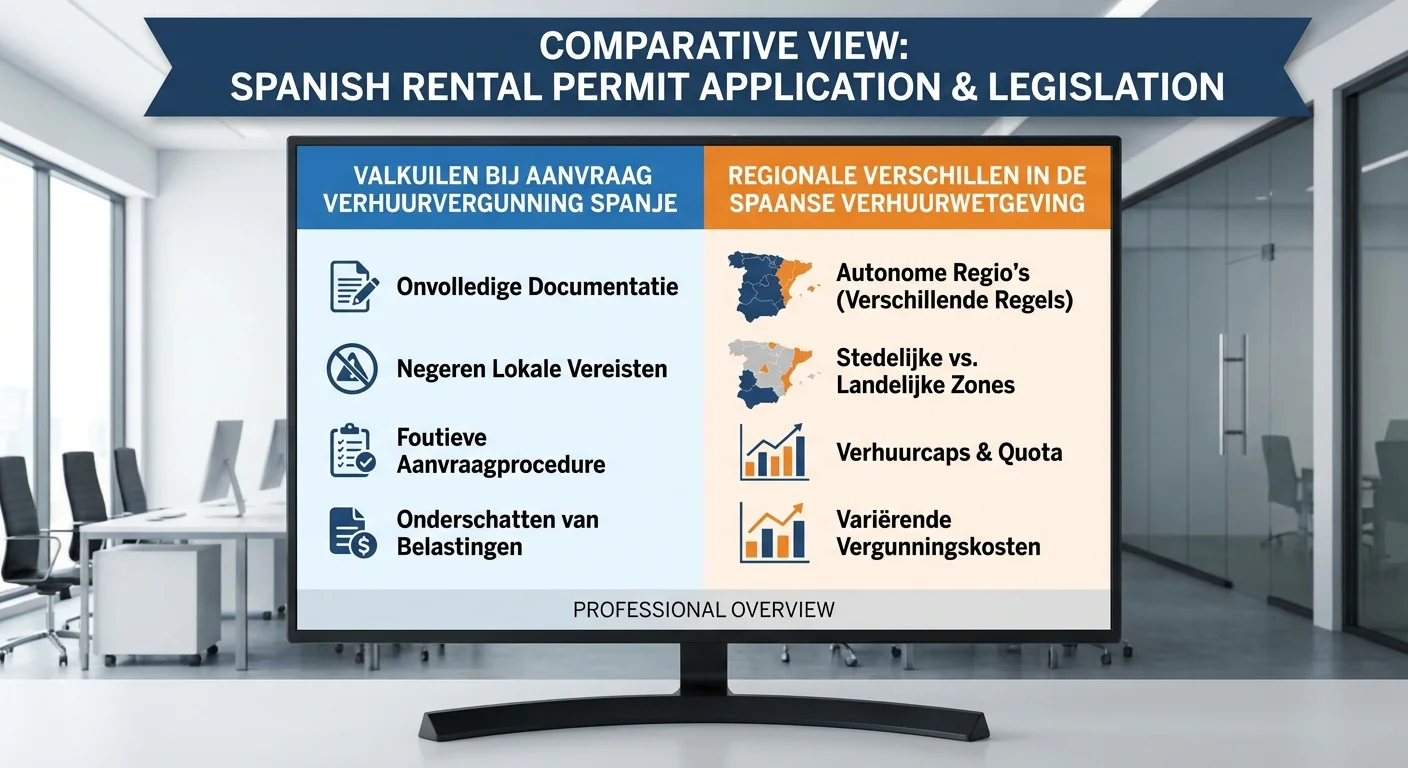
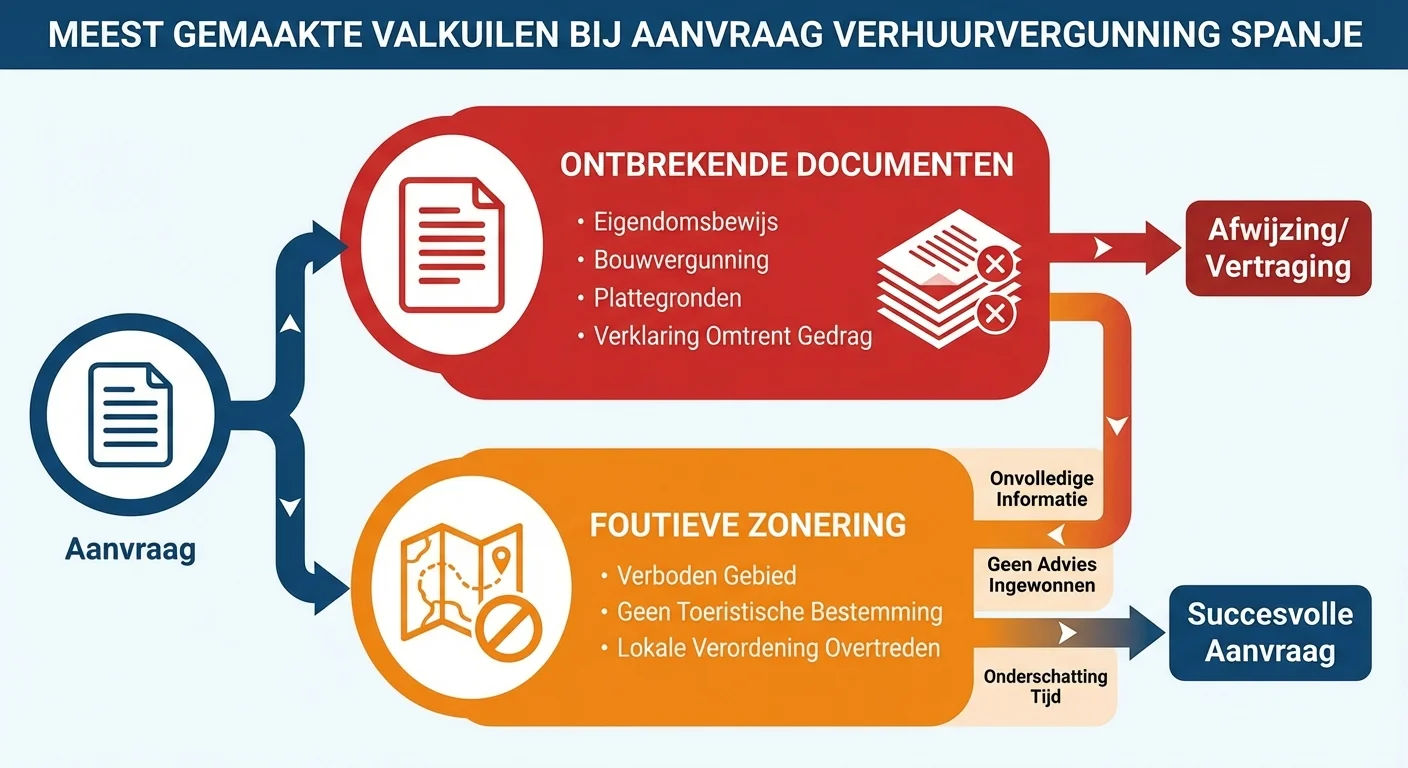
The largest Pitfalls in Application for Letting Permit Spain are often ignoring local zoning plans and submitting incomplete technical documentation. To avoid these Pitfalls at Application Rental Permit Spain, you need to know exactly which regional decrees are in force for your specific property type. Many owners underestimate the bureaucratic complexity, causing applications to be delayed for months or finally rejected by Spanish authorities.
The successful Navigating the Pitfalls in Application for Letting Permit Spain requires thorough preparation of all legal title documents.
Always ensure you have a valid certificate of occupancy before you start. Use a practical guide to minimise mistakes and pay attention to the following crucial points:
- Check local tourism quotas by district.
- Verify the bylaws of the Owners' Association.
- Provide an up-to-date certificate of habitability.

What is a tourist rental licence in Spain?
A tourist rental licence, often referred to in Spain as the ‘licencia de vivienda vacacional‘, is an official document issued by the regional government. This licence is required by law for anyone wishing to rent out their property to holidaymakers on a short-term basis. Without this registration number, you are not allowed to offer your property on platforms such as Airbnb or Booking.com. However, obtaining this document is not always an easy process, and many owners encounter unexpected Pitfalls at Application Rental Permit Spain that can significantly delay or even block the process completely.
Holding a licence guarantees that the property meets specific quality and safety requirements that can vary greatly from one autonomous region to another.
Regulations around holiday rentals have been tightened considerably in recent years to protect the local housing market. Each region, from Andalusia to the Costa Blanca, has its own criteria for the Pitfalls in Application for Letting Permit Spain procedure. This means that what works in one province may be prohibited in another. It is essential to understand that a licence is not just an administrative number, but proof that your property meets standards of habitability, fire safety and hygiene. For more background information on investing, please visit our blog page.
The legal basis and regional differences

In Spain, competence for tourism lies with the 17 autonomous communities. This creates a complex landscape in which the Pitfalls in Application for Letting Permit Spain for new owners are often hidden in the small print of local decrees. For example, in some cities, you must first apply for a certificate of urban compatibility before you can submit the actual permit. If this document is refused, your dream of a profitable holiday home is over immediately. It is therefore crucial to thoroughly research the specific requirements in your municipality beforehand.
“Failure to register a holiday home correctly can result in fines of up to tens of thousands of euros, depending on the region and the severity of the offence.”
The requirements a property must meet are diverse and extensive. Here are some common conditions you should check to Prevent pitfalls in Application for Letting Permit Spain through proper preparation to be realised:
- Presence of a valid certificate of habitability (Cédula de Habitabilidad).
- Minimum dimensions for bedrooms and common areas.
- Mandatory installation of air conditioning and heating in certain areas.
- Availability of a complaint book and first-aid kit in the home.
- Permission from the Owners' Association (Comunidad de Propietarios).
One of the largest Pitfalls in Application for Letting Permit Spain risks is ignoring the articles of association of the CoE. More and more complexes prohibit tourist rentals via an internal vote. Even if the government gives you a
The biggest pitfalls when applying for rental licence Spain
The process to operate a legal holiday home on the Costa del Sol or Costa Blanca may seem like an administrative formality at first glance, but the reality is often more unruly. Many investors underestimate the complexity of the local regulations, unintentionally running into significant delays or even fines. The Pitfalls in Application for Letting Permit Spain often start with poor preparation of documentation, with crucial certificates missing or out of date. It is essential to understand that each autonomous region in Spain has its own specific requirements, meaning that what applies in Andalusia does not necessarily apply in the Valencia region.
A common mistake is ignoring the strict municipal zoning laws that can vary from one neighbourhood to another.

When you use the Avoiding pitfalls in Application for Letting Permit Spain want, you should first of all look at the ‘Certificado de Compatibilidad Urbanística’. This document, issued by the municipality, confirms whether tourist rentals are allowed in that specific location at all. Without this certificate, your application to the regional government is doomed to fail. Many buyers sign a purchase contract without doing this check, only to find out later that their dream home may never be legally rented out. This is one of the most costly mistakes one can make in the Spanish property market.
Regional differences and administrative requirements
In addition, we see that the Pitfalls in Application for Letting Permit Spain for holiday homes often have to do with the technical state of the property. These include minimum areas per guest, mandatory air conditioning in all rooms or the presence of an official complaint book. If your property does not meet these physical requirements at the time of inspection, the permit will be denied immediately. It is therefore advisable to engage an expert beforehand to test the property against current legislation.
“Failure to comply with local regulations can result in fines many times higher than the cost of a correct application.”
Another critical issue is the role of the Owners' Association (Comunidad de Propietarios). Since legislative changes in recent years, these associations have gained more power to prohibit or restrict tourist rentals within their complex. One of the biggest Pitfalls in Application Rental Permit Spain risks is that you buy a flat where the bylaws explicitly prohibit rentals. Therefore, always check the minutes of the last meetings before buying.
To get around these obstacles, professional help is often indispensable for successful proceedings.
Below is an overview of the most critical areas of concern:
- Check the validity of the ‘Licencia de Primera Ocupación’.
- Verify that the Comunidad de Propietarios has not banned rentals.
- Ensure that all safety devices, such as fire extinguishers, are in place.
- Apply for the digital certificate for government communication in time.
Navigating the desk
The importance of the certificate of habitability (Cédula de Habitabilidad)
Obtaining a tourism licence in Spain is impossible without the presence of a valid Cédula de Habitabilidad. This document acts as official proof that a property meets the minimum hygienic and technical requirements set by law for human habitation. Many investors underestimate how crucial this certificate is during the process. When faced with Pitfalls in Application for Letting Permit Spain, the lack or expiry of this document often the first major hurdle that completely blocks progress. Without this paper, you cannot put utilities such as water and electricity in your own name, let alone start a legal rental activity. It is the foundation of your legal status as a landlord in the Spanish market.
Failure to check the validity of the Cédula on time is one of the most common errors when applying for a Spanish licence leading to delays.
The technical requirements and validity period
The Cédula de Habitabilidad is not valid forever. depending on the region, it has to be renewed every 10 to 15 years. For an existing property, we often talk about the ‘Licencia de Segunda Ocupación’. The technical inspection required for this looks at things like the minimum area of rooms, the height of ceilings and the presence of ventilation. If a property has been converted without proper building permits, the certificate can be refused. This is a crucial aspect of the Pitfalls in Application for Letting Permit Spain, as a rejection means that the property is officially not habitable. Repairing such structural defects can cost thousands of euros and take months, putting an immediate strain on your returns. Therefore, always make sure you consult an architect before buying.

It is essential to understand that Avoid pitfalls in Application for Letting Permit Spain by checking documentation is the only way to mitigate financial risks during the buying process.
Why the municipality is the deciding factor
Besides the regional requirements, municipalities may impose additional conditions for habitability in relation to tourist rentals. In some cities, the Cédula alone is no longer sufficient and a favourable urban planning report (Informe Urbanístico) must also be submitted. This is where the Pitfalls in Application for Letting Permit Spain for new investors, because the rules may vary from village to village. A property may be technically perfect, but if the local government has decided that no new licences will be issued in that particular neighbourhood, the Cédula remains just a proof of occupancy with no commercial value. It is therefore advisable to verify the full status of the property through the Pitfalls in Application for Letting Permit Spain page for in-depth information on local regulations.
“Without a current Cédula de Habit
Regional differences in Spanish rental legislation
Anyone considering investing in Spanish property for tourist rental immediately encounters a complex web of regulations. Spain is divided into 17 autonomous communities, each of which has its own powers over tourism and housing. This means that rules in Andalusia can be completely different from those in the Comunidad Valenciana or the Balearic Islands. Not understanding these local nuances constitutes one of the biggest Pitfalls in Application Rental Licence Spain, as an approved file in one province would be immediately rejected in another region based on specific zoning or technical requirements.
Each region has its own deadlines and strict documentation requirements for investors.
The impact of municipal autonomy
In addition to regional laws, individual municipalities (ayuntamientos) also have a fat hand in granting licences. In cities like Barcelona or Palma de Mallorca, the rules have become extremely strict due to pressure on the local housing market. This has made obtaining a new licence almost impossible in certain neighbourhoods. Many buyers make the mistake of thinking that a national law regulates everything, but the Local Pitfalls in Application for Letting Permit Spain tips for investors show that the municipality's zoning plan is often decisive for your success. Without a positive urban planning report from the municipality, the process often comes to an immediate halt.

It is essential to check beforehand whether the relevant municipality has currently imposed a moratorium on new applications.
“Spanish bureaucracy requires patience. what is allowed on one street may be strictly forbidden a block away by local ordinances.”
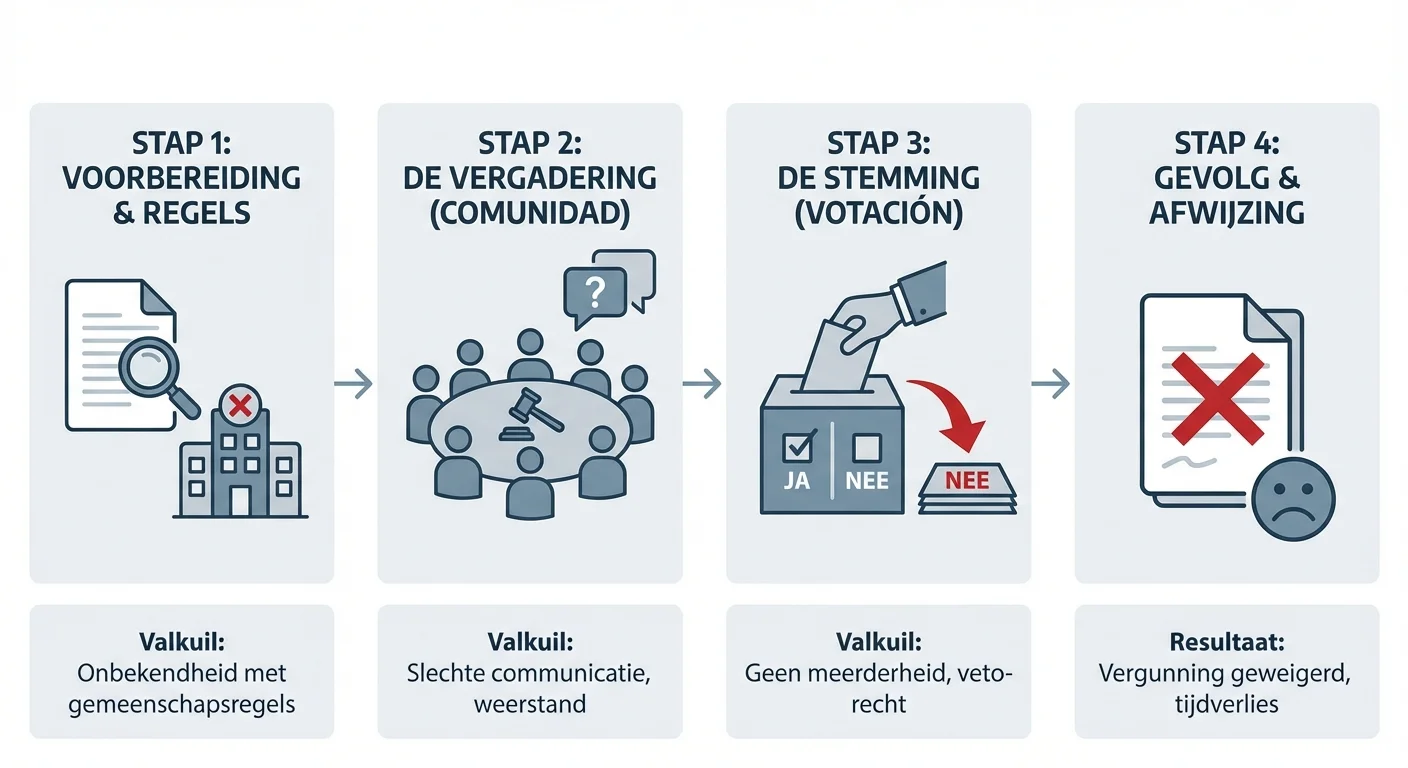
Another crucial aspect is the role of the Owners' Association (Comunidad de Propietarios). Since the 2019 legislative changes, these associations in many regions have gained more power to prohibit or restrict tourist rentals within their complex. This is one of the most underestimated Pitfalls in Application for Rental Licence Spain risks. Even if the region and municipality give the green light, a three-quarters majority of neighbours can thwart your plans. It is therefore essential to have the building's bylaws thoroughly checked by an expert before buying, to avoid being stuck with a property you are not allowed to commercially operate.
Always make sure you request the most recent minutes of the owners' meeting.
Key concerns by region
To successfully navigate the Pitfalls in Application for Letting Permit Spain legislation by region, you should take into account the following variable factors that can vary greatly from one location to another:
- The requirement of a certificate of habitability (Cédula de Habitabilidad).
- Specific furnishing requirements, such as air conditioning in each room.
- Maximum occupancy based on square footage.
- The need for an official complaints book (Hojas de Reclamaciones).
- Mandatory registration with local police for guest administration.
If you overlook these details, you will run
Consent of the Owners' Association (Comunidad de Propietarios)
When you buy a property in an apartment complex or urbanisation with shared facilities, you will inevitably have to deal with the Comunidad de Propietarios. Since the 2019 change in the law, these associations have gained significantly more power to regulate or even ban tourist rentals within their building completely. One of the biggest Pitfalls when Applying for Letting Licence Spain is ignoring the bylaws of the Comunidad, as a negative decision by the neighbours can send your entire investment plan straight into the bin. It is therefore essential to check if there is already a prohibition clause in the association's official documents before purchasing.
Without explicit permission or where there is an existing prohibition in the statutes, obtaining a licence has become legally impossible in most regions.
The impact of the three-fourths majority
Since the adaptation of Spain's Horizontal Property Law (Ley de Propiedad Horizontal), an association of owners with a three-fifths majority of owners can decide to restrict or prohibit holiday rentals. This means that, as an individual owner, you are dependent on the favour of your neighbours, which often leads to unforeseen Pitfalls in Application for Letting Permit Spain risks. Moreover, the association may increase the service charge for properties rented out on a tourist basis by up to 20%, provided this is democratically decided at a general members' meeting.

It is crucial to request the minutes of the last three years from the property manager (administrador) to see if there are any tensions around rentals. It is often seen that buyers discover too late that there are ongoing proceedings to block rentals, which is one of the most painful Pitfalls in Application for Letting Permit Spain for investors is. Besides the licence, you also need to consider other costs such as transfer tax rates Spain 2026 that will affect your overall budget.
Always check the following with the Comunidad:
- Have the current statutes already been amended to explicitly prohibit tourism exploitation?
- Is there an increased contribution for owners doing holiday rentals?
- Are there specific house rules restricting the use of pools or lifts by tourists?
- Is a positive certificate from the association required for the municipality?
“The power of the Comunidad de Propietarios is often underestimated, but they are the first and most important barrier for any property investor in Spain.”
Legal steps and verification
If you intend to operate a property, you must obtain a Pitfalls in Application for Letting Permit Spain checklist for buyers
Tax obligations and applying for a NIE-number
Entering the Spanish property market as a landlord entails a complex set of administrative and tax responsibilities that are often underestimated by foreign investors. One of the biggest Pitfalls in Application for Letting Permit Spain is not arranging the NIE (Número de Identidad de Extranjero) number in time or incorrectly. This unique identification number is the absolute basis for every official act in Spain, from opening a bank account to registering your property with the tourism authorities. Without a valid NIE number, you simply cannot engage in legal rental activities, as the tax authorities use this number to link your income to your personal identity and property.
The process of obtaining this number can be time-consuming due to bureaucratic delays at consulates or local police stations, which directly affects your schedule.
The role of the NIE number in tax returns
Once you have a licence, you are required to file the Modelo 210 quarterly for non-resident tax on rental income. Many owners forget that the Spanish tax authorities strictly check the match between the licence holder and the taxpayer. A common mistake within the Pitfalls on Application for Rental Licence Spain is thinking that income is only taxed in the home country. However, Spain has the first right to tax property on home soil. Failure to declare this income correctly can result in heavy fines and even revocation of your precious rental licence by the regional government.
It is therefore essential to keep accurate records of all income and deductible expenses, such as municipal taxes and maintenance, from day one.
“Tax transparency is not a choice but a necessity for those who want to rent out successfully and without worries under the Spanish sun.”
Avoid administrative errors and delays
In addition to direct income tax, you should also take into account local IBI (property tax) and waste levy, which are essential for maintaining your status as a legal landlord. Another Pitfalls in Application for Letting Permit Spain is overlooking the mandatory registration with the Guardia Civil or local police for each guest staying at your property. This security protocol requires you to submit your guests' passport details through a digital portal within 24 hours of arrival. Ignoring these specific regulations can result in immediate suspension of your licence, regardless of how well your fiscal affairs are otherwise regulated.
It is advisable to seek professional help to avoid dealing with unreliable intermediaries that provide incorrect information about your tax obligations.
For your application process to run smoothly, you need to have the following things in place:
- A valid passport and official copies for the NIE application.
- The Pitfalls in Application for Letting Permit
The impact of local zoning plans on your application
Understanding local zoning laws is one of the most crucial steps when considering renting out a property to tourists. In Spain, municipalities have complete freedom to set their own rules, which often leads to complex situations where one street is allowed to rent out and another is not. Many investors make the mistake of thinking that general national legislation is sufficient, but the reality is that local ‘Plan General de Ordenación Urbana’ (PGOU) is decisive. Without a thorough analysis of these plans, you will immediately run into the biggest Pitfalls at Application for Letting Permit Spain, which may result in an immediate rejection of your file by the municipality.
Local regulations often determine whether a property may occupy a tourist function within a specific residential area or zone.
The role of zoning and municipal certificates
Before you start collecting documents at all, you should request a ‘Certificado de Compatibilidad Urbanística’ from the town hall. This document confirms whether using the property for holiday rentals is in line with the local zoning plan. Ignoring this step is one of the most common Pitfalls in Application for Letting Permit Spain for unprepared buyers. In cities such as Valencia or Palma de Mallorca, the rules have become extremely strict, with certain floors or neighbourhoods completely excluded from new licences. It is therefore essential to first verify the legal status of the property through a Note Simple to see if there are no restrictions resting on the plot itself.
It is an illusion to think that a licence is guaranteed once you are the owner of a beautiful coastal flat.
“Local governments in Spain are increasingly using zoning plans as a tool to combat overtourism, which significantly complicates the Pitfalls in Application for Letting Permit Spain procedure for new applicants.”
When dealing with these strict regulations, it is important to look at the specific requirements for each zone. For example, some municipalities require a separate entrance for tourists or set a maximum number of permits per building. If you overlook these details, you will fall into the well-known Pitfalls in Application for Letting Permit Spain and regulations that could make your investment unprofitable. Also, make sure you have the Avoiding pitfalls in Application for Letting Permit Spain through local expertise thoroughly understand before you sign contracts. Good preparation prevents you from getting stuck in a bureaucratic quagmire from which escaping is often costly and time-consuming.
While studying the plans, pay attention to the following:
- The specific classification of the land (urban versus rustic).
- Any quotas for tourist accommodation in your specific district.
- The need for approval by the Owners' Association (Comunidad de Propietarios).
- Minimum requirements for the area and facilities of the house.
The impact of these plans is so great that even a small change in local policy can make your pl
Common mistakes when filling in official forms
The process of legalising your holiday home in Spain is a bureaucratic maze in which precision is the top priority. Many owners underestimate the complexity of Spanish administration, which often leads to unnecessary delays or even direct rejections of their file. One of the most common Pitfalls in Application for Letting Permit Spain is simply not accurately copying details from the title deed. If the name of the owner or the address of the property differs even one letter from the official registration in the land registry, the handling official will irrevocably set the file aside. It is therefore essential to fill in every field with extreme care and double-check all attached documentation for consistency and timeliness.
Errors in addressing or personal data will immediately cause a blockage in the system. Make sure you always have the most recent documents on hand to avoid these errors.
Administrative sloppiness and missing documentation
Besides typos, the lack of specific local certificates is a major stumbling block for many investors. In many regions, a valid certificate of habitability (Cédula de Habitabilidad) or a certificate of conformity from the municipality is a hard requirement. Without these documents, the Pitfalls in Application for Letting Permit Spain procedure is doomed to fail before it has even begun properly. Moreover, you need to take into account the specific requirements per autonomous region, as the rules in Andalusia may differ significantly from those in the Comunidad Valenciana or the Balearic Islands. Failure to attach a copy of the Note Simple may, for example, lead to doubts about the current ownership status of the property.
Another critical mistake is ignoring digital signature requirements. In modern Spain, almost every Pitfalls in Application for Letting Permit Spain application through digital platforms that require a specific certificate (Certificado Digital). Many foreign owners still try to scan and mail forms manually, which is often no longer accepted as a valid submission under current legislation.
“Consistency between your cadastral data and the actual situation of the property is the only way to successful registration without penalties.”
It is also very important to check that there are no illegal construction in Spain, as this will directly jeopardise the approval of your licence. If the area on your forms does not match the recorded reality, the inspection will notice this immediately. Avoid pitfalls in Application for Letting Permit Spain with professional help is therefore often the smartest route for those who are not fluent in the Spanish legal language. Below is an overview of the most critical points that are often overlooked while filling in the forms:
- Incorrectly stating the cadastral reference number (Referencia Catastral).
- Failure to pay associated administrative fees (Tasa) before filing.
- Incomplete information on the maximum capacity of the property according to the occupancy
Penalties and fines for renting without a valid licence
Renting out a holiday home illegally in Spain is an extremely risky business that can lead to astronomical financial penalties. Spanish authorities have significantly tightened their controls in recent years. In doing so, they use sophisticated algorithms and specialised inspectors who continuously monitor major online platforms. If you do not take the Pitfalls at Application for Rental Licence Spain seriously, you run the real risk of having your property officially classified as an illegal tourist accommodation. Fines vary widely by autonomous region, but in popular tourist areas such as the Costa del Sol, Costa Blanca or the Balearic Islands, they can range from €3,000 to as much as €600,000 for very serious offences. It is therefore essential to get the entire process legally correct from the start.
A lack of knowledge about local laws never absolves you of your legal responsibility. These days, the tax authorities and local authorities crack down inexorably on owners who ignore the rules. In addition to direct fines, you often face an immediate ban on further rental activities. This means you have to cancel all pending bookings immediately, which inevitably leads to additional compensation claims from disappointed tenants. One of the biggest Pitfalls in Application for Letting Permit Spain tips is to underestimate the speed with which the authorities take action following an anonymous report by neighbours or competitors. Also, make sure your property is optimally safe by looking into the security of your home in Spain, as inspectors also pay strict attention to general security standards and fire prevention during their checks.
The legislation makes a clear distinction between minor, serious and very serious offences. Light offences often involve failure to display the registration number in advertisements. Serious offences are about renting without full completion of the procedure. Very serious offences involve repeat offences or offering prohibited services. Ignoring regulations can even lead to a lifetime ban on renting. By proactively avoiding Pitfalls in Application for Letting Licence Spain risks, you protect your investment and your reputation as a landlord in the long run. Therefore, always stay abreast of recent changes in local decrees.
Roadmap to successfully obtain a licence in Spain
Obtaining a tourism licence in Spain is a process that requires precision and patience, as each region has its own specific requirements for property owners. To avoid getting bogged down in bureaucracy, it is essential to first check whether your municipality is currently issuing new licences, as some cities have introduced a temporary stop. Many owners make mistakes by rushing ahead without consulting the local zoning regulations, which is one of the biggest Pitfalls in Application Rental Licence Spain. Make sure you have the ‘Cédula de Habitabilidad’ and an energy performance certificate before submitting the official application to the Registro de Turismo.
Proper preparation prevents unnecessary delays and legal complications throughout the process.
Documentation and local regulations
When you enter the administrative phase, you should consider the Avoid specific Pitfalls in Application for Letting Permit Spain by double-checking all documents for timeliness. Most regions today require a compatibility report from the municipality, stating that the property can indeed be used for tourism purposes. If you are missing this document, your file will be rejected immediately, which is common in the Pitfalls in Application for Letting Permit Spain for Beginners. Also remember to check your home for technical defects in good time, as explained in the article on a winterising property in Spain, to meet all quality requirements.
Follow these steps carefully to get around the Pitfalls in Application for Letting Permit Spain and regulations:
- Apply for the urban compatibility certificate from the local municipality.
- Collect the title deed, proof of identity and certificate of habitability.
- Submit the ‘Declaración Responsable’ to the regional tourism authority.
- Once approved, register the property with the local police for guest records.
“Successful lettings do not start with the first booking, but with a watertight legal basis and avoiding the Pitfalls in Application for Letting Permit Spain.”
Once the licence is in, the registration number must be visible in all advertisements to avoid fines. Ignoring this publication requirement is among the most costly Pitfalls in Application for Letting Permit Spain strategy mistakes one can make.
Always stay abreast of changing tax laws in your specific region.
Avoiding the biggest pitfalls when applying for a rental permit Spain is essential for an optimal return on your property. Thorough preparation prevents costly mistakes and saves you considerable time. Therefore, always check local regulations and zoning plans in advance. Many owners submit incomplete documentation, leading to delays or rejections of the tourism licence. Moreover, pay close attention to the specific rules of the Owners' Association.
Want to make sure you do not skip any crucial steps and definitively avoid the pitfalls when applying for rental licence Spain? Our experts will guide you through the entire process, from land registry control to registration with the Guardia Civil. Contact us today for a no-obligation consultation. Start renting out your Spanish property legally right away without legal worries or administrative hassle. We make the application process for your licence completely hassle-free and efficient.
Frequently Asked Questions
What are the most common pitfalls when applying for rental licence Spain?
One of the biggest pitfalls when applying for rental licence Spain is not complying with specific municipal zoning regulations. Owners often forget that each region has its own rules, resulting in applications being rejected unnecessarily.
How do I avoid delays during the application process?
Make sure all documentation, such as the ‘Licencia de Primera Ocupación’, is complete and up-to-date. The lack of technical certificates is one of the well-known pitfalls when applying for rental licence Spain that can cause months of delay.
Why is permission from the Owners' Association (VvE) necessary?
In many Spanish regions, VvEs can prohibit holiday rentals by statute, even if the government would approve the licence. Ignoring the complex's internal regulations is a crucial mistake that could jeopardise your investment.
Service & Contact
Location: costa Blanca, spain
Scope of work: belgium,netherlands,england,france,europe,america
Services: real estate agent,real estate brokerage, investment advisor,
Opening hours: Mon-Fri until 10 a.m.-5:30 p.m.