Met pensioen naar Spanje verhuizen is voor EU-burgers eenvoudiger dan velen denken: u heeft geen non-lucratief visum nodig, maar wel een correcte inschrijving als resident, een goed geregelde zorgverzekering en een helder beeld van waar uw pensioen wordt belast. Als gepensioneerde Belg, Nederlander, Duitser of Fransman geniet u in Spanje van vrij verkeer binnen de EU, waardoor u zich zonder werkvergunning aan de Costa Blanca mag vestigen. Toch vraagt een zorgeloze oude dag onder de zon om een doordachte voorbereiding: van het NIE-nummer en de residencia tot het S1-formulier voor uw zorg, de 183-dagenregel voor uw belastingresidentie en een realistisch budget op basis van uw pensioen. In deze checklist op maat voor senioren leest u precies welke stappen u zet en waar u op moet letten.
Met pensioen emigreren naar Spanje is geen sprong in het diepe, maar een reeks heldere stappen die u rustig en in de juiste volgorde kunt zetten.
Deze gids is geschreven voor wie de actieve loopbaan achter zich laat en kiest voor een nieuw hoofdstuk aan de Spaanse kust. We behandelen de zaken die voor gepensioneerden écht anders liggen dan voor werkende emigranten: uw verblijfsstatus als EU-burger, uw pensioen en de belastingheffing daarop, de overdracht van uw zorgrechten, de kosten van het dagelijks leven op een pensioen en de meest geschikte, rustige locaties aan de Costa Blanca. Voor het volledige administratieve stappenplan verwijzen we u door naar onze algemene complete checklist om te emigreren naar Spanje, die elke formaliteit uitgebreid behandelt. Wilt u eerst een breder beeld van het leven aan de kust, lees dan onze gids over emigreren naar Spanje en wonen aan de Costa Blanca.
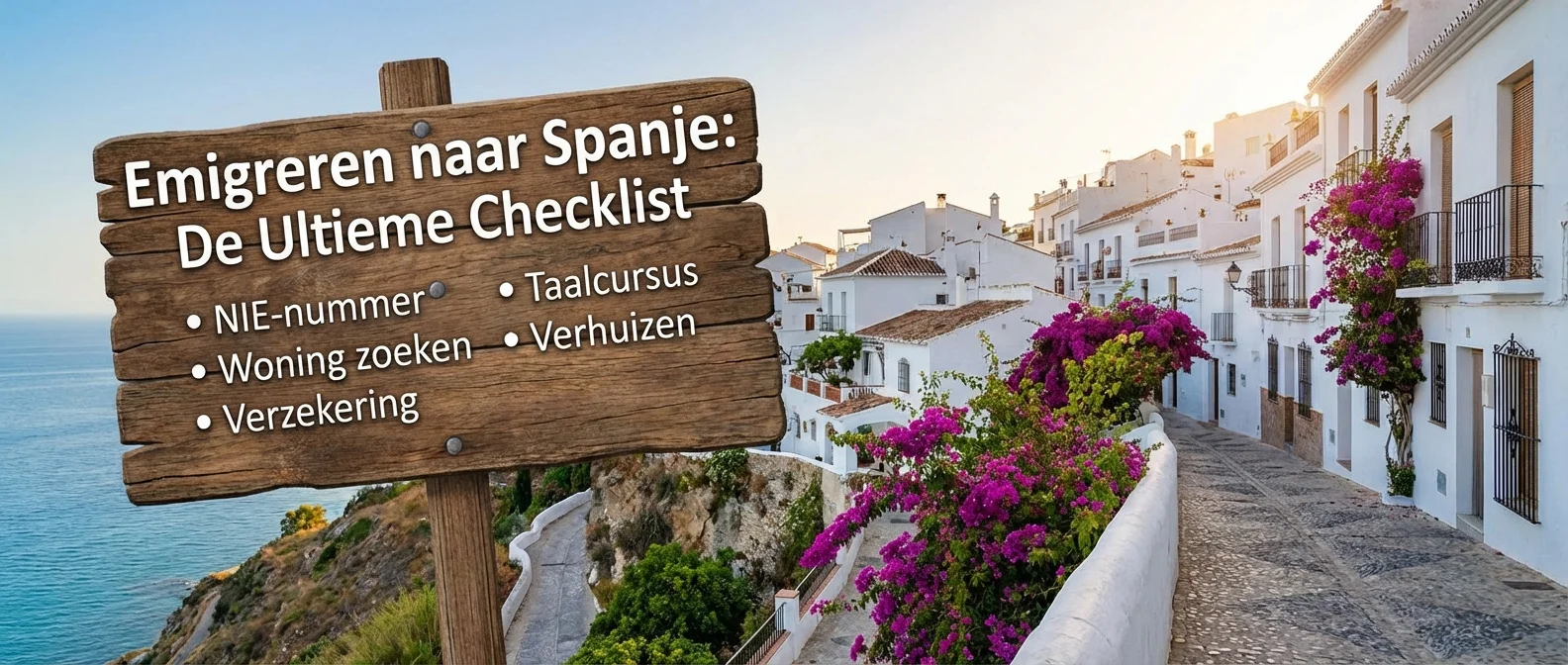
De kernpunten die u als gepensioneerde regelt vóór en kort na uw vertrek zijn:
- Het Spaanse NIE-nummer aanvragen, uw fiscale en administratieve identiteit.
- U inschrijven als EU-resident (de ‘residencia’) en het empadronamiento bij de gemeente.
- Uw zorg regelen, voor de meeste gepensioneerden via het S1-formulier.
- Een Spaanse bankrekening openen voor uw pensioenuitkering en vaste lasten.
- Helderheid krijgen over uw belastingresidentie en de heffing op uw pensioen.
Een goede voorbereiding bespaart u veel tijd bij de Spaanse bureaucratie en voorkomt dat u in uw eerste jaar tegen onnodige muren aanloopt. Begin daarom tijdig met het verzamelen van uw documenten en laat u waar nodig bijstaan door een lokale expert die de regio, de taal en de procedures van binnenuit kent.
Met pensioen naar Spanje als EU-burger: heeft u een visum nodig?
Een hardnekkig misverstand onder toekomstige emigranten is dat u een non-lucratief visum (visado de residencia no lucrativa) nodig heeft om met pensioen naar Spanje te verhuizen. Voor burgers van buiten de Europese Unie klopt dat: zij moeten dit visum aanvragen en daarbij een fors privé-inkomen én een volwaardige private zorgverzekering aantonen. Voor u als gepensioneerde Belg, Nederlander, Duitser of Fransman geldt echter het vrije verkeer van personen binnen de EU. U heeft dus géén non-lucratief visum nodig om u permanent aan de Costa Blanca te vestigen.
Wat u wél nodig heeft, is een correcte inschrijving als resident zodra u langer dan drie maanden in Spanje verblijft. Als EU-burger ontvangt u dan het Certificado de Registro de Ciudadano de la Unión, in de volksmond de ‘residencia’ of het ‘groene kaartje’. Hiervoor toont u aan dat u over voldoende bestaansmiddelen beschikt, zoals een pensioen, en over een geldige ziektekostendekking. Het verschil met het non-lucratieve visum is groot: de drempels liggen voor EU-gepensioneerden lager en de procedure is administratief eenvoudiger.
“Als gepensioneerde EU-burger reist en woont u vrij binnen Europa. Spanje vraagt geen visum, maar wel dat u zich netjes inschrijft en uw zorg en bestaansmiddelen op orde heeft.”
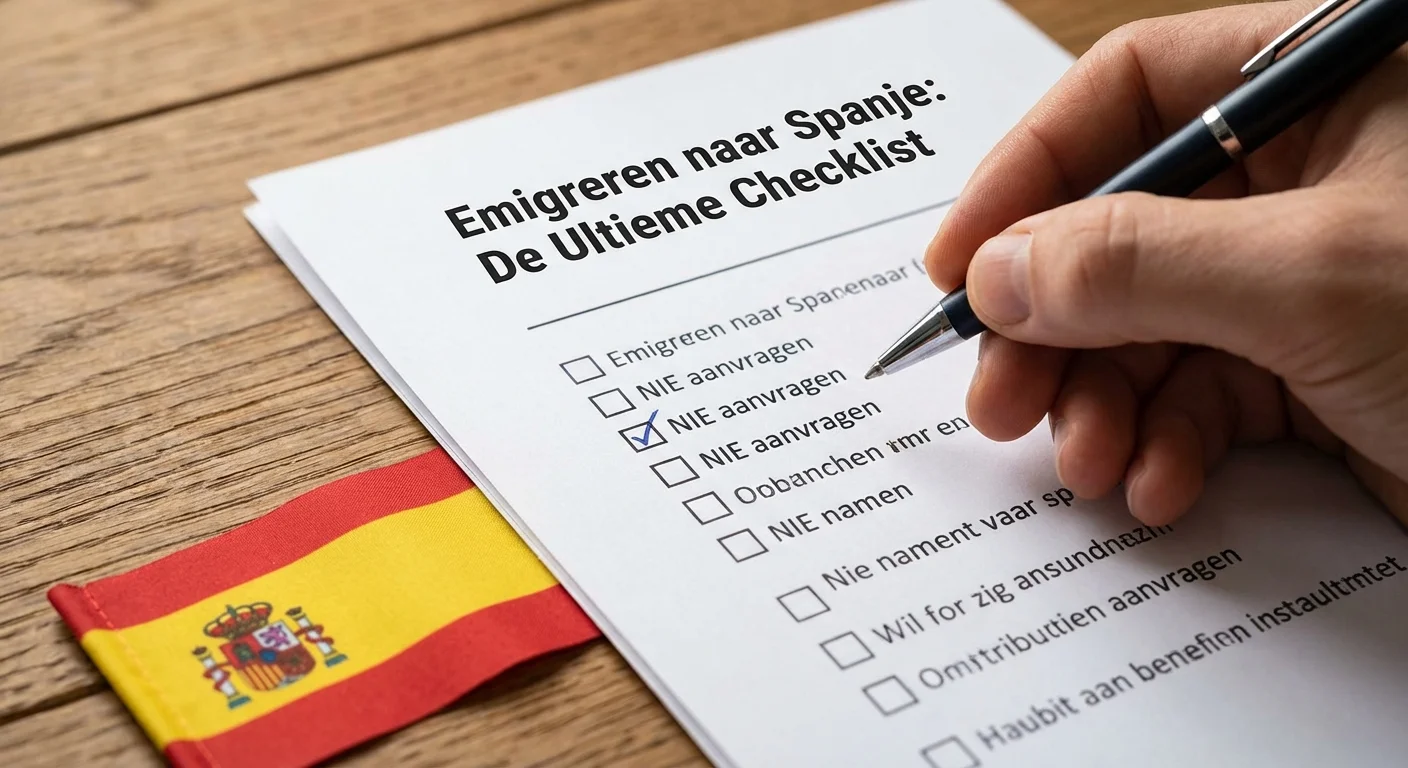
De eerste administratieve stappen voor senioren
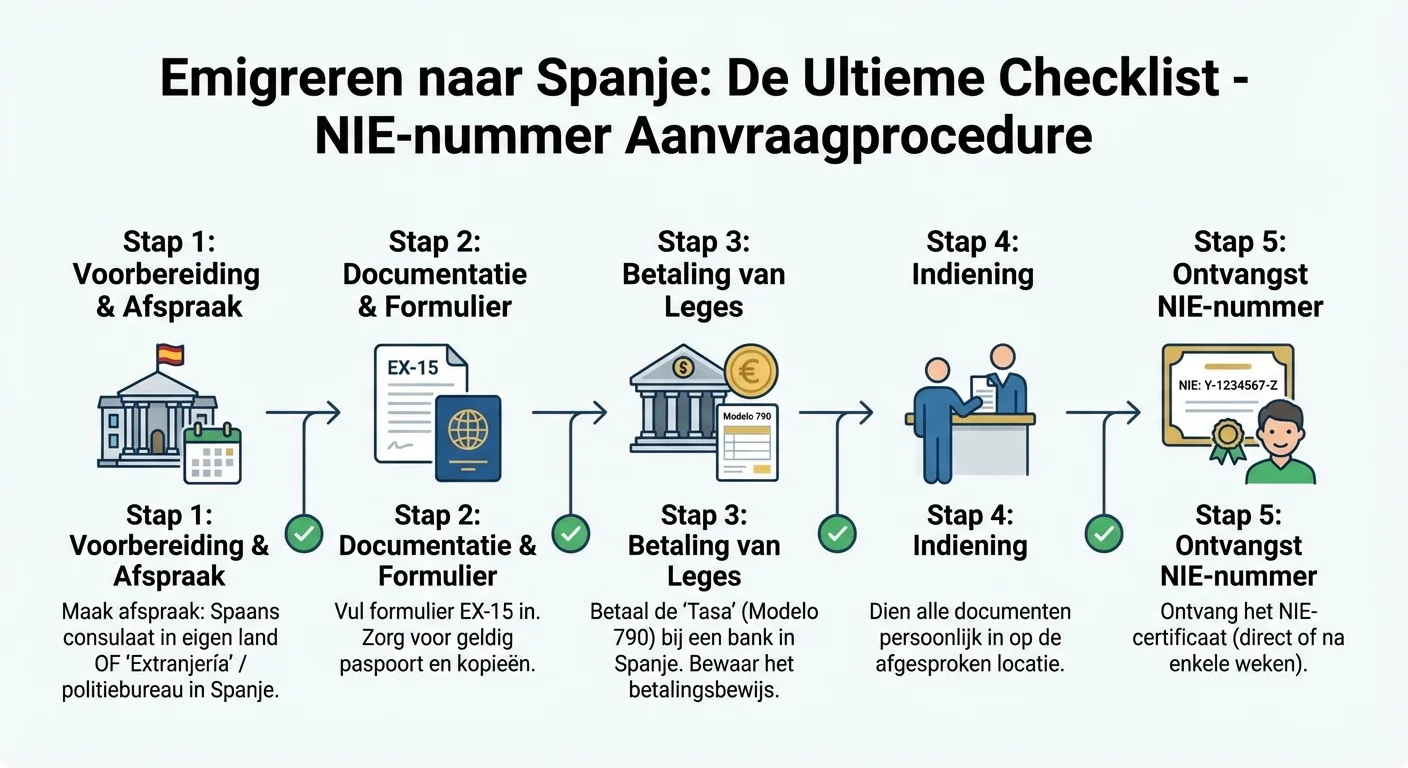
Het fundament van uw nieuwe leven begint bij het NIE-nummer (Número de Identidad de Extranjero), uw unieke fiscale identificatienummer. Zonder dit nummer kunt u in Spanje vrijwel niets officieel regelen: geen bankrekening openen, geen woning op uw naam zetten en geen zorg aanvragen. U vraagt het NIE aan bij het Spaanse consulaat in uw thuisland of bij een vreemdelingenbureau (Oficina de Extranjería) in Spanje zelf. In onze uitgebreide uitleg over het aanvragen van het NIE-nummer leest u welke documenten u nodig heeft en hoe u lange wachttijden voorkomt; dit document staat ook prominent in de algemene checklist.
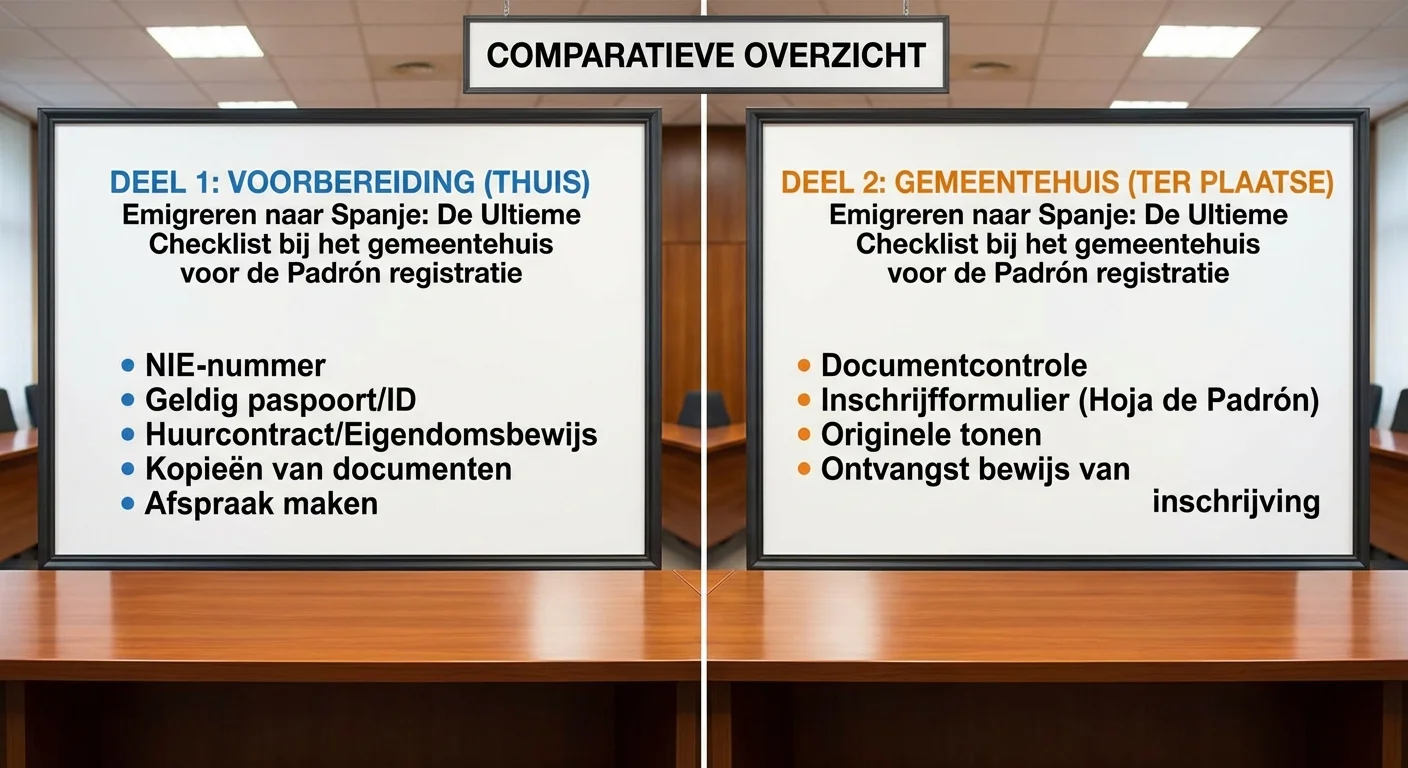
Na het NIE volgen de residencia en het empadronamiento, de inschrijving in het bevolkingsregister van uw gemeente (het ‘padrón’). Dit bewijs van woonplaats heeft u nodig voor toegang tot lokale zorg, het omwisselen van uw rijbewijs en tal van andere zaken. U regelt het bij het gemeentehuis (Ayuntamiento) met uw paspoort, NIE en een eigendoms- of huurbewijs. Houd er rekening mee dat de Spaanse administratie traag kan zijn; geduld, complete dossiers en zo nodig de hulp van een gestor besparen u veel herhaalbezoeken. Veel senioren vinden het prettig om deze stappen niet alleen te doorlopen, juist omdat de taalbarrière en de regionale verschillen in procedures in het begin overweldigend kunnen aanvoelen.
Het is verstandig om altijd meerdere kopieën van elk document mee te nemen, aangezien Spaanse ambtenaren hier vaak om vragen. Print formulieren vooraf in tweevoud uit en voeg betalingsbewijzen direct bij uw dossier. Zo voorkomt u dat u, voor een ontbrekende kopie, opnieuw een afspraak (cita previa) moet maken en weken later terug moet komen.
Waar wordt uw pensioen belast: het verdrag tussen uw thuisland en Spanje
De vraag die bij gepensioneerden het zwaarst weegt, is fiscaal van aard: waar wordt mijn pensioen straks belast? Het antwoord hangt af van het type pensioen én van het dubbelbelastingverdrag tussen Spanje en uw thuisland. Een belangrijk onderscheid is dat tussen een overheidspensioen en een privépensioen. Overheidspensioenen, bijvoorbeeld het pensioen van een voormalig ambtenaar of leerkracht in overheidsdienst, blijven doorgaans in het land van herkomst belast. Private pensioenen en aanvullende pensioenen worden daarentegen vaak in Spanje belast volgens de daar geldende schijven, wat een andere netto-uitkomst kan opleveren dan u thuis gewend was.
De dubbelbelastingverdragen tussen Spanje en respectievelijk België, Nederland, Duitsland en Frankrijk bepalen telkens welk land op welk inkomensbestanddeel mag heffen, en zorgen via verrekening of vrijstelling dat u niet tweemaal volledig betaalt over hetzelfde inkomen. Omdat deze regels per land en per pensioensoort verschillen en regelmatig wijzigen, geven wij hier bewust geen vaste percentages. Het zou onverstandig zijn om uw planning te baseren op een algemeen tarief dat u online vindt; uw persoonlijke situatie verdient een doorrekening op maat.
“Niet elk pensioen wordt op dezelfde manier belast. Het verschil tussen een overheidspensioen en een privépensioen kan voor uw netto-inkomen aanzienlijk uitmaken.”
Belastingresident in Spanje: de 183-dagenregel
Zodra u meer dan 183 dagen per kalenderjaar in Spanje verblijft, wordt u in de regel belastingresident. Vanaf dat moment geeft u uw wereldwijde inkomen aan bij de Spaanse fiscus (de Agencia Tributaria) via de inkomstenbelasting IRPF, in plaats van enkel uw Spaanse inkomsten als niet-resident. Voor gepensioneerden betekent dit dat ook uw pensioen, spaargeld en eventuele buitenlandse huurinkomsten in de Spaanse aangifte terechtkomen, met verrekening van de in het buitenland al betaalde belasting volgens het verdrag. Wanneer u precies belastingresident wordt en wat dat betekent, leggen we volledig uit in onze gids over if you are a tax resident in Spain.
Houd daarnaast rekening met enkele bijkomende verplichtingen die specifiek voor residenten gelden. Een resident met een aanzienlijk vermogen kan te maken krijgen met de vermogensbelasting (Impuesto sobre el Patrimonio), waarvan de vrijstellingsdrempel rond de 700.000 euro netto per persoon ligt en die per autonome regio sterk kan verschillen. Bovendien geldt voor elke resident de aangifteplicht van buitenlandse bezittingen boven de 50.000 euro via het beruchte Modelo 720. Dit is geen extra belasting, maar een informatieve aangifte; verzuim ervan kan echter tot boetes leiden. Laat u daarom bijstaan door een ervaren gestor of fiscaal adviseur die uw dossier correct en op tijd indient.
Bezit u ook een woning? Let op de lokale belastingen
Wie als gepensioneerde een woning bezit in Spanje, krijgt naast de heffing op het pensioen ook te maken met vastgoedgebonden belastingen. Jaarlijks betaalt u de gemeentelijke onroerendezaakbelasting IBI, doorgaans rond 200 euro per 100.000 euro woningwaarde. Verhuurt u uw woning niet en bent u nog niet-resident, dan rekent de fiscus een fictief inkomen (imputed income) van 19% over 1,1% van de kadastrale waarde wanneer die in de voorbije tien jaar is herzien, of over 2% bij een oudere waarde. Goed nieuws voor de Costa Blanca: in de Comunidad Valenciana daalt het tarief van de overdrachtsbelasting ITP vanaf 1 juni 2026 van 10% naar 9% voor woningen tot één miljoen euro. Een volledig en actueel beeld vindt u in ons overzicht van de Property taxes in Spain for 2026.
Ook de erfbelasting verdient de aandacht van senioren die hun nalatenschap zorgvuldig willen regelen. In de Comunidad Valenciana geldt een bonificatie van 99% voor echtgenoot en kinderen, en niet-residenten uit de EU/EER krijgen dezelfde gunstige regionale voordelen als residenten. Een tijdige planning, bij voorkeur met een officieel Spaans testament, zorgt ervoor dat uw vermogen later fiscaal optimaal en zonder onnodige discussies overgaat naar uw nabestaanden.
Zorgverzekering voor gepensioneerden: het S1-formulier
De gezondheidszorg is voor wie met pensioen naar Spanje verhuist een van de belangrijkste pijlers van een zorgeloos bestaan. Spanje staat wereldwijd bekend om zijn uitstekende publieke zorgstelsel, de Sistema Nacional de Salud (SNS), dat hoog scoort op kwaliteit en toegankelijkheid. Voor EU-gepensioneerden is er een bijzonder gunstige route om hier toegang toe te krijgen: het S1-formulier.
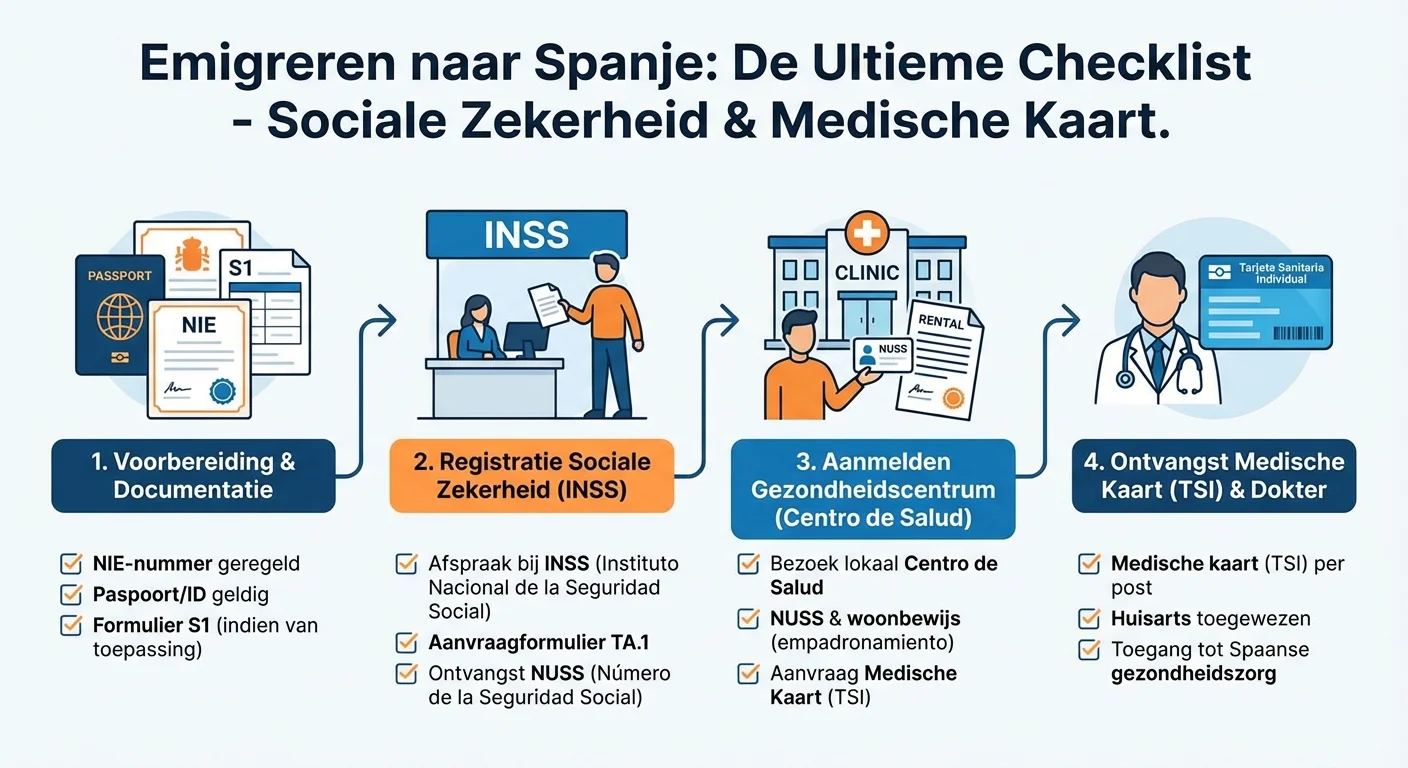
Met het S1-formulier draagt u uw ziekteverzekeringsrechten uit uw thuisland over naar het Spaanse systeem, zonder dat u opnieuw sociale premies hoeft te betalen. U vraagt het formulier aan bij de bevoegde instantie in uw thuisland, bijvoorbeeld uw ziekenfonds in België, het CAK in Nederland, de Krankenkasse in Duitsland of de CPAM in Frankrijk, en registreert het vervolgens bij uw lokale Spaanse gezondheidsdienst. De kostprijs van uw medische zorg wordt dan tussen de twee landen verrekend. Met het S1 valt u qua dekking gelijk met een Spaanse gepensioneerde, inclusief de gunstige terugbetaling van medicijnen. Voor wie van een welverdiende oude dag onder de zon wil genieten, is dit een groot voordeel.
“Het S1-formulier is voor de gepensioneerde EU-emigrant de sleutel tot het Spaanse publieke zorgstelsel, zonder dubbele bijdragen en met dezelfde rechten als een Spaanse gepensioneerde.”
Niet iedere senior heeft echter recht op een S1. Wie vervroegd met pensioen is zonder wettelijk pensioen, of als rentenier leeft, kan terugvallen op het convenio especial: een vrijwillige overeenkomst met de regionale gezondheidsdienst tegen een vaste maandelijkse bijdrage. Daarnaast kiezen veel gepensioneerden, ook met een S1, voor een aanvullende private polis om wachttijden te omzeilen en sneller bij een specialist terecht te kunnen. Aan de Costa Blanca vindt u talrijke klinieken met Nederlands-, Frans- of Duitstalig personeel, wat misverstanden over uw gezondheid voorkomt. Welke route het beste bij uw situatie past, leest u in detail in onze gids over de zorgverzekering in Spanje voor residenten.
Praktische tips rond uw zorg bij aankomst
Een vlotte start in het Spaanse zorgstelsel begint met een goede planning. De volgende aandachtspunten bespreken wij dagelijks met onze gepensioneerde klanten uit België, Nederland, Duitsland en Frankrijk:
- Vraag uw S1-formulier aan vóór uw definitieve vertrek, zodat er geen periode zonder dekking ontstaat.
- Overbrug de wachttijd tussen aankomst en volledige inschrijving met een tijdelijke private polis of uw Europese ziekteverzekeringskaart (EHIC).
- Laat uw belangrijkste medische dossiers vertalen naar het Spaans voor uw nieuwe huisarts (médico de cabecera).
- Controleer of uw vaste medicatie onder dezelfde naam verkrijgbaar is bij de Spaanse apotheek (farmacia).
- Kies bewust voor een meertalige aanbieder of kliniek in uw regio aan de Costa Blanca.
De kosten van leven op een pensioen aan de Costa Blanca
Een realistisch beeld van uw maandelijkse uitgaven is essentieel voor een zorgeloze oude dag. De Costa Blanca staat al decennia bekend om zijn uitstekende prijs-kwaliteitverhouding. Ook al heeft de inflatie haar sporen nagelaten, de dagelijkse boodschappen en horecaprijzen liggen gemiddeld twintig tot dertig procent lager dan in Noord-Europa. Een groot voordeel voor gepensioneerden is bovendien dat veel van het Spaanse leven zich buitenshuis afspeelt: een wandeling langs de boulevard, een menú del día op een terras of een bezoek aan de lokale markt kost weinig en levert veel op aan levensvreugde.
Voor wie zijn pensioen zorgvuldig wil verdelen, maakt de woonsituatie het grootste verschil. Een gepensioneerde met een eigen, hypotheekvrije woning houdt maandelijks aanzienlijk meer over dan een huurder in een gewilde kustplaats. De grootste kostenpost blijft immers het wonen, gevolgd door nutsvoorzieningen, zorg, boodschappen, transport en vrije tijd. Vergeet bij een eigen woning de jaarlijkse lasten niet, zoals de IBI, de comunidad-bijdrage voor gemeenschappelijke voorzieningen en eventueel zwembad- of tuinonderhoud.
Hoeveel u precies nodig heeft, hangt sterk af van uw levensstijl en locatie. Wij hebben dit voor drie veelvoorkomende budgetten realistisch uitgewerkt in ons artikel over de vraag of u in Spanje kunt rondkomen van 1.000, 2.000 of 3.000 euro per maand. Kort gezegd: een zuinige alleenstaande redt het met een bescheiden pensioen in het binnenland, een koppel leeft comfortabel met een middenbudget aan de kust, en met een ruimer pensioen geniet u van een royale, ontspannen levensstijl met eigen woning en auto.
Huren of kopen als gepensioneerde
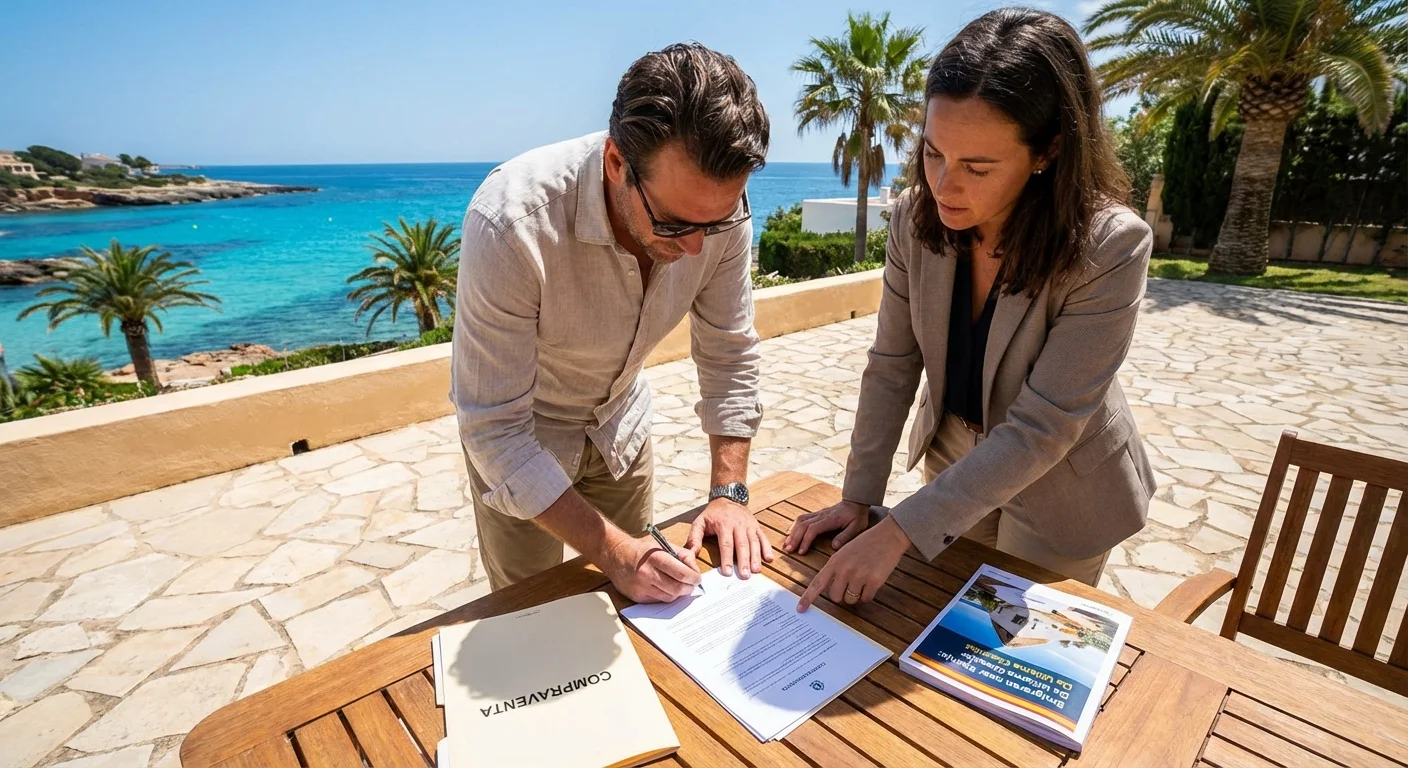
Veel senioren beginnen hun avontuur met een huurwoning om de regio en de buurt rustig te leren kennen voordat zij zich definitief binden. Dat biedt flexibiliteit, maar de huurprijzen in populaire kustgebieden stijgen gestaag. Wie de huurlast structureel wil wegnemen en zijn kapitaal in waardevast vastgoed wil onderbrengen, kiest vaak voor een eigen woning. Houd bij aankoop rekening met de bijkomende kosten koper van doorgaans 10% tot 15% bovenop de aankoopprijs, en laat elke woning juridisch controleren. Een logisch vertrekpunt is onze A comprehensive guide to buying property in Spain, en met onze tool for calculating the buyer’s costs brengt u de totale aankoopkosten exact in beeld.
Een onafhankelijke aankoopbegeleiding is voor senioren extra waardevol. De bouwkwaliteit, de isolatie en de juridische procedures in Spanje verschillen van wat u thuis gewend bent. Maak daarom gebruik van een betrouwbare partij die uw belangen behartigt, de nodige documenten controleert en u door de notariële afhandeling loodst, zodat u zich kunt richten op het mooie van uw nieuwe leven.
Geschikte rustige locaties aan de Costa Blanca voor senioren
De Costa Blanca is al decennia een van de meest geliefde bestemmingen voor Europeanen die dromen van een nieuw leven onder de zon, en juist voor gepensioneerden biedt de regio veel rust, ruimte en uitstekende voorzieningen. De keuze van uw woonplaats is bepalend voor uw woongenot op lange termijn. Waar een vakantieganger vooral op het strand let, kijkt een permanente bewoner naar de nabijheid van een ziekenhuis, de aanwezigheid van een gemeenschap in de wintermaanden en de bereikbaarheid van voorzieningen.
The Northern Costa Blanca staat bekend om haar groene, bergachtige omgeving en pittoreske stadjes. Dénia is een gezellige havenstad met goede medische faciliteiten en directe veerverbindingen. Jávea combineert een charmante oude kern met rustige woonwijken en een mild microklimaat. Altea, met zijn witgekalkte oude dorp en kunstzinnige sfeer, en het rustige Moraira zijn geliefd bij wie waarde hecht aan schoonheid en gemoedelijkheid. Deze omgeving heeft een wat hoger prijssegment, maar biedt daarvoor groen, uitzicht en authenticiteit.
The Southern Costa Blanca is vlakker en betaalbaarder, met een grote internationale gemeenschap die het integreren vergemakkelijkt. Torrevieja, Orihuela Costa en Pilar de la Horadada zijn populair onder senioren vanwege de toegankelijkheid, de uitstekende faciliteiten en de zoutmeren die zorgen voor een microklimaat dat door de Wereldgezondheidsorganisatie tot een van de gezondste ter wereld is bestempeld. Dat maakt deze streek een uitgesproken keuze voor gepensioneerden en mensen met reumatische of luchtwegklachten. Wie verder van de kust gaat wonen, in het rustige heuvelland erachter, profiteert van fors lagere woonlasten zonder de zon of de mediterrane sfeer op te geven.
Het klimaat is voor veel senioren de doorslaggevende factor. Met meer dan driehonderd zonnige dagen per jaar, milde winters tussen de 15 en 20 graden overdag en een relatief lage luchtvochtigheid biedt de Costa Blanca een leefomgeving die zowel de fysieke als de mentale gezondheid ten goede komt. Het buitenleven is hier de standaard en niet de uitzondering, wat de overgang naar een actieve, sociale oude dag een stuk gemakkelijker maakt.
Waar moet u als senior op letten bij uw woningkeuze?
Bij het kiezen van een woning denkt een gepensioneerde verstandig vooruit. Een gelijkvloerse woning of een appartement met lift blijft ook op latere leeftijd comfortabel bewoonbaar, terwijl een villa met veel trappen en een groot terrein op termijn juist veel onderhoud vraagt. Let ook op de afstand tot het dichtstbijzijnde gezondheidscentrum, een apotheek en de supermarkt, en op de bereikbaarheid van het openbaar vervoer voor wanneer u liever niet meer met de auto rijdt. Een woning binnen een rustige urbanización met onderhouden gemeenschappelijke voorzieningen biedt bovendien sociale contacten en een zekere veiligheid, zeker als u een deel van het jaar in uw thuisland verblijft. Wie het hele jaar van de woning geniet, kan met goed sleutelbeheer en periodiek onderhoud zorgen dat alles ook tijdens afwezigheid in orde blijft. Door deze afwegingen nu al mee te nemen, kiest u een thuis dat met u meegroeit in plaats van een woning waar u over enkele jaren weer uit moet.
Checklist op maat voor gepensioneerden
Onderstaande checklist brengt de belangrijkste stappen voor senioren overzichtelijk samen. Voor de volledige uitwerking van elke administratieve formaliteit verwijzen wij naar onze algemene checklist voor emigreren naar Spanje; de onderstaande lijst legt de nadruk op wat voor gepensioneerden anders of extra belangrijk is.
- Vraag tijdig uw NIE-nummer aan bij het consulaat of in Spanje zelf.
- Schrijf u in als EU-resident (residencia) en regel het empadronamiento; als EU-burger heeft u géén non-lucratief visum nodig.
- Vraag uw S1-formulier aan in uw thuisland en registreer het bij uw Spaanse gezondheidsdienst.
- Open een Spaanse bankrekening voor de uitbetaling van uw pensioen en uw vaste lasten.
- Laat doorrekenen waar uw pensioen wordt belast: overheidspensioen versus privépensioen en het verdrag met uw land.
- Houd de 183-dagenregel in de gaten en bereid u voor op de gevolgen van fiscaal residentschap (IRPF, eventueel Modelo 720 en vermogensbelasting).
- Maak een realistisch maandbudget op basis van uw pensioen en kies bewust tussen huren en kopen.
- Selecteer een rustige locatie met goede medische voorzieningen die bij uw levensfase past.
- Regel een officieel Spaans testament en verdiep u in de gunstige regionale erfbelasting.
“Een goede voorbereiding is voor de gepensioneerde emigrant het halve werk: wie zijn zorg, fiscaliteit en woonsituatie tijdig regelt, geniet daarna met een gerust hart van de Spaanse zon.”
Vergeet niet dat ook het onderhoud van uw woning aandacht vraagt, zeker als u niet het hele jaar aanwezig bent of nog pendelt tussen uw thuisland en Spanje. Veel eigenaren schakelen daarom een betrouwbare partij in voor periodiek beheer en controle, zodat hun woning ook op afstand zorgeloos blijft.
Uw voorbereiding in het thuisland: wat regelt u vóór vertrek?
Een geslaagde emigratie als gepensioneerde begint niet in Spanje, maar al maanden eerder aan de keukentafel in België, Nederland, Duitsland of Frankrijk. Juist omdat u niet langer een werkgever heeft die administratieve zaken voor u regelt, loont het om uw vertrek zorgvuldig te plannen. Begin tijdig met het verzamelen van uw officiële documenten en houd er rekening mee dat sommige akten, zoals een geboorteakte of een huwelijksakte, voorzien moeten zijn van een apostille om in Spanje rechtsgeldig te zijn. Veel senioren onderschatten hoeveel tijd het kost om deze stukken te verzamelen en te laten legaliseren.
Breng vóór uw vertrek ook uw pensioenadministratie volledig in kaart. Maak een overzicht van al uw pensioenstromen: uw wettelijke ouderdomspensioen, eventuele aanvullende of bedrijfspensioenen en lijfrentes. Voor elk van deze stromen is het verstandig om vooraf na te gaan hoe de uitbetaling naar een Spaanse bankrekening verloopt en welke fiscale gevolgen een verhuizing heeft. Een Nederlander met AOW, een Belg met een rust- of overlevingspensioen en een Duitser met een Rente hebben elk te maken met andere instanties en termijnen. Een tijdig contact met de uitkerende instantie voorkomt dat uw pensioen na de verhuizing tijdelijk stilvalt of op het verkeerde rekeningnummer terechtkomt.
“Voor de gepensioneerde emigrant is de voorbereiding in eigen land minstens zo belangrijk als de stappen in Spanje. Wie zijn documenten, pensioen en zorgrechten vooraf op orde brengt, arriveert met een gerust hart.”
Denk daarnaast aan praktische zaken die u in uw thuisland het beste afhandelt vóór u vertrekt. Vraag uw S1-formulier aan bij de bevoegde instantie, regel een Europese ziekteverzekeringskaart als overbrugging en controleer de opzegtermijn van uw bestaande zorgverzekering, zodat u niet onnodig dubbel betaalt of juist even zonder dekking zit. Verzamel een vertaling van uw belangrijkste medische dossiers en een actueel overzicht van uw medicatie. Wie deze stappen ordelijk doorloopt, voorkomt dat de eerste maanden onder de Spaanse zon worden overschaduwd door administratieve stress die op afstand veel lastiger op te lossen is.
De residencia-aanvraag stap voor stap
De inschrijving als EU-resident is voor gepensioneerden een van de belangrijkste formaliteiten, en het loont om te weten wat u kunt verwachten. U maakt eerst een afspraak (cita previa) bij de Oficina de Extranjería of het aangewezen politiebureau in uw provincie. Vervolgens vult u het aanvraagformulier in en betaalt u de bijbehorende leges bij een bank. Bij de afspraak toont u uw geldige paspoort, uw NIE, een bewijs van voldoende bestaansmiddelen en een bewijs van uw ziektekostendekking. Voor gepensioneerden vormt een pensioenoverzicht doorgaans het bewijs van bestaansmiddelen, en het S1-formulier of een private polis het bewijs van zorgdekking.
Houd er rekening mee dat de exacte vereisten en de hoogte van het verlangde inkomen per provincie en per kantoor licht kunnen verschillen, en dat de regels in de loop van de tijd worden aangepast. Het is daarom verstandig om de actuele eisen vooraf te laten controleren door een lokale gestor of adviseur, die ook de taal en de gebruiken van het betreffende loket kent. Zo voorkomt u dat u door één ontbrekend document opnieuw weken op een afspraak moet wachten. Na een geslaagde aanvraag ontvangt u het groene residentiecertificaat, dat samen met uw NIE de basis vormt voor vrijwel alle verdere stappen in uw nieuwe leven.
Sociaal leven en welzijn als senior aan de Costa Blanca
Een zorgeloze oude dag draait om meer dan administratie en fiscaliteit. Voor veel gepensioneerden is juist het sociale leven de doorslaggevende reden om naar de Costa Blanca te verhuizen. De regio kent een grote, hechte gemeenschap van Belgen, Nederlanders, Duitsers en Fransen, waardoor u zich snel thuis voelt en gemakkelijk aansluiting vindt. Tegelijk loont het om ook contact te zoeken met de lokale Spaanse bevolking; een paar woorden Spaans en een glimlach openen deuren naar diepere vriendschappen en een rijker begrip van de cultuur die u heeft gekozen.
De Spaanse levensstijl, met haar nadruk op buitenleven, gemeenschap en een ontspannen dagindeling, sluit bijzonder goed aan bij wie de drukte van een werkend bestaan achter zich laat. Een wandeling langs de boulevard, een partijtje jeu de boules of pétanque, een bezoek aan de wekelijkse markt of een gezamenlijke lunch op een terras vormen het ritme van veel senioren aan de kust. Talloze verenigingen, sportclubs en hobbygroepen organiseren activiteiten in uw eigen taal, van wandel- en fietsgroepen tot kaart- en koorclubs. Voor wie actief wil blijven, biedt de regio bovendien volop mogelijkheden voor golf, zwemmen, fietsen en yoga in een klimaat dat het hele jaar door uitnodigt om naar buiten te gaan.
Ook het gemak van het dagelijks leven draagt bij aan het welzijn van senioren. De afstanden zijn klein, veel voorzieningen zijn lopend of met een korte autorit bereikbaar, en de medische zorg is nooit ver weg. Wie kiest voor een gelijkvloerse woning of een appartement met lift, houdt het wonen ook op langere termijn comfortabel. Door bij de keuze van uw woning en locatie nu al rekening te houden met de wensen van later, legt u de basis voor een werkelijk zorgeloze oude dag aan de Spaanse kust.
How we can help you
Met pensioen naar Spanje verhuizen is een mooie, maar veelomvattende stap. Bij Investeer in Spanje begeleiden wij, onder leiding van vastgoedexpert en CEO Kenzo Fayot, dagelijks gepensioneerden, kopers en nieuwkomers uit België, Nederland, Duitsland en Frankrijk bij hun verhuizing naar de Costa Blanca. Van het vinden van de juiste rustige woning tot aankoopbegeleiding, hypotheekadvies, juridische controle, verhuur en het onderhoud of sleutelbeheer van uw woning: u heeft één vast aanspreekpunt dat de regio, de taal en de bureaucratie van binnenuit kent. Bekijk gerust ons volledige aanbod aan property services in Spain, en wie het exclusieve segment zoekt, kan ook op Ibiza bij ons terecht.
Of u nu een gelijkvloerse woning zoekt in een rustig dorp aan de Costa Blanca Noord, een betaalbare woning in een hechte internationale gemeenschap in het zuiden, of uw vaste lasten als gepensioneerde wilt laten doorrekenen: ons team neemt u alle zorgen uit handen en kijkt verder dan de woning alleen. Klaar voor een zorgeloos nieuw hoofdstuk onder de zon? Please feel free to contact us, with no obligation voor een persoonlijk plan van aanpak; wij denken graag met u mee over uw droomhuis, uw budget en uw fiscale situatie in de prachtige regio Costa Blanca.
Veelgestelde vragen over met pensioen naar Spanje
Heb ik als gepensioneerde EU-burger een visum nodig om naar Spanje te verhuizen?
Nee. Als gepensioneerde Belg, Nederlander, Duitser of Fransman geniet u van het vrije verkeer binnen de EU en heeft u geen non-lucratief visum nodig. Wel schrijft u zich in als resident (de ‘residencia’ of het groene kaartje) zodra u langer dan drie maanden in Spanje verblijft, waarbij u voldoende bestaansmiddelen en een zorgverzekering aantoont. Daarnaast regelt u een NIE-nummer en het empadronamiento bij de gemeente.
Waar wordt mijn pensioen belast als ik met pensioen naar Spanje ga?
Dat hangt af van het type pensioen en van het dubbelbelastingverdrag tussen Spanje en uw thuisland. Overheidspensioenen blijven doorgaans in het land van herkomst belast, terwijl private pensioenen vaak in Spanje worden belast. Omdat de regels per land en pensioensoort verschillen, raden wij u sterk aan uw persoonlijke situatie vooraf te laten doorrekenen door een fiscaal adviseur of gestor, zodat u niet voor verrassingen komt te staan.
Hoe regel ik mijn zorgverzekering als gepensioneerde in Spanje?
De meeste EU-gepensioneerden gebruiken het S1-formulier, waarmee u uw zorgrechten uit uw thuisland overdraagt naar het Spaanse publieke stelsel zonder dubbele bijdragen. U vraagt het aan bij de bevoegde instantie in uw land en registreert het in Spanje. Heeft u geen recht op een S1, dan kunt u terugvallen op het convenio especial of een private polis. Veel senioren sluiten daarnaast een aanvullende private verzekering af voor kortere wachttijden.
Wanneer word ik belastingresident in Spanje?
U wordt fiscaal resident zodra u meer dan 183 dagen per kalenderjaar in Spanje verblijft, of wanneer het centrum van uw economische of gezinsleven daar ligt. Vanaf dat moment geeft u uw wereldwijde inkomen aan via de Spaanse inkomstenbelasting IRPF en kunt u te maken krijgen met de vermogensbelasting boven ongeveer 700.000 euro netto per persoon en de aangifteplicht via Modelo 720 voor buitenlandse bezittingen boven 50.000 euro.
Welke locaties aan de Costa Blanca zijn geschikt voor gepensioneerden?
Aan de Costa Blanca Noord zijn Dénia, Jávea, Altea en Moraira geliefd om hun rust, groen en voorzieningen. Aan de Costa Blanca Zuid bieden Torrevieja, Orihuela Costa en Pilar de la Horadada betaalbaarheid, een grote internationale gemeenschap en een gezond microklimaat dankzij de zoutmeren. Voor senioren tellen vooral de nabijheid van medische zorg, een actieve wintergemeenschap en gelijkvloerse, goed bereikbare woningen.