Whether you can get by in Spain on €1,000, €2,000 or €3,000 a month depends mainly on your living arrangements and where you live. In a nutshell: with €1.000 A thrifty single person can get by in the countryside or a quiet coastal town, but it’s still a tight squeeze; with €2.000 a couple live comfortably on the Costa Blanca; and with €3.000 you can enjoy a comfortable, carefree lifestyle with your own home, car and regular meals out. Those who own their own home rather than rent it have considerably more money left over each month. In this article, we set out three realistic budgets for expats and pensioners from the Netherlands, Belgium, Germany and France who wish to move to the Costa Blanca.

Prices have also risen in Spain, but living costs on the Costa Blanca are generally still lower than in Northern Europe. A key difference from home is that much of Spanish life takes place outdoors: a stroll along the promenade, a ‘menu del día’ on a terrace or a visit to the local market costs very little and offers great value. Nevertheless, it’s worth drawing up a realistic financial plan before you set off. Below you’ll find a realistic breakdown by budget, the differences between the coast and the inland areas, and who can afford each budget.
Making ends meet in Spain on €1,000 a month
It is possible to get by on a thousand euros a month in Spain, but it requires careful choices. For a single person who owns their own mortgage-free home, this budget is often manageable; for a tenant in a popular coastal town, it will be a tight squeeze. The biggest expense is, and always will be, accommodation. In the inland areas of the province of Alicante or in a quiet village, the rent for a simple one-bedroom flat is usually between €450 and €650 a month, whilst in sought-after coastal towns such as Dénia, Jávea or Altea, you’ll easily pay between €700 and €900 for something similar.
A realistic monthly breakdown for a frugal single person looks something like this:
- Rent (small flat, inland or on a quiet coast): €450 – €650
- Utilities (electricity, water, internet): €100 – €150
- Groceries: €200 – €280
- Health insurance (private insurance policy or contribution): €60 – €120
- Transport (public transport or a fuel-efficient car): €50 – €120
- Leisure (terrace, daily special, short trips): €80 – €150
The electricity bill deserves special attention: during the summer months, air conditioning can drive up costs considerably. Water, on the other hand, is relatively cheap, and local council charges are often lower than what you’re used to in the Netherlands or Belgium. If you cook for yourself using seasonal produce from the local market and avoid tourist restaurants, you’ll find it surprisingly easy to keep this budget under control. The biggest pitfall is the temptation to live in a permanent holiday mode and eat out every day.

For whom is €1,000 a realistic figure?
This budget is best suited to a frugal single person or a pensioner who owns their own, fully paid-off home, is content with a simple lifestyle and avoids the hustle and bustle of the tourist coast. For a couple or anyone still renting in Dénia, Jávea or Moraira, a thousand euros a month is, in practice, not enough to make ends meet without worry. Are you considering buying your own home to eliminate that rental burden for good? Then read our guide on buying property in Spain and bear in mind the purchaser’s costs in addition to the purchase price, which are usually between 10 and 15%.
Making ends meet in Spain on €2,000 a month
With a budget of two thousand euros a month, you’ll find yourself in a comfortable position. This amount is well above the average Spanish net salary and is the ideal target figure for many expats and couples. On the Costa Blanca, this will allow you to rent a spacious, modern two-bedroom flat in a sought-after neighbourhood, or easily cover the running costs of your own home. What’s more, there’s plenty left over for an active, social lifestyle without having to weigh up every expense.
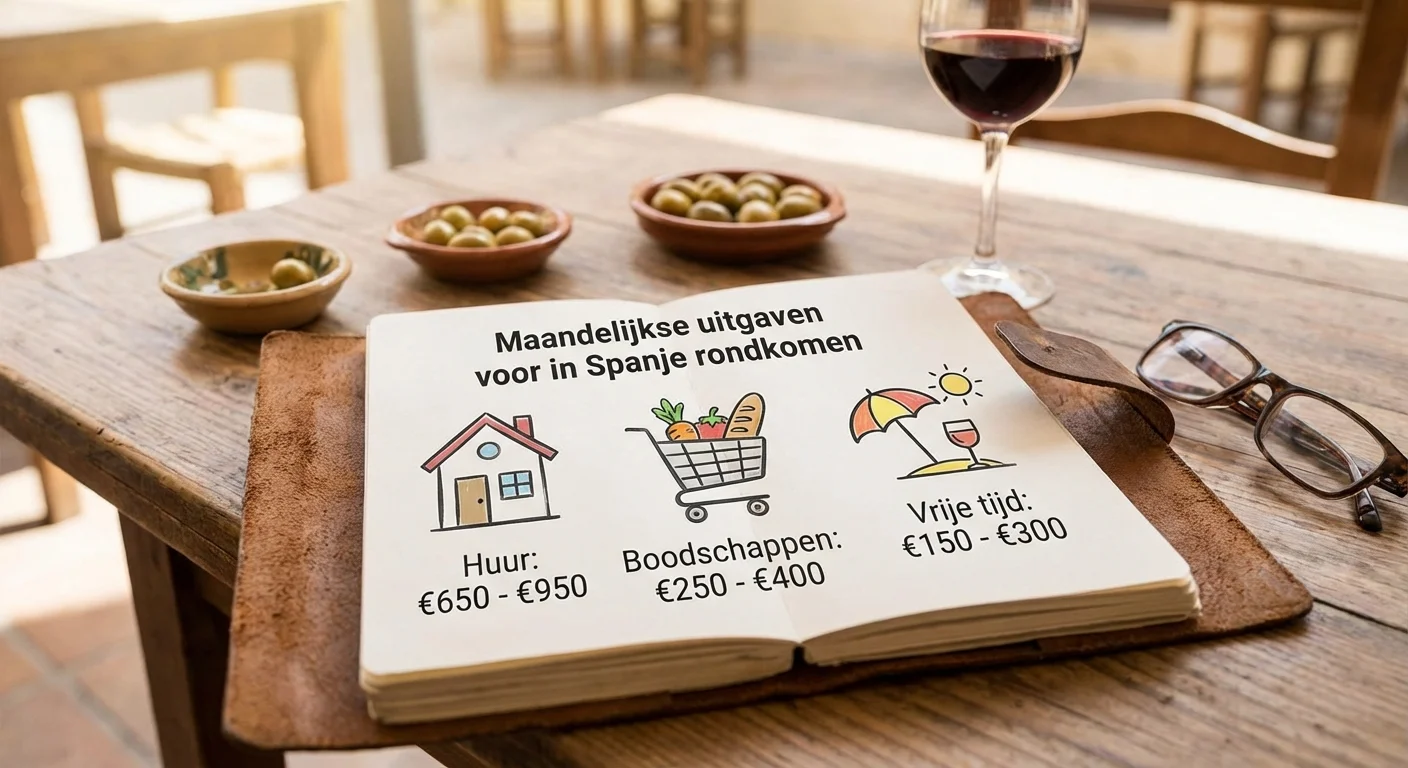
An indicative breakdown for a couple with this budget:
- Rent or housing costs (spacious flat, two bedrooms): €750 – €1,100
- Utilities (including air conditioning in summer): €150 – €220
- Groceries (two people): €350 – €450
- Health insurance (private policy for two): €120 – €240
- Transport (own car, including insurance and fuel): €150 – €250
- Leisure (eating out, sport, days out): €250 – €400
With this budget, you can enjoy tapas or a full dinner three to four times a week, hire a cleaner and take regular short trips within Spain. Gastronomy is an integral part of Spanish life, and on the Costa Blanca you’ll find countless affordable restaurants away from the tourist areas. For pensioners from the Netherlands, Belgium, Germany or France, two thousand euros a month offers a quality of life that is often unattainable in their home countries.
Healthcare, taxation and residence
Healthcare costs deserve special attention. If you stay in Spain for more than half a year in any calendar year, you will generally be Tax resident in Spain, which has implications for your health insurance and your tax return. Pensioners receiving an AOW or state pension can often access the public healthcare system via an EU form, whilst others take out a private policy. For a good private health insurance policy, you should expect to pay roughly €60 to €120 per person per month, depending on age and cover. Please also bear in mind that owning your own home entails annual costs, such as property tax IBI (approximately €200 per €100,000 of the property’s value) and, if the property is not let, a notional income tax.
For whom is €2,000 a realistic figure?
Two thousand euros a month is excellent for a couple or a single person who wants to live in comfort. Retired couples with a reasonable pension, expats on a fixed income and winter visitors with a second home on the Costa will find this offers a comfortable balance. Those who own their home rather than rent will even have some money left over from this budget to save or invest.
Making ends meet in Spain on €3,000 a month
With three thousand euros a month, you can live in true luxury on the Costa Blanca. This budget allows you to live in a detached house or a villa with a swimming pool, drive a modern car and enjoy the Mediterranean lifestyle without having to count every penny. For a family with children, or for those who wish to live in the most exclusive neighbourhoods, this is generally the amount that puts all your wishes comfortably within reach. Even those seeking the very best, for example in Ibiza, will find this budget provides a solid foundation.
A broad breakdown by month might look like this:
- Housing costs (villa or spacious rental property with a swimming pool): €1,100 – €1,600
- Utilities (larger house, swimming pool maintenance, air conditioning): €250 – €400
- Groceries (family or demanding kitchen): €450 – €600
- Care (comprehensive private cover, possibly including a private clinic): €150 – €300
- Transport (modern car, servicing): €200 – €350
- Leisure (eating out, golf, travel, hobbies): €400 – €700
At this level, making ends meet is no longer a matter of maths but a question of enjoying life. You can afford memberships to sports or golf clubs, take Spanish language lessons, travel regularly and still put money aside each month. Many buyers with this profile make a conscious decision to buy a property rather than rent, as this largely eliminates housing costs and ties up capital in property that retains its value. For those considering letting, a second home on the coast can also yield an attractive return.
For whom is €3,000 a realistic figure?
Three thousand euros a month is suitable for families who aspire to a luxurious lifestyle, and for couples who, as well as enjoying comfort, also wish to save or invest. It is also the amount that will allow you to live in the most sought-after parts of the Northern Costa Blanca, such as Altea or Moraira, without having to compromise. Would you like to make your capital work for you rather than simply letting it sit idle? Then take a look at our options regarding real estate investments in Spain and the expected returns on a holiday home, which usually amount to between 4 and 7% net per year.
Coast versus inland: where your budget goes furthest
Your location plays a major role in determining how much you have left at the end of the month. There is a significant difference between the bustling coastal towns and the quiet inland areas. On the Northern Costa Blanca, with popular towns such as Dénia, Jávea, Altea and Moraira, rental and property prices are noticeably higher than in the hinterland or in parts of the Southern Costa Blanca, such as Torrevieja, Orihuela Costa and Pilar de la Horadada. Tourist hotspots also tend to have higher prices for outdoor dining, groceries and services, particularly during the high season.
The following factors determine how far your budget will go:
- Proximity to the coastline and international tourist attractions: the closer to the sea, the higher the rent.
- The choice between renting and owning your own home: owning a property without a mortgage drastically reduces your fixed costs.
- The availability of public transport versus the need for a car of one’s own.
- Local taxes and municipal charges, which vary from one municipality to another.
- Shopping at the local market and Spanish supermarkets rather than expensive international chains.
Those who choose to live a little further inland, in the hills behind the Costa Blanca, often benefit from significantly lower living costs without having to sacrifice the sun, the cuisine or the Mediterranean atmosphere. For those seeking both affordability and amenities, a location just outside the main tourist area is usually the best compromise. If you’re considering taking the plunge, be sure to read our comprehensive guide on property trends and market forecasts for 2026, so that you can base your decision on up-to-date figures.
In conclusion: making ends meet in Spain always comes down to smart planning and the ability to adapt to the local way of life. The lower costs of fresh produce, eating out and a lifestyle centred largely on the outdoors are a major advantage. However, rising rents in the most popular coastal areas call for realistic financial planning. Anyone who does their sums honestly in advance and makes informed choices about housing and location will find that the Costa Blanca can be a pleasant home for people on any of the three budgets.
How we can help you
At Invest in Spain, we assist buyers and expats from the Netherlands, Belgium, Germany and France on a daily basis as they make the move to the Costa Blanca. Our team, led by property expert and CEO Kenzo Fayot, knows the local market from Dénia to Torrevieja inside out and knows exactly which area suits your budget and lifestyle. Whether you’re looking to rent, buy a property or work out the running costs of owning your own home: we can help you with guidance on the purchase process and a reliable estate agent on the Costa Blanca, legal checks, mortgage advice and hassle-free management of your property. Take a look at our full range of services in Spain or start your search via our property portfolio.
Would you like to know what budget is realistic for your situation and which location on the Costa Blanca would suit you best? Please feel free to contact us, with no obligation and we’d be happy to discuss this with you in person.
Frequently asked questions about making ends meet in Spain
Can you get by on €1,000 a month in Spain?
Yes, but it’s a tight budget. A frugal single person who owns their own, fully paid-off home can get by in the countryside or a quiet coastal town. For a tenant in a popular seaside resort such as Dénia or Jávea, a thousand euros a month is usually not enough to make ends meet without any worries.
How much money does a couple need to live comfortably in Spain?
For a couple on the Costa Blanca, around €2,000 a month is a comfortable guideline. This covers rent or housing costs, health insurance, a car and groceries, and leaves you with enough to eat out regularly and go on day trips.
Is the coast more expensive than the inland areas of the Costa Blanca?
Yes. In popular coastal towns on the Northern Costa Blanca, such as Dénia, Jávea, Altea and Moraira, rental and property prices are noticeably higher than in the hinterland or in parts of the Southern Costa Blanca. Just outside the tourist centres, your budget will often go further.
Does owning your own home make a big difference to your monthly expenses?
Significantly. Owning a mortgage-free home largely eliminates the biggest expense: rent. You are then left with fixed costs such as utilities, property tax (approximately €200 per €100,000 of the property’s value) and maintenance. As a result, you’ll have much more to spend on other things with the same budget.
What about health insurance for pensioners?
Pensioners receiving a state pension can often gain access to the public healthcare system by completing an EU form. Others take out private insurance, which costs roughly €60 to €120 per person per month, depending on age and cover. Anyone who stays in Spain for more than six months a year usually becomes a tax resident.