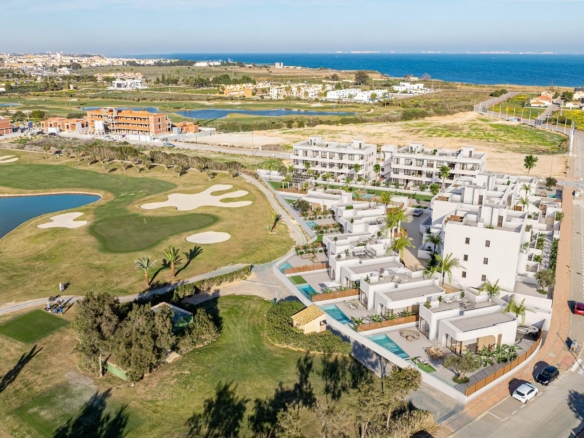
Overseas property is primarily taxed by the country in which the property is situated: if you own a house on the Costa Blanca, Spain – as the country of location – levies local taxes on the property, rental income and any capital gains. At the same time, your country of residence — the Netherlands or Belgium — will also want to see this property included in your tax return, as you are liable for tax there on your worldwide assets or income. Double taxation is prevented by a double taxation agreement: the Netherlands applies a deduction in Box 3 to prevent double taxation, whilst Belgium grants an exemption subject to progressive taxation. The difference between income tax (on rental income) and capital gains tax (on property ownership) ultimately determines how much you pay.
This guide provides an overarching overview to which all country-specific articles on this site relate. Below, we explain step by step how the basic principle works, how the Netherlands and Belgium differ, and where Spain fits into this picture as a country of residence. If you are looking for the finer details for each country, we will refer you to the in-depth articles on the Dutch tax on a house in Spain and the Belgian tax on a property in Spain. That way, you’ll always have the full picture in mind.
It is essential to understand how overseas property is taxed, so that you can avoid unexpected additional tax assessments from the tax authorities and maintain the return on your investment on the Costa Blanca.
Tax treatment varies significantly depending on your country of residence. The Netherlands assesses the value of your assets via the Box 3 tax, whilst Belgium uses the notional rental value, based on the cadastral income, as the basis for taxation. Whether you are Belgian, Dutch, German or French, and whether you are buying as an investor, as the purchaser of a second home, as an expat or as a pensioner: the basic principle remains the same, but the practical implications differ. We assist property owners from across north-western Europe with precisely these cross-border issues, from Dénia, Jávea, Altea and Moraira in the north to Torrevieja, Orihuela Costa and Pilar de la Horadada in the south.
- The country in which the property is situated (Spain) levies tax first on ownership, rent and capital gains.
- Your country of residence also requires this asset to be declared — in Box 3 (NL) or via the cadastral income (BE).
- A double taxation agreement prevents you from paying the full amount twice.

The basic principle: the country of location takes precedence, whilst the country of residence is also taken into account
Anyone who owns international property will inevitably find themselves dealing with two tax systems. The first is the site principle: Property is taxed in the country where it is physically located. For a property on the Costa Blanca, this means that Spain has the primary right to levy tax. Spain taxes you annually on the property (via the local property tax) IBI and the so-called ‘imputed income’ for unlet properties), on your rental income if you let out a property, and on the capital gain when you sell. These Spanish taxes are separate from whatever your country of residence may subsequently do with the same property.
The second country is your country of tax residence. In principle, both the Netherlands and Belgium tax residents on their worldwide income and assets. This means that your Spanish property, even though it is thousands of kilometres away, is in principle included in your Dutch or Belgian tax return. At first glance, this looks like double taxation: after all, both Spain and your country of residence are claiming a slice of the same pie. It is precisely to prevent this that double taxation treaties exist, which are discussed in detail below.
It is a persistent misconception that a property abroad is completely excluded from your tax return in your country of residence. The obligation to declare in your country of residence almost always applies; it is only the actual payment that is neutralised by the treaty. If you fail to declare your property, you risk fines, even if, on balance, you would owe little or no additional tax. To fully understand when you are considered a tax resident of a country at all, it is useful to know if you are a tax resident in Spain — as that status determines which country is your country of main residence.
Income tax versus wealth tax
To fully understand the tax implications, it is crucial to distinguish between two types of tax. Income tax is levied on the income generated by the property: rental income, and in Spain also a flat-rate “notional” income if you do not let the property but use it yourself. For non-residents in Spain, this is handled via Form 210, at a rate of 19% for EU/EEA residents (with expenses being deductible) and 24% for non-EU residents (on gross income). If you do not let the property, Spain charges 19% on 1.1% of the cadastral value (if this has been revised within the last ten years) or on 2% of that value.
Wealth tax In contrast, tax is levied on the asset itself, regardless of whether it generates any income. Spain has a wealth tax (impuesto sobre el patrimonio) with a threshold of approximately €700,000 net per person, although this varies by region. The Netherlands does not have a separate wealth tax in the traditional sense, but taxes wealth via ‘box 3’. Belgium does not levy a general wealth tax on property, but uses the cadastral income system. The distinction between income tax and wealth tax explains why two owners with an identical property may still receive very different tax assessments, depending on their country of residence and how they use the property.
“Correctly distinguishing between income tax on rent and capital gains tax on property is the first step in determining how your overseas property will be taxed by the tax authorities.”
How is foreign property taxed in the Netherlands?
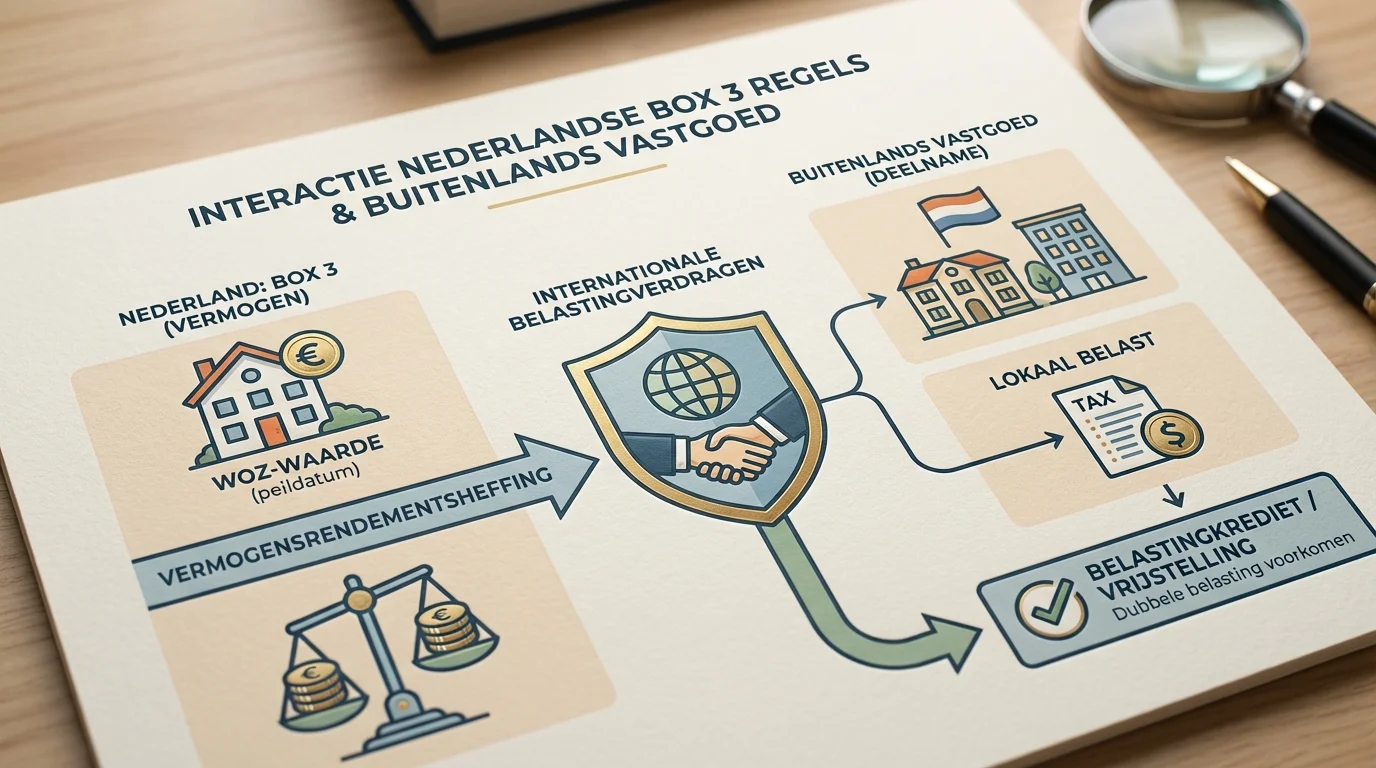
For many Dutch people, a second home across the border A dream come true, but it also entails tax obligations. As a Dutch tax resident, you must declare your worldwide income and assets to the Tax and Customs Administration. In principle, the value of your property in Spain falls under Box 3, where it is taxed as part of your taxable assets. The Netherlands claims the right to tax these assets, but international treaties ensure that you do not pay tax twice on the same asset — which is crucial for your net return.
The Tax and Customs Administration considers the economic value of the property on 1 January of the relevant tax year in order to determine how it foreign property taxed is subject to Box 3. Since the reforms to Box 3, a single notional rate of return on total assets is no longer applied; instead, a distinction is made between savings and other assets. Property falls into the latter category, for which a flat-rate return percentage applies that is considerably higher than for savings. This has a direct impact on the amount of the tax assessment.
Valuation without a Dutch WOZ value
A frequently asked question is how to determine the value of a property in Spain, given that Spain does not have an official system equivalent to the Dutch WOZ valuation. For your Dutch tax return, you should state the market value, i.e. the value in a condition ready for immediate sale. As no Dutch local authority carries out this valuation, you must make a substantiated estimate yourself, based on comparable sales in the region or a valuation report from a local expert. Ensure this is done consistently and is well documented: an estimate that is too low may lead to corrections and fines in the event of an audit. In practice, the Spanish cadastral value is often used as a reference, but you must convert this to the standards applied by the Tax and Customs Administration for assets.
A concrete example makes this clearer. Suppose you own a flat in Jávea with a market value of €350,000 and you have taken out a mortgage of €150,000 against it. For Box 3, a net amount of €200,000 is then taken into account, as mortgage debts directly related to the property reduce the tax base. The Tax and Customs Administration calculates the flat-rate return on that balance and then applies the double taxation relief, as Spain has the right to tax the property. The net effect is that in the Netherlands you often pay little or no additional tax on the property itself, but its value does count towards the calculation of your total assets.
Please note an important distinction in this example: not every debt counts towards the tax base. Only a loan that can be demonstrated to have been taken out for the purchase, renovation or maintenance of this specific property reduces the tax base. If you paid for the property in Jávea in cash from your own funds, the full €350,000 will be included in Box 3 and the benefit of a debt deduction will be lost. This makes the choice of financing a tax-relevant decision, rather than a purely practical one. Many buyers of a second home therefore have a calculation carried out in advance to determine whether a Spanish mortgage as a non-resident, a supplement to their Dutch main residence, or a combination of the two would be most advantageous. Bear in mind, too, that the value in foreign currency is irrelevant within the eurozone, but that year-on-year fluctuations in the Spanish market value do affect your Box 3 tax base.
Contraceptive methods in the Netherlands
To prevent you from paying tax in both Spain and the Netherlands, the Netherlands applies the double taxation relief method: it grants a reduction on the calculated tax. As the right to tax property under the treaties almost always lies with the country in which the property is situated, on balance you will often pay less or no Box 3 tax on the value of the property. However, the value does count towards determining your total assets, which may affect your tax-free allowance and any benefits you receive. When completing your tax return, you will usually follow these steps:
- Determine the current market value of the property as at 1 January.
- Check whether there is a tax treaty between the Netherlands and Spain via the website of the Inland Revenue.
- Enter the value in box 3 under the ‘other assets’ category.
- Explicitly ask for the double tax relief in the digital tax return programme.
If you’d like to find out all the details regarding the Netherlands — from the reference date to how this interacts with rental income in Spain — please read our in-depth article on the Dutch tax on a house in Spain. In this section, we’ll take a closer look at how Box 3 works in practice for the Costa Blanca.
Taxation in Belgium: the cadastral income
For a Belgian resident, this constitutes Cadastral Income (KI) the cornerstone of the system. This notional income represents the average net rental income that a property would generate on an annual basis. Originally designed for properties on Belgian territory, its scope has been extended to include properties abroad in recent years. Nowadays, your Spanish property is also taxed on the basis of a comparable KI — a fundamental shift in the way the Belgian tax authorities view cross-border property ownership. Important: the KI does not reflect the actual rental income, but serves as a standardised taxable base for personal income tax.
The KI for properties outside the country’s borders is calculated on the basis of the current market value, which is adjusted to a reference value for the base year 1975. This ensures that your overseas property is included in your tax return in a standardised manner. The tax authorities apply specific capitalisation factors to arrive at a notional rental income comparable to that of Belgian properties. Many owners find this complex, but the aim is clear: to eliminate discrimination between domestic and foreign investments.

Exemption subject to a progression clause
The way in which overseas property is taxed in Belgium has a direct impact on the progressive rate of personal income tax. Although the taxable value of a Spanish property is generally, thanks to the double taxation agreement, exempt subject to the progression clause, the amount does count towards determining which tax bracket your other income falls into. In practical terms: you do not pay Belgian tax on the Spanish KI itself, but the increase in your total income may result in your employment income or pension falling into a higher tax bracket. Owning a holiday home can therefore indirectly lead to a higher tax burden.
In practice, you enter the foreign rental income under the relevant codes in Part 1 of your personal income tax return, together with an indication of the country in which the property is situated. If the property in Spain is mortgaged, the interest paid is, subject to certain conditions, deductible from the foreign property income, which may reduce the taxable base. It is advisable to keep the deed of purchase, proof of the current market value and the annual Spanish tax assessments (such as the IBI) in a safe place, so that, should the Belgian tax authorities make enquiries, you can immediately demonstrate how the allocated property income was calculated. For Belgian owners with a second home on the Costa Blanca, this is usually a minor annual formality, but the consequences of an oversight — a back-dated tax assessment with a surcharge — can be significant.
When you purchase a new property or renovate an existing one, you are required to report this to the General Administration of Property Documentation within thirty days. That authority will then determine the KI, which you must include annually in your tax return under the correct codes. Failure to comply with these rules may result in administrative penalties and increased tax assessments. A clear approach to completing your tax return is as follows:
- Determine the current market value of the property in undeveloped or built-up state.
- Please report the purchase or commencement of use to the Surveying and Valuation Department within thirty days.
- Check whether a double taxation agreement reduces the impact of Belgian tax.
- Keep hold of any supporting documents relating to local Spanish taxes, as these may be relevant to the final settlement.
- Consult the official website of the Federal Public Service Finance for the latest codes and instructions.
“The tax authorities aim for tax neutrality, whereby a second home on the Costa Blanca is treated in a similar way to a flat on the Belgian coast.”
Full details for Belgian owners, including the specific codes and the obligation to report, can be found in our separate article on the Tax in Belgium on a house in Spain. If you are Belgian and are still considering the purchase itself, our guide on Buying property in Spain as a Belgian to help you on your way.
Double taxation agreements: how double taxation is prevented
The basic principle is clear: property is taxed in the country where it is physically situated – the ‘situs’ principle. However, as both the Netherlands and Belgium tax their residents on their worldwide assets or income, the same Spanish property could be taxed in two countries. To prevent this undesirable double taxation, both countries have concluded bilateral tax treaties with Spain that specify exactly which country has the right to tax and how the other country grants a tax credit. These treaties provide legal certainty and prevent your returns from being eroded by successive tax claims.
Exemption method versus credit method
There are two methods for eliminating double taxation. In the case of the exemption method if your country of residence exempts foreign assets or income, often subject to progressive taxation — this is the Belgian approach for the KI. In the case of the offset or avoidance method The tax is first calculated and then reduced; this is what the Netherlands does in Box 3 via the double taxation relief. The difference may seem technical, but in practice it can affect your effective tax burden, particularly if the Spanish tax rate is lower or higher than the rate in your country of residence.
When analysing a treaty, there are a few key points to bear in mind in order to understand how your overseas property will be taxed:
- The definition of immovable property in the specific treaty.
- The method of prevention: exemption (BE) versus deduction/set-off (NL).
- The impact of local Spanish taxes such as IBI and imputed income.
- The deductibility of debts directly related to the property.
“International treaties form the backbone of cross-border investment, as they limit states” taxing powers in favour of the individual taxpayer.”
Furthermore, transparency between European Member States is increasing: through the automatic exchange of information, the tax authorities are able to gain a clearer picture of property held abroad more quickly. Concealing such information is therefore not an option. However, with the right structure and timely tax returns, you can remain fully compliant whilst still maximising your returns. For a complete and up-to-date breakdown of the costs associated with your Spanish property, please refer to the comprehensive overview Property taxes in Spain 2026.
The Spanish side: what is the country’s geographical location?
As Spain, being the country of location, is the first to levy tax, it is worth setting out the specific Spanish tax rates. For non-residents who own a property on the Costa Blanca do not let out, the imputed income applies: you pay 19% on 1.1% of the cadastral value (provided it has been revised within the last ten years) or on 2% of that value. In addition, you pay the annual IBI, the local property tax, which amounts to approximately €200 per €100,000 of the property’s value. Both charges apply regardless of whether you derive any income from the property.
If you do let out the property, you will pay Spanish income tax using Form 210: 19% for EU/EEA residents, from which you may deduct costs such as maintenance, interest and depreciation, or 24% on gross income for non-EU residents. A net rental yield of 4 to 7% per year is a realistic benchmark for a well-located holiday home. Please also bear in mind that letting requires a letting licence in many local authorities; we explain this in our article on the rental licence in Spain.
Own use versus letting
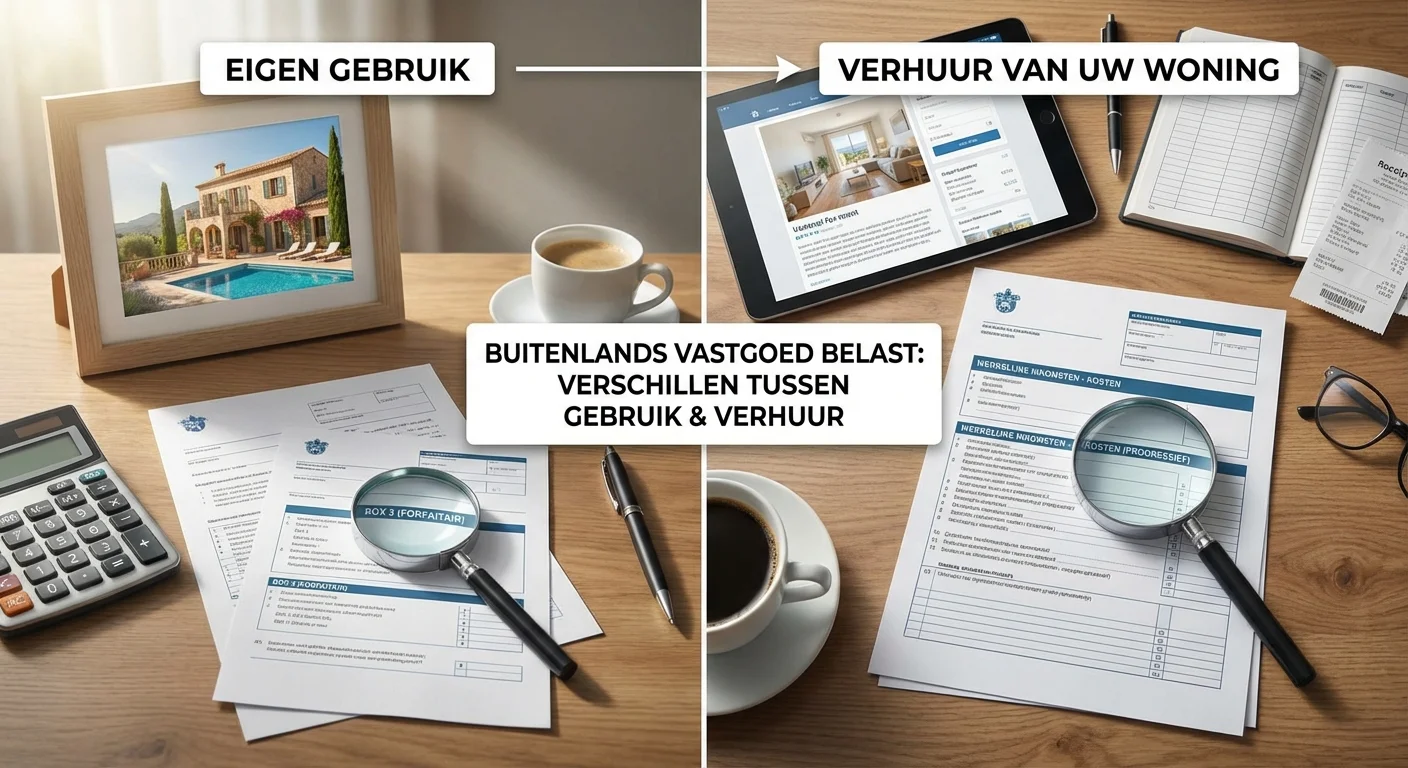
The way in which you use the property is decisive for its tax treatment. In the Netherlands, the property remains in Box 3 in any case, whether you use it as a holiday home yourself or let it out — after all, the Netherlands taxes the notional return on the capital, not the actual rental income. In Spain, by contrast, the use of the property does make a difference: if you let it out, you pay tax on the actual rental income; if you use it yourself, you pay tax on the imputed income. Many owners opt for a hybrid approach, whereby the property is let for part of the year to cover the fixed costs. You can read in detail about exactly how taxation works for a property that is not permanently occupied in our guide on the tax on your second home in Spain.
In the case of short-term lettings involving additional services such as breakfast or cleaning, the Dutch tax authorities may, in exceptional cases, treat the income as business profits under Box 1. However, this only applies to work that clearly goes beyond normal asset management. For most private individuals, the property simply remains part of the Box 3 tax base. If you wish to calculate the expected return in advance, our guide on the Calculate the return on a holiday home in Spain to come up with realistic figures. When making your choice, bear the following in mind:
- The amount of the local IBI and the imputed income for owner-occupied properties.
- The deductibility of maintenance costs when letting property as an EU resident.
- The impact of the levy on your global effective tax rate.
- The obligation to hold a letting licence and to keep a guest register.
Purchase costs, capital gains tax and inheritance
In addition to the annual levies, you will face one-off costs and tax liabilities relating to assets and inheritance. The buyer's costs In Spain, these usually amount to between 10 and 15% on top of the purchase price. For existing properties, you pay stamp duty (ITP); in the Valencian Community, this rate will fall from 10% to 9% from 1 June 2026 for properties valued at up to €1,000,000. For new-build properties, the rate is 10% IVA plus AJD, and for commercial property, 21% IVA plus AJD. On top of that, there are costs for the notary, the land registry and a solicitor. You can easily produce an accurate estimate using our tool for calculating the costs incurred by a buyer of a property in Spain.
The wealth tax In Spain, this only applies above a threshold of around €700,000 net per person, although this varies by region. For most buyers of a second home, the property value remains below this threshold, particularly with a mortgage that reduces the net value. Non-residents can, incidentally, finance up to around 70% of the valuation; we would be happy to assist you with the Applying for a mortgage in Spain.
Finally, the inheritance tax. The Valencian Community has a favourable scheme: a tax allowance of 99% for a spouse and children. From 1 June 2026, a further deduction of 25% will be added for brothers, sisters, uncles, aunts, cousins and nieces (rising to 50% from June 2027). Important for our Belgian, Dutch, German and French clients: non-residents from the EU/EEA receive the same regional benefits as residents. For the legal and tax finer points, please refer to our article on Inheritance law and property in Spain.
Optimising your tax burden
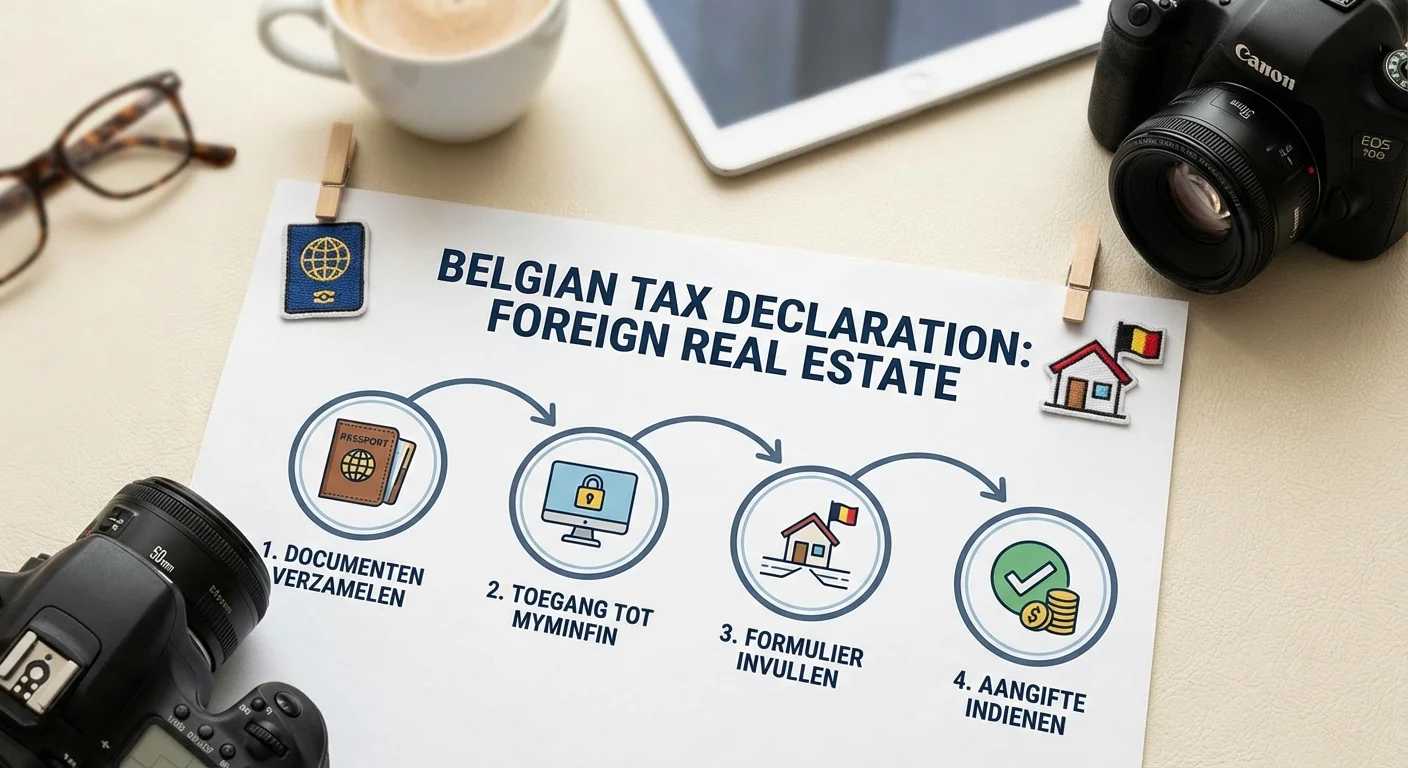
Owning property abroad comes with certain obligations, but with careful planning you can keep costs under control. The first step is always to check the tax treaty between your country of residence and Spain: it determines which country has the right to tax your income and prevents you from paying the full amount twice. It is also worth seeking advice in good time on local tax deductions such as maintenance costs, interest and local taxes. Keeping good records is half the battle for any property owner.
The way in which you finance the purchase also plays a role. A mortgage taken out specifically for the property reduces the taxable base in Box 3 or for personal income tax. Furthermore, the legal structure under which you hold the property is important in the long term — in some cases, a local entity such as a Spanish SL can reduce inheritance tax, although this comes with higher annual administrative costs. It remains a trade-off between immediate benefits and future savings for your heirs.

“A proactive attitude towards international tax rules is the best guarantee of profitable investment across borders.”
- Check annually for any changes to double taxation treaties and to the Box 3 or KI rules.
- Keep a careful record of all supporting documents relating to maintenance and local Spanish taxes.
- Consider refinancing if interest rates or the rules governing your taxable income change.
Anyone wishing to take a longer-term view of the market and tax developments will find valuable context in our overview Property trends in Spain 2026 and in the guide to Taxes for property investors in Spain.
How we can help you
At Invest in Spain, our team, led by property expert and CEO Kenzo Fayot, we assist buyers from Belgium, the Netherlands, Germany and France on a daily basis with purchasing, letting and correctly declaring property on the Costa Blanca for tax purposes. Whether you’re looking for a second home in Dénia, Jávea, Altea or Moraira, an investment property in Torrevieja, Orihuela Costa or Pilar de la Horadada, or are considering an exclusive property in Ibiza: we provide comprehensive support throughout the purchase process, from legal due diligence and mortgages to letting and key management. This ensures you know exactly how your overseas property will be taxed, both in Spain and in your home country.
Our expertise ranges from the initial consultation to the annual tax return and everything in between. We work in partnership with trusted tax advisers and lawyers, so that your legal review is watertight and ensures that no tax obligations are overlooked. Do you have any questions about your specific situation, or would you like to be sure that you are not paying more than necessary to the tax authorities? Please feel free to contact us, with no obligation for a thorough analysis of your international property portfolio and bespoke advice. You can also, without obligation, make use of our property services in Spain Take a look to see how we take care of everything for you from start to finish.
Frequently asked questions about overseas property and tax
Which country will be the first to levy tax on my house in Spain?
The country where the property is situated is the first to levy tax: for a property on the Costa Blanca, that is Spain. Spain taxes you on the property itself (IBI and imputed income), on rental income and on the capital gain upon sale. Your country of residence (the Netherlands or Belgium) will then also want to see the property declared in your tax return, but thanks to the double taxation agreement, you will not have to pay the full amount twice.
What are the income tax implications if I own foreign property?
In the Netherlands, overseas property is taxed under ‘box 3’ as part of your worldwide assets. You declare the value, but are entitled to a deduction to prevent double taxation, as Spain has the right to tax the property. In Spain, you pay income tax yourself on actual rental income (19% for EU/EEA residents) or on a flat-rate notional income if you do not let the property.
How is the taxable base for a second residence in Belgium calculated?
Belgian residents are taxed on their overseas property on the basis of an allocated cadastral income (CI), just as they are for properties in Belgium itself. Thanks to the double taxation agreement, this CI is generally exempt subject to progression: you do not pay Belgian tax on it, but it does count towards determining which tax bracket your other income falls into.
What is the difference between income tax and capital gains tax on overseas property?
Income tax is levied on the income generated by the property: rental income and, in Spain, also a notional income where the property is owner-occupied. Wealth tax is levied on the property itself. Spain has a wealth tax with a threshold of approximately 700,000 euros net per person (varying by region); the Netherlands taxes wealth via Box 3 and Belgium via the cadastral income.
Do I need to declare my holiday home in Spain, even though I pay very little tax on it back home?
Yes. You are legally obliged to declare your worldwide assets so that the tax authorities can determine the correct rate of tax on your total assets or income. Thanks to the treaty, you will often pay little or no additional tax in your country of residence, but failing to declare the property may result in fines. The obligation to declare is separate from the actual payment.